


What Are Plush Flowers? Trends, Production, and Commercial Uses

Updated: Jul 24

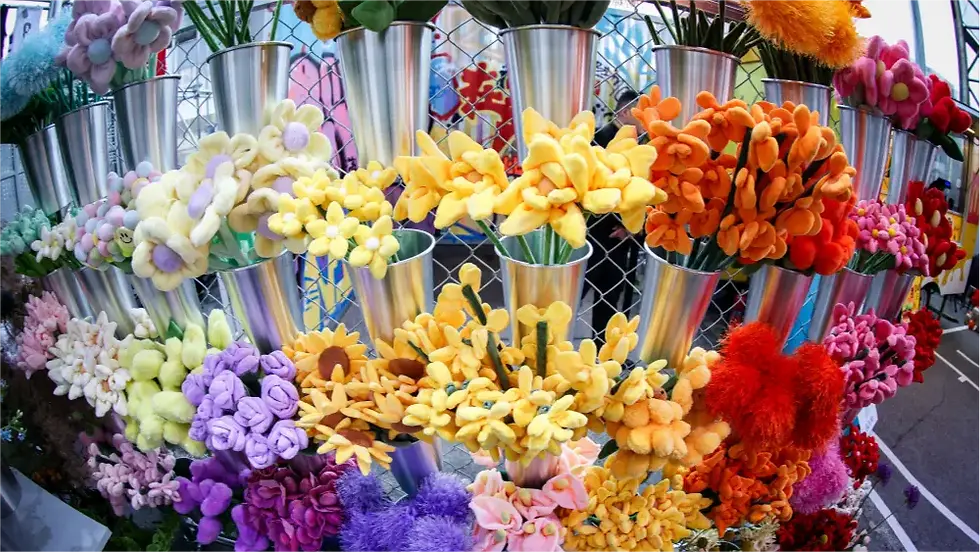
Walk into a plush flower display and the experience feels familiar. Roses, lilies, tulips, chrysanthemums, and other flowers are arranged by type and color, much like a fresh flower market.
The difference becomes clear when the flowers are picked up. Their petals are soft, their stems are covered in fabric, and they can be displayed individually or combined into a bouquet.
This format has moved quickly from art installations and social media into gift retail, pop-up events, e-commerce, campus stores, and brand projects.
So, what are plush flowers, and how can they be developed into commercial products?
What Are Plush Flowers?
Plush flowers are textile floral products made with soft fabric petals, leaves, flower centers, and supported stems. They combine the recognizable appearance of flowers with the tactile quality of plush products.
Many plush flowers are displayed and sold individually. Different flower types and colors can be arranged in containers, allowing customers to select one flower or combine several into a bouquet.
The wider category also includes prepared bouquets, flower baskets, flower pots, boxed gifts, and event displays. These products may have different structures and production methods, even though they share the same soft floral theme.
Feature | Typical characteristics |
Main materials | Soft fabric, thread, stem support, labels, and optional filling |
Common formats | Individual flowers, bouquets, baskets, pots, and gift boxes |
Presentation | Open flower displays, prepared gifts, branded packaging, or event installations |
Customization | Flower type, color, size, label, packaging, and display format |
Unlike conventional artificial flowers, plush flowers do not always aim for botanical realism. Their shapes may be softer, fuller, brighter, or more sculptural.
They also differ from traditional plush toys. A plush toy is normally developed around a complete animal or character shape. A plush flower is developed around petals, leaves, a flower head, and a stem. Its visual quality depends on the flower silhouette, petal arrangement, and balance of the finished product.
To review current flower types, colors, and product formats, email sales@sweetie-group.com for Sweetie’s latest plush flower catalog.
Why Are Plush Flowers Becoming Popular?
The growth of plush flowers is connected to three main factors: greater visibility through art and social media, the combination of floral gifting with soft materials, and the development of more interactive retail displays.
Art and Social Media Increased Visibility
Large-scale art installations helped introduce plush flowers to a wider audience.
Cj Hendry’s Flower Market is one of the most visible examples. Her official archive records the New York Flower Market project in 2024. The 2025 Rockefeller Center edition presented 27 new plush flower designs and allowed visitors to select flowers for their own bouquets.
These installations showed how plush flowers could work as both individual products and part of a complete environment. Rows of different flowers created a setting that encouraged browsing, photography, selection, and bouquet building.
Cj Hendry is mentioned here only as background to the development of the category. Sweetie is not affiliated with or authorized by the artist.
They Combine Floral Gifting with Soft Materials
Flowers already have an established place in birthdays, graduations, anniversaries, celebrations, and thank-you gifts.
Plush materials add a different quality to that familiar form. They make the flower soft to touch and suitable for longer-term display. The product can still communicate the meaning of a floral gift without depending on the short life of fresh flowers.
Plush flowers also look different from conventional soft toys. Their floral form makes them suitable for stores and projects that want a soft gift without relying on an animal, character, or licensed property.
They Support Interactive Retail
Plush flowers can be arranged by flower type, color, or seasonal collection. This gives stores and event organizers several ways to present the same category.
A flower-market-style display can offer individual flowers for selection. Staff may also prepare bouquets on site or provide wrapping so that several flowers can be combined into a complete gift.
This format works particularly well for pop-ups and events because the product display becomes part of the activity. New colors, limited designs, and seasonal varieties can also be introduced without changing the entire concept.
How Are Plush Flowers Made?
The exact production method depends on the flower design. A rose, lily, tulip, sunflower, and chrysanthemum require different patterns, proportions, and assembly methods.
However, most plush flowers move through four broad stages.
Design and Material Selection
Development begins with a drawing, reference image, sample, or product idea.
The flower type, overall size, petal shape, leaf position, stem length, colors, and intended presentation are confirmed before production.
Suitable fabrics are then selected. The material affects the softness, surface appearance, flower shape, and ability of the petals to maintain their form.
Branding details should also be decided at an early stage. Printed labels and embroidered labels create different results, and some branding components need to be integrated during production rather than added to a completed flower.
Cutting the Fabric Components
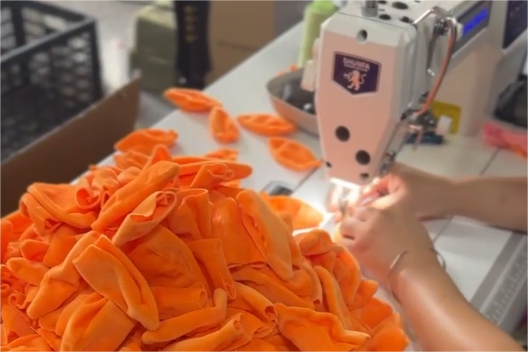
Once the patterns and materials have been approved, the petals, leaves, stem coverings, and other textile components are cut by machine.
Accurate cutting helps maintain consistent dimensions across a production batch. This is particularly important for flowers with repeated petals or several layers of textile components.
Machine cutting prepares the pieces, but it does not complete the flower. Most of the following work is done by hand.
Hand Sewing and Assembly
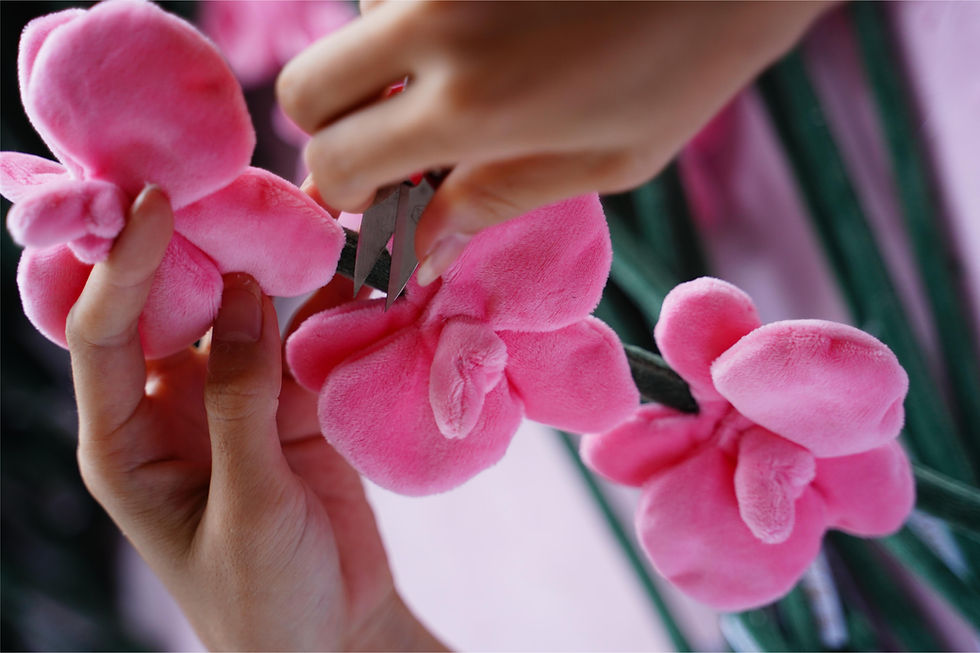
The cut components are sewn, shaped, and assembled by experienced workers.
Some flower designs require filling to create volume. Others rely more on the fabric, stitching, folding, and arrangement of the components. Sewing and adhesive work may be combined where appropriate for the product structure.
Because different flowers require different techniques, production cannot be treated as a single standard process for every design.
Shaping, Inspection, and Packing
After assembly, the flower is shaped and checked before packing.
Inspection normally covers the flower shape, petal arrangement, color, stitching, stem condition, label position, surface cleanliness, and overall consistency.
Packaging must also protect the flower during storage and transport. Excessive pressure can flatten the flower head, affect the leaves, or bend the stem. The packing method should therefore match the product size and final sales channel.
Where Can Plush Flowers Be Sold or Used?
Plush flowers can be developed for several commercial channels. The most suitable format depends on how the products will be displayed, selected, packed, and delivered.
Retail Stores
Gift shops, lifestyle stores, flower shops, campus stores, museum stores, supermarkets, and other retail channels can sell plush flowers individually or as prepared gifts.
An open display can organize flowers by type or color. This makes the range easy to understand while allowing customers to build their own combinations.
Prepared bouquets, pots, baskets, and boxed gifts are useful when the store needs a faster, ready-to-give option.
Plush flowers can also be paired with other gift categories, including greeting cards, fragrance, beauty products, jewelry, chocolates, stationery, and small plush items.
For chain retail, the collection should remain easy to display and replenish. Flower types, color groups, packaging dimensions, and batch consistency become particularly important when products are distributed across several locations.
Pop-Ups and Events
Pop-ups and events are a natural setting for plush flowers because the products can serve several purposes within the same project.
They can be used as merchandise, decorations, event gifts, or parts of an interactive flower-selection area. Visitors may choose individual flowers and have them wrapped on site, or receive a customized flower as a branded keepsake.
Suitable applications include:
Shopping mall activations
Seasonal flower markets
Art and design events
Brand launches
Beauty and fragrance promotions
Graduation events
Sports and youth culture programs
Store openings
Custom colors, labels, cards, and wrapping can connect the flower collection to the event identity.
E-Commerce
For online sales, plush flowers can be offered as individual flower and color options, prepared bouquets, seasonal sets, or packaged gifts.
Product photography must replace the physical experience of touching and comparing the flowers. Useful images should show the full product, fabric texture, flower-head size, stem length, available colors, and final packaging.
Packaging requires special attention. Flower heads need protection from compression, while stems should be secured to reduce movement and bending during delivery.
Prepared bouquets may be easier to present as complete gifts. Individual flowers offer greater variety but require clear SKU organization and color identification.
Brand and Corporate Projects
Plush flowers can be customized for promotional gifts, corporate programs, product launches, beauty campaigns, hospitality projects, and branded events.
Customization may include:
Brand colors
Printed or embroidered labels
Hangtags and message cards
Bouquet wrapping
Gift boxes
Event-specific packaging
Coordinated flower collections
The product can be used alone or combined with another brand’s merchandise. For example, a plush flower may accompany a fragrance, beauty set, jewelry item, or seasonal corporate gift.
Sweetie’s current plush flower program covers individual flowers, bouquets, blind boxes, display sets, boxed gifts, and custom collections for retail, events, gifting, and brand projects.
For a retail, e-commerce, event, or branded plush flower project, send your concept or reference images to sales@sweetie-group.com.
Why Choose Sweetie for Plush Flower Projects?
Sweetie-Gifts approaches plush flowers as floral gift products rather than simply treating them as ordinary plush items.
This background helps connect the flower itself with the wider commercial project, including the color range, bouquet presentation, branding, packaging, display, and intended sales channel.
Floral Product Development
Sweetie has extensive experience developing floral gifts in several materials and formats.
For plush flower projects, support can include flower selection, color planning, fabric options, size adjustments, sampling, and the development of a coordinated collection.
An individual flower design can also be extended into bouquets, baskets, pots, gift boxes, blind boxes, or event displays when the project requires a broader product range.
Custom Labels and Packaging
Branding options include printed labels, embroidered labels, hangtags, cards, wrapping, gift boxes, and retail display packaging.
These elements are planned together with the flower rather than treated as an afterthought. This is particularly important when packaging dimensions, label positions, or presentation requirements affect the final product.
Support for Different Sales Channels
A product developed for an open retail display may require a different solution from one intended for e-commerce delivery or a premium gift set.
Sweetie supports projects for retail stores, importers, wholesalers, e-commerce companies, events, promotional programs, and branded gifts. Product formats and packaging can be adjusted around the practical requirements of each channel.
Quality and Production Coordination
Plush flower production includes a significant amount of handwork. Approved samples and clear quality standards are therefore important for maintaining consistency.
Sweetie checks key areas such as flower shape, color matching, stitching, labels, stem condition, packaging, and display presentation. The goal is to keep the bulk order reasonably consistent with the confirmed sample and support stable repeat orders.
Frequently Asked Questions
What are plush flowers?
Plush flowers are soft textile flowers made with fabric petals, leaves, flower centers, and supported stems. They can be sold individually or developed into bouquets, baskets, pots, gift boxes, and event displays.
Why are plush flowers popular?
Their popularity comes from the combination of floral gifting, soft texture, social media visibility, and interactive retail presentation. They can be touched, selected, displayed, and combined into personalized bouquets.
How are plush flowers made?
The general process includes design development, material selection, machine cutting, hand sewing, assembly, shaping, inspection, and packing. The exact method changes according to the flower type and product format.
Where can plush flowers be sold?
They are suitable for gift shops, flower shops, lifestyle stores, campus stores, museum stores, supermarkets, e-commerce, pop-ups, events, brand campaigns, and corporate gift programs.
Can plush flowers be customized?
Yes. Flower type, size, fabric, color, stem length, labels, cards, packaging, and display formats can be customized according to the project.
Final Thoughts
Plush flowers combine the familiar meaning of flowers with the softness and visual impact of textile products.
They can be sold individually, arranged into bouquets, used in interactive retail displays, or developed for e-commerce, events, and branded gift programs.
A successful collection depends on more than the flower design. Color planning, consistent production, suitable packaging, clear branding, and the final sales environment all influence the result.
For the latest catalog or support with a custom plush flower collection, contact sales@sweetie-group.com.

CEO of Sweetie-Group

Comments