


Are Plush Flowers Safe? A Buyer's Guide to Fabrics, Glue, Metal Stems, and Testing

During a recent plush flower sourcing discussion, an Australian customer asked our team a question that went beyond flower designs, colors, and prices:
“For safety purposes can you please advise the materials used in production of the flowers – what metal is used, any fabric dye testing reports you may have as well as details regarding the glue…”
The customer wanted to understand exactly what materials were used and whether they could meet the company's safety requirements.
It's a reasonable concern for importers, retail chains, gift brands, and businesses developing their own floral collections. A plush flower may look like a simple fabric decoration, but its construction can involve textile materials, adhesives, and internal metal support.
So, are plush flowers safe? Decorative plush flowers can be made to meet applicable product safety requirements. However, their safety depends on the actual materials, construction, intended use, and supporting evidence.
For the products discussed with this customer, we confirmed three main materials: polyester fabric, transparent EVA hot-melt glue sticks, and iron wire inside the stems.
Here's what buyers should know about these materials and how to verify them before placing a bulk order.
Are Plush Flowers Safe for Decorative and Gift Use?
The plush flowers we manufacture are decorative textile flowers designed for bouquets, floral gifts, retail displays, pop-up shops, and flower bars. They resemble flowers rather than traditional stuffed animal toys.
When evaluating these products, it helps to distinguish three different concerns.
Chemical safety involves potentially restricted or hazardous substances in fabrics, dyes, adhesives, and other materials.
Physical safety involves construction hazards, such as exposed wire ends or poorly secured components.
Product quality concerns appearance, color consistency, shape retention, and workmanship. These issues matter commercially, but a quality defect does not automatically indicate a chemical safety problem.
Depending on the product and its intended use, other factors, including flammability, may also require assessment.
For wholesale buyers, the most reliable approach is to review the actual product specifications and determine what safety evidence is relevant to the destination market.
What Materials Are Used in Plush Flowers?
The materials used in decorative plush flowers depend on the flower design and construction.
In our Australian customer's project, the following materials were confirmed:
Component | Material | Function |
Flower fabric | Polyester | Forms the soft petals and leaves |
Adhesive | Transparent EVA hot-melt glue sticks | Bonds components during assembly |
Stem core | Iron wire | Supports the flower and allows shaping |
Other components, such as stitching, filling, or decorative accessories, depend on the individual design.
A small plush tulip and a large decorative flower with multiple petal layers may have different structural requirements. Materials used for one design should not automatically be assumed to apply to every item in a supplier's catalog.
For custom projects, establishing a material list during sampling is a useful first step. It allows the buyer and manufacturer to confirm the proposed construction before reviewing any additional testing requirements.
Are Polyester Fabrics and Dyes Safe for Plush Flowers?
Polyester is widely used in textile manufacturing, including decorative fabric products. It can be produced in different textures and colors, making it suitable for creating plush flower petals and leaves.
However, identifying a fabric as polyester doesn't establish the chemical safety of every dye or finish used in its production.
The more useful questions concern the actual fabric specification, coloring process, finishing treatments, and applicable chemical restrictions.
What Should Buyers Know About Fabric Dyes?
Some textile dyes and chemical treatments are subject to restrictions in particular markets.
For example, EU REACH Annex XVII includes restrictions on specified azo colorants that can release certain aromatic amines in defined textile and leather applications.
These restrictions are not a blanket prohibition on all azo dyes. Their applicability depends on the relevant substance, material, and conditions of use.
For decorative plush flowers entering Europe, the appropriate chemical requirements should be determined from the actual product and its intended use.
It's also useful to distinguish chemical testing from colorfastness testing.
Colorfastness testing examines whether a fabric retains its color or transfers dye under specified conditions. Restricted-substance testing examines whether identified chemicals are present within applicable limits.
Both can be relevant to retail products, but they answer different questions.
What Fabric Testing Information Should Buyers Request?
Start by identifying the fabric used in the approved product.
Depending on the project, useful information may include fabric composition, supplier material specifications, and applicable chemical test reports.
A test report should identify the material tested, the test method, substances examined, and reported results.
For collections containing multiple colors or fabrics, the testing scope needs to be reviewed accordingly.
For example, a test report for one polyester fabric may not adequately represent a different fabric sourced from another supplier or manufactured using a different dye formulation.
The key is to establish which materials require verification rather than assuming that one fabric report covers every product variation.

What Glue Is Used in Plush Flowers?
Adhesives are used during the assembly of certain decorative plush flowers.
For the Australian project, our sales team confirmed the adhesive specification:
“Regarding the adhesive, we use transparent EVA (ethylene-vinyl acetate) hot-melt glue sticks to assemble the flowers.”
EVA is a polymer used in various adhesive products. Conventional EVA hot-melt glue sticks are heated during application and form a bond as the adhesive cools.
This type of glue can be used to assemble selected fabric components, although the exact application points depend on the flower design.
How Can Buyers Verify EVA Glue Safety?
An EVA adhesive's general material name does not reveal its complete formulation.
Commercial hot-melt adhesives may contain additional ingredients that influence bonding strength, flexibility, and processing characteristics.
For buyers with specific chemical safety requirements, the useful information is the actual adhesive product identification and relevant supporting documentation.
Depending on availability and project requirements, this may include technical product information, a Safety Data Sheet (SDS), or suitable chemical testing.
An SDS describes chemical hazards and handling information. It does not, by itself, certify that a finished plush flower complies with all applicable consumer product safety rules.
The finished sample should also be inspected for visible excess glue and insecure attachments. These checks help assess workmanship and construction, although they cannot replace chemical testing when testing is required.
Confirming the adhesive during sample approval also reduces the possibility of unexpected material changes during bulk production.
Need to review the materials in your plush flower design? Send your specifications and target market to sales@sweetie-group.com. Our team can discuss the materials used and suitable third-party testing arrangements.
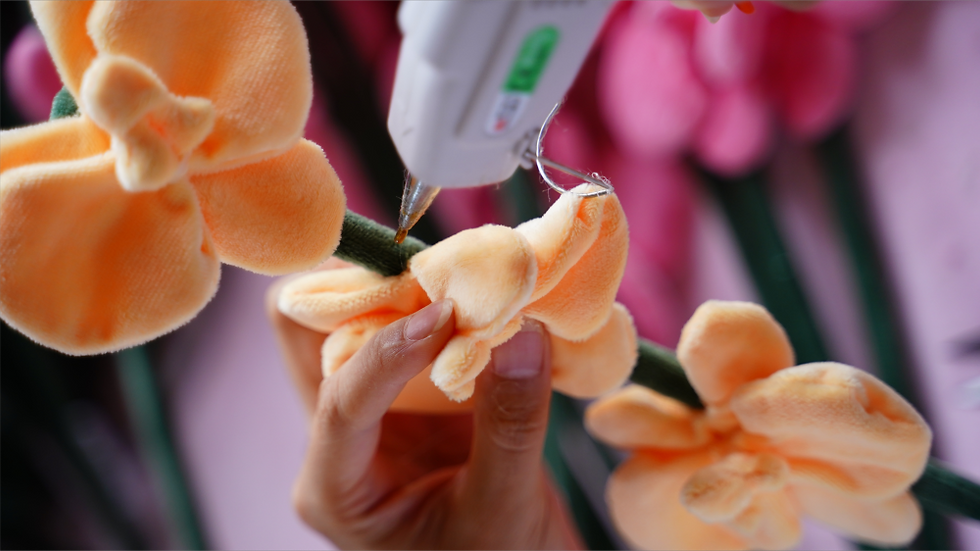
What Metal Is Used Inside Plush Flower Stems?
A decorative plush flower needs sufficient stem support to hold its shape during display and normal handling.
For the project discussed here, the internal stem core was confirmed as iron wire.
Iron wire helps support the flower head while allowing the stem to be shaped for different arrangements.
This can be useful when flowers are displayed individually in buckets, placed in vases, or combined into bouquets.
What Should Buyers Check About Iron Wire Stems?
The main safety considerations relate to the construction of the finished stem.
The wire should be appropriately enclosed, with its ends protected to prevent sharp points from becoming exposed during intended use.
The connection between the flower head and stem also needs to remain secure.
When inspecting a sample, it's useful to examine the stem covering, both ends of the stem, and the attachment at the flower head. The stem should also provide suitable support for the size and weight of the flower.
Durability is a separate consideration. If a design is intended to be frequently repositioned or bent, its performance should be evaluated under the expected handling conditions.
These practical checks are especially relevant to flower shops and interactive flower bars, where customers may repeatedly pick up and arrange individual stems.
The exact wire specification and any required mechanical testing should be determined for the particular design rather than assumed from the material name alone.
What Testing and Documentation Do Buyers Need?
There is no single safety certificate that applies to every decorative plush flower.
The relevant requirements depend on the product's materials, intended use, and destination market.
Which Safety Requirements May Apply?
For decorative plush flowers entering the European Union, applicable chemical restrictions under REACH may need to be considered.
REACH is not limited to preserved flowers. It can also apply to substances present in textile products and other consumer articles. However, it does not create a universal product certificate that every plush flower must obtain.
The EU General Product Safety Regulation (GPSR) also establishes obligations for consumer products within its scope, including relevant product safety, traceability, and information requirements.
In Australia, consumer products must be safe, and businesses need to comply with any mandatory product safety standards or bans applicable to their products.
In the United States, buyers should likewise assess the product against applicable consumer product safety requirements.
Decorative plush flowers should not automatically be classified as children's toys. Toy-specific standards become relevant when the product's actual design, intended use, or marketing brings it within the applicable toy definition.
For importers, the practical starting point is to confirm the product category and destination market before determining which tests are necessary.
What Is the Difference Between Material Reports and Import Documents?
Buyers sometimes request several documents together, but they do not all serve the same purpose.
Material specifications identify the components used in the product, including the fabric, adhesive, and internal stem structure.
Test reports record the results of particular tests performed on identified samples. They provide evidence relevant to the tested requirements, not automatic approval of every product made by the manufacturer.
Import and packing documents support shipment and import procedures. They are separate from material safety testing.
For our Australian customer's project, we confirmed the materials used and agreed to cooperate with necessary third-party testing according to the customer's requirements.
Our team also supplied an updated Packing Declaration as part of the shipment documentation.
In Australian import procedures, packing declarations can address information about packing materials and relevant biosecurity concerns, such as timber or straw used in packing.
A Packing Declaration is not evidence that the plush flower fabric, glue, or metal components have passed chemical safety testing.
Understanding these differences helps buyers request the right documents without confusing shipping requirements with product compliance.
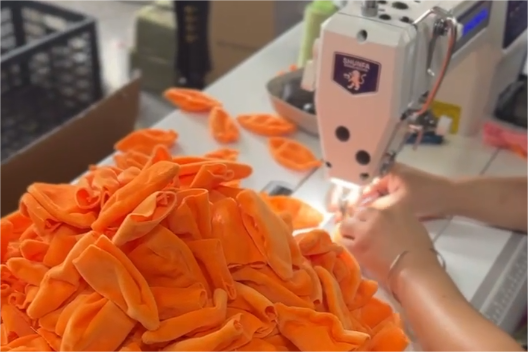
How to Verify Plush Flower Materials Before Bulk Ordering
Material verification is most effective when it starts during product development rather than after production has finished.
The process can be organized into four steps.
1. Confirm the Product and Its Intended Use
Identify the exact flower design, size, materials, and target market.
A product developed for decorative retail displays may have different requirements from one marketed as a children's play product.
The sales channel and any retailer-specific requirements should also be clarified.
2. Review Material Specifications and Available Reports
Ask the supplier to identify the materials in the proposed product.
For the plush flowers described in this article, that includes polyester fabric, transparent EVA hot-melt glue, and iron wire.
If reports are available, compare them with the actual materials rather than accepting them based only on their titles.
Useful report details include:
Report detail | What to verify |
Sample identification | Does it match the relevant material or product? |
Testing scope | Which substances or safety requirements were tested? |
Test method and results | What was measured, and against which criteria? |
Laboratory and report details | Who performed the tests, and when? |
Product coverage | Does the evidence adequately represent the intended order? |
The report date is useful context, but a report does not automatically become invalid simply because it is older. Its relevance depends on the applicable requirements and whether the tested materials and product specifications remain representative.
3. Arrange Additional Testing When Necessary
Some retail chains and brands have their own restricted-substance lists or product testing policies.
If the existing documentation does not cover those requirements, additional testing may be appropriate.
Before sending samples to a third-party laboratory, confirm the testing scope, samples required, responsibilities, cost, and schedule.
Testing should be based on the actual product requirements rather than a generic list of certificates.
4. Approve Materials Before Mass Production
The approved sample should represent the materials and construction intended for the bulk order.
Any proposed changes to the fabric, adhesive, wire, or other significant components should be reviewed before implementation.
This helps ensure that product specifications and supporting documentation remain consistent with what is manufactured.
The principle is straightforward: the approved sample, material specifications, and relevant test evidence should correspond to the same product.
How Sweetie Supports Material Verification
At Sweetie-Group, material questions are addressed during product discussions and sampling.
For the Australian customer project described earlier, our team identified the main materials, discussed cooperation with third-party testing, and provided updated shipment documentation.
For new wholesale and OEM/ODM projects, buyers can share material specifications and testing requirements during development. The testing scope, documentation, responsibilities, and related costs can then be discussed according to the project.
Our plush flower manufacturing and supply chain resources in Yiwu also support product sampling, design development, and production coordination for decorative floral collections.
If you're still deciding which products to include in your collection, Sweetie AI can help recommend floral gifts based on your sales channel and purchasing needs, and assist with initial assortment and sourcing plans. Specific material and testing requirements can then be confirmed with our team.

Frequently Asked Questions About Plush Flower Safety
Are Polyester Plush Flowers Safe?
Polyester is a widely used textile material, but its presence alone does not establish finished-product safety. Relevant dyes, finishes, construction details, and applicable requirements should also be considered.
What Glue Is Used to Assemble Plush Flowers?
For the project described here, we use transparent EVA hot-melt glue sticks. Different designs may use other materials or assembly methods. The actual adhesive formulation should be reviewed when specific chemical safety requirements apply.
Do Plush Flower Stems Contain Metal Wire?
Some decorative plush flowers contain internal wire. Our Australian customer's project uses iron wire to provide stem support and allow shaping. Proper enclosure and protection of the wire ends are important construction considerations.
Can Manufacturers Provide Fabric Dye Testing Reports?
Available reports depend on the materials and previous testing performed. Where additional evidence is required, relevant third-party testing can be discussed. Reports should be checked against the actual fabric and product specifications.
Do Decorative Plush Flowers Need Toy Safety Certification?
Not automatically. Decorative floral gifts and children's toys can have different regulatory requirements. The applicable classification depends on product design, intended use, marketing, and the rules of the destination market.
Can Plush Flowers Be Tested Before Bulk Production?
Yes. Appropriate chemical or physical testing can be arranged during product development. The necessary tests, sample requirements, costs, and responsibilities should be confirmed before bulk production begins.
Final Thoughts: Material Transparency Matters in Plush Flower Sourcing
Decorative plush flowers may look simple, but understanding their construction is an important part of responsible sourcing.
Knowing the actual fabric, adhesive, and stem materials makes it easier to identify relevant safety requirements and determine whether additional testing is needed.
Confirming these details before bulk production also helps avoid misunderstandings between buyers and manufacturers.
Planning a wholesale or custom plush flower collection? Email your designs, target quantities, and material requirements to sales@sweetie-group.com. Our team can discuss product specifications, sampling, and the next steps for your project.
Annie Zhang

Comments