


Preserved vs. Dried Flowers for Wholesale Sourcing: The Ultimate B2B Buying Guide

For bulk buyers, preserved flowers are ideal for premium, high-margin gifting and e-commerce due to their lifelike texture and vibrant colors, whereas dried flowers are best for budget-conscious, rustic-themed retail displays and boho home decor. While preserved florals offer superior durability during shipping, dried varieties offer an organic, textured aesthetic at a lower wholesale price point.
What are the main differences between preserved and dried flowers in wholesale sourcing?
To make an informed purchasing decision, bulk buyers must understand that preserved and dried flowers are distinct product categories with different manufacturing processes, target demographics, and profit margins. When evaluating preserved vs dried flowers wholesale opportunities, importers must weigh initial unit costs against long-term shelf stability, transit damage rates, and consumer appeal.
Below is a direct comparison matrix designed to help wholesale sourcing managers, e-commerce retailers, and corporate buyers evaluate both categories:
Feature | Preserved Flowers | Dried Flowers |
|---|---|---|
Production Method | Glycerin-based chemical replacement of natural sap | Dehydration via air-drying, heat, or freeze-drying |
Appearance | Soft, flexible, and virtually indistinguishable from fresh flowers | Rigid, matte, slightly shriveled, and rustic |
Color Range | Highly consistent; can be dyed any custom Pantone color | Muted, earthy tones; prone to fading under UV light |
Shedding & Fragility | Minimal shedding; highly pliable cellular structure | High fragility; prone to petal drop and shattering |
Average Shelf Life | 1 to 3+ years (under indoor conditions) | 6 months to 1 year (gradually degrades) |
Moisture Sensitivity | Vulnerable to high humidity (causes glycerin weeping) | Vulnerable to dampness (causes mold and rot) |
Price Point | Premium (higher investment, high retail markup) | Budget-to-moderate (lower unit cost, volume-driven) |
Best Applications | Luxury gifts, corporate events, e-commerce arrangements | Boho retail bundles, rustic wedding decor, potpourri |
Understanding these baseline metrics is crucial before allocating your annual floral sourcing budget. While both options offer extended lifespans compared to fresh-cut stems, they serve completely different consumer segments.

How do the production processes of preserved flowers and dried flowers affect their durability?
The fundamental difference in durability lies in the chemistry of how each floral type is made. As a B2B supplier, I often explain to clients that preserving a flower is a chemical molecular substitution, whereas drying is simple dehydration.
To produce wholesale dried flowers, fresh plants are harvested and hung upside down in dark, well-ventilated rooms, or processed through commercial dehydrators. This removes almost 100% of the natural moisture. The result is a highly brittle cellular wall. Any sudden movement, vibration in transit, or rough handling by end-consumers causes petals to snap or crumble.
In contrast, manufacturing bulk preserved flowers involves a two-step biochemical process. First, freshly harvested flowers (usually Grade A roses, carnations, or hydrangeas) are submerged in an alcohol bath to remove their natural pigment and moisture. Second, they are placed in a pressurized mixture of cosmetic-grade glycerin, water, and non-toxic dyes. The glycerin penetrates the cell structure, replacing the sap. Because glycerin does not evaporate, the cells remain hydrated and flexible. This keeps the flower soft, supple, and highly resistant to mechanical stress during bulk shipping.
Which option is more cost-effective for bulk importing and shipping?
When calculating the total cost of ownership (TCO) for a bulk floral shipment, you cannot look at the Ex-Works (EXW) unit price alone. You must factor in damage-upon-arrival rates, storage constraints, and shipping density.
Product Loss During Transit: Dried flowers suffer from a high "shatter rate." In standard ocean freight container shipping, vibration can cause up to 10% to 15% product loss for highly fragile dried species like delphiniums or baby’s breath. Preserved flowers, with their elastic glycerin-infused petals, have an average transit damage rate of under 2% when packaged correctly.
Storage and Shelf Life: Dried flowers must be turned over quickly. Within six to nine months, they lose their visual appeal, become dusty, and fade. Preserved flowers can easily sit in a temperature-controlled wholesale warehouse for over 18 months without any loss in aesthetic value, allowing you to manage seasonal inventory spikes (such as Valentine's Day and Mother's Day) with far less waste.
Shipping Volume: Dried flowers are often bulky and cannot be tightly compressed without breaking. Preserved roses, however, are usually shipped as individual flower heads packed tightly in protective paper trays, optimizing shipping volume and lowering per-unit freight costs.
How should retail, e-commerce, and corporate gift buyers choose between them?
Your sales channel is the single most important factor in determining whether to source preserved or dried floral inventories.
E-Commerce and D2C Brands
If you run an online flower delivery or subscription box business, preserved flowers are highly recommended. Parcel shipping networks (such as FedEx, DHL, or UPS) are notoriously rough. A bouquet made entirely of dried flowers will arrive with a layer of fallen petals at the bottom of the box, ruining the unboxing experience. Preserved floral arrangements can withstand dropping, tossing, and tilting during transit.
Traditional Gift Stores and Florists
Retail flower shops benefit from offering a mix of both. However, for premium gifting, preserved arrangements have a much higher perceived value. Consumers are willing to pay a significant premium for a rose that looks fresh but lasts for years, especially when housed in acrylic cases, glass domes, or luxury hatboxes. As an established preserved flower gift manufacturer, we see retail clients easily achieving 300% to 500% markups on finished preserved floral gifts.
Supermarkets and Home Decor Retailers
For volume-driven mass retailers, dried flowers are excellent seasonal sellers. Bundled wheat, pampas grass, lavender, and dried palm leaves are highly sought after for autumn and bohemian-themed home styling. These items require minimal display maintenance and appeal directly to budget-conscious, style-focused shoppers.
Corporate Gifting Programs
Corporate clients value durability and brand alignment. Preserved flowers can be customized to match exact corporate brand colors through precise dyeing formulas. They can sit on an office reception desk for years without watering or sunlight, making them an excellent long-term brand touchpoint.
What packaging and logistics requirements apply to bulk floral shipments?
Proper logistics management prevents costly inventory write-offs. Each floral type requires a highly specialized approach to packaging and environmental controls.
For dried flowers, the main threat is moisture and crushing. If packed too tightly, they lose their natural, organic shape and become flat. They must be packed in breathable materials, and silica gel packs are absolutely mandatory to prevent mold during ocean shipping through warm, humid tropical waters.
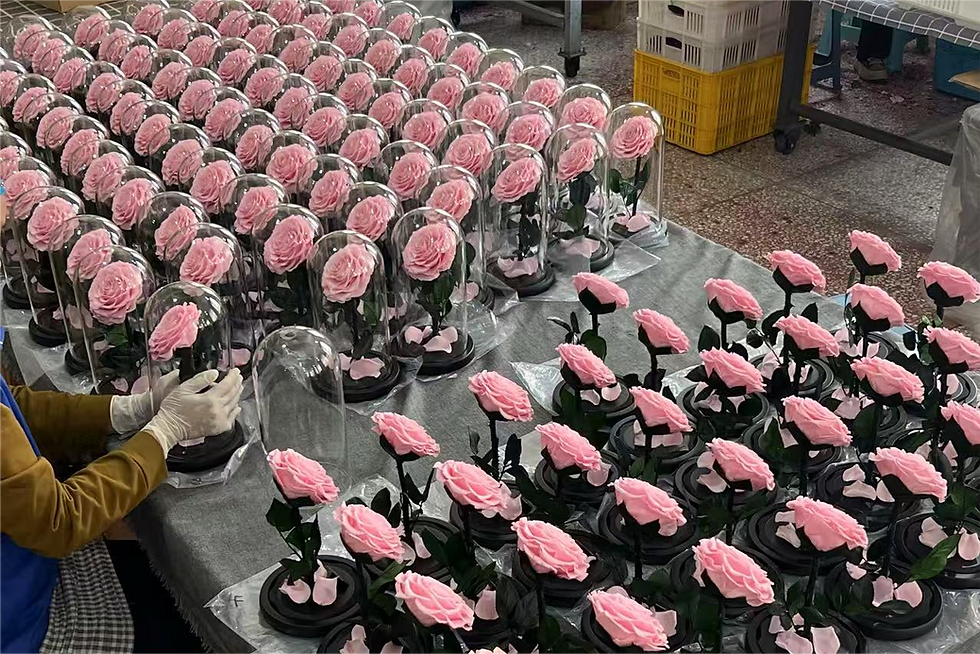
For preserved flowers, humidity control is even more critical. Because glycerin is hygroscopic (it absorbs moisture from the air), exposure to relative humidity levels above 70% will cause the flowers to "sweat" or bleed dye. Partnering with a supplier that offers professional preserved flower packaging wholesale solutions is essential. High-quality preserved flower heads should be secured in molded plastic or sturdy cardboard trays that hold each calyx firmly in place, preventing the petals from touching the container walls. Additionally, shipping containers should use active dehumidification or desiccants to maintain an ideal internal humidity of 40% to 60%.
What quality control questions should B2B buyers ask a preserved flower gift manufacturer?
Before signing a contract with a factory, your sourcing team must run a thorough quality control audit. Not all preserved florals are created equal. Low-grade suppliers often cut corners on chemicals, curing times, and sorting.
To protect your brand and customer satisfaction, ask your potential manufacturing partner the following questions:
"What grade of raw flowers do you use?" Grade A roses have thick, symmetrical petals, strong calyxes, and no tears. Grade B roses have thinner petals, irregular shapes, and are prone to splitting post-preservation.
"Is your preservation liquid non-toxic and cosmetic-grade?" High-quality manufacturers use cosmetic-grade glycerin and natural colorants. Cheap suppliers may use industrial solvents that emit strong chemical odors, which is a major red flag for retail consumers.
"What is your color-fastness standard?" Ask if they run bleeding tests to ensure that deep red or blue roses will not transfer color onto light-colored packaging or neighboring white flowers.
"Do you perform professional drop-tests on your finished gift packaging?" A reliable manufacturer will subject their custom-designed gift boxes to standardized physical drop tests to ensure the inner protective structure keeps the delicate arrangement safe during courier delivery.
At Sweetie-Gifts, we handle these pain points directly. We operate a highly controlled preservation facility, using high quality materials and eco-friendly preservation agents. We customize not only the floral arrangements but also develop protective, drop-tested structural packaging tailored to your specific logistics channels.
Frequently Asked Questions (FAQ) for Floral Importers
Can you combine preserved and dried flowers in a single design?
Yes. Many modern floral designers combine the structural, muted, and wild textures of dried foliage (like pampas grass or eucalyptus) with the vibrant, focal beauty of preserved roses. This combination creates a stunning, multi-textured arrangement while balancing material costs.
Do preserved and dried flowers require special customs clearance or phytosanitary certificates?
Generally, yes. Because these are natural plant materials, most countries require a phytosanitary certificate issued by the exporting country’s agricultural authorities to prove the shipment is free of pests and soil. Since preserved flowers have undergone deep chemical treatment, they are usually subject to fewer biological restrictions than raw dried plants, but you should always verify with an experienced customs broker.
How should bulk inventory be stored in a wholesale warehouse?
Both preserved and dried flowers must be stored in a cool, dark, and dry warehouse. Keep them completely out of direct sunlight to prevent UV fading. Maintain temperatures between 15°C and 25°C (59°F to 77°F) and relative humidity levels between 45% and 55% for optimal preservation longevity.
Choosing between preserved and dried flowers? Share your target market, price range, sales channel, and packaging needs. Sweetie can recommend suitable options and samples. Contact: sales@sweetie-group.com

Warm regards,
Annie Zhang

Comments