


Custom Plush Flowers for Brands: An OEM/ODM Guide from Concept to Mass Production


A flower may look simple in a photograph. Turning it into a soft product that remains recognizable across hundreds or thousands of pieces takes much more planning.
A tulip depends on a clean silhouette. A rose needs convincing layers. A sunflower needs the right balance between its center and petals. Fabric, proportions, colors, stem stability, labels, and packaging all affect the final result.
That is why custom plush flowers should be treated as a product development project, not simply as an existing item with a new color or logo.
Custom plush flowers are created by translating a real flower, original drawing, brand theme, or campaign concept into a production-ready textile product. A typical OEM or ODM project includes concept review, design development, material selection, sampling, branding approval, packaging planning, and mass production.
What Are Custom Plush Flowers?
Custom plush flowers are soft floral products developed around real plants, stylized botanical forms, seasonal themes, or original brand concepts.
They can be produced as single stems, bouquets, boxed gifts, retail collections, event merchandise, promotional gifts, or large display pieces.
Unlike fresh flowers, they do not wilt. Compared with conventional artificial flowers, they have a softer texture and a more tactile, playful character.
This makes them suitable for gift brands, lifestyle stores, flower shops, campus retail, corporate programs, product launches, pop-up events, and seasonal collections.
How Plush Flowers Differ from Standard Plush Toys
Plush flowers and traditional plush toys may use similar fabrics, but their structures are different.
A standard plush toy is often developed around one complete animal, character, or object-shaped body. A plush flower is built around several floral elements, such as petals, leaves, a flower center, a stem, internal support, filling when needed, and brand details.
Each flower requires a different design solution. The features that make a rose recognizable are not the same as those of a tulip, daisy, or sunflower.
Once the fabric components have been cut, much of the assembly, shaping, and finishing is completed by hand. The final appearance therefore depends on proportion, material behavior, assembly accuracy, and careful shaping.
The goal is to preserve the flower’s defining features while adapting finer details to soft materials and repeatable production.
OEM vs. ODM Plush Flower Development
The right development model depends on how complete the starting concept is.
Development model | Starting point | Manufacturer’s role |
OEM | A developed design with dimensions, colors, branding, and packaging requirements | Review feasibility, make samples, refine production details, and arrange bulk production |
ODM | A flower photograph, sketch, brand theme, event idea, or general product concept | Help develop the shape, size, materials, colors, product format, branding, and packaging |
OEM is usually suitable when most product details have already been defined.
ODM begins earlier. It is useful when a company has a flower reference, campaign theme, or creative direction but still needs support with product form, materials, dimensions, and presentation.
In both cases, the physical sample should be approved before mass production begins.
What Can Be Customized?
A plush flower can be customized at several levels. The selected options should work together rather than being treated as separate decisions.
Area | Common options |
Flower design | Realistic, simplified, stylized, oversized, or original |
Size and format | Mini flower, single stem, bouquet, pot, gift box, or display piece |
Materials | Fabric texture, softness, firmness, surface finish, and filling |
Colors | Natural shades, brand colors, seasonal palettes, and coordinated collections |
Branding | Printed, woven, or embroidered labels, hangtags, ribbons, and cards |
Packaging | Protective bag, paper sleeve, bouquet wrap, retail box, gift box, or display unit |
Flower Shape and Product Format
Many familiar flowers can be adapted into plush products, including roses, tulips, sunflowers, daisies, chrysanthemums, lilies, and orchids.
Original botanical shapes can also be developed from a brand symbol, artwork, or fictional flower concept.
Not every natural detail needs to be copied literally. Thin petals, delicate stamens, or highly irregular structures may need to be simplified so the finished product remains recognizable, soft, and practical to produce.
The same flower can also be developed in several formats. A compact single stem may suit checkout retail or a promotional program. A bouquet may offer greater gift value. A larger version may work for events, window displays, or limited-edition merchandise.
Fabrics and Colors
Fabric affects both appearance and touch.
A very soft material may create a relaxed, warm look but may not hold a sharply defined petal. A firmer fabric may maintain the outline more effectively, although it will feel different in the hand.
Material selection should consider:
Surface texture
Pile length
Thickness
Flexibility
Color availability
Shape recovery
Compatibility with the flower design
Actual fabric samples are more reliable than screen images. Lighting, photography, monitor settings, and fabric direction can all affect how a color appears.
Colors may be based on a real flower, a brand palette, a seasonal collection, or an event theme. A digital color reference is a useful starting point, but physical approval is preferable when color accuracy is important.
Labels, Logos, and Packaging
Branding may be added through printed, woven, or embroidered labels, as well as hangtags, ribbons, cards, sleeves, and printed boxes.
Fine text and multicolor artwork may be clearer when printed. Simpler logos may work well as embroidered or woven labels.
Packaging should also be considered during sampling. It can affect the flower’s dimensions, presentation, carton volume, and final cost.
Have a flower reference or brand concept ready? Send the image, preferred size, quantity, and launch date to sales@sweetie-group.com for an initial review.
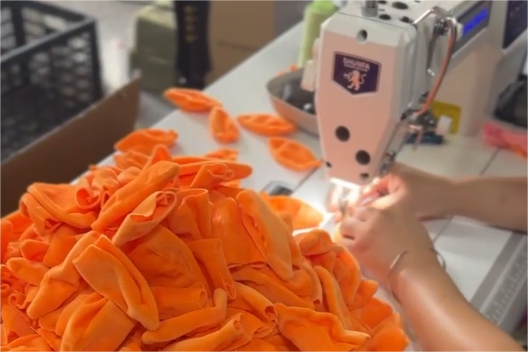
The Five-Step Custom Plush Flower Development Process
A structured process makes sample revisions easier to manage and creates a clearer reference for production.
Step 1: Concept and Reference Review
The project normally begins with a flower photograph, drawing, rendering, mood board, or existing product concept.
Useful information includes:
Intended use
Target dimensions
Preferred colors
Estimated quantity
Logo requirements
Packaging direction
Target price range
Required delivery date
A flower developed for a retail display may need a different size and presentation from one created for a premium gift box or an event giveaway.
The most important project priority should also be identified early. It may be an accurate brand color, a particular flower shape, a compact package, or a fixed launch date.
Step 2: Design Development
The flower’s most recognizable features are translated into a soft product design.
This stage considers the overall silhouette, flower-head proportion, petal arrangement, leaf position, stem length, balance, visual style, and branding position.
Natural flowers often contain more detail than a textile product can reproduce clearly. Design development determines which elements should remain prominent and which can be simplified.
Production feasibility should be reviewed at the same time. An attractive illustration is a starting point, but the design must also be suitable for sampling and repeated production.
Step 3: Material, Color, and Branding Selection
Once the design direction is clear, the main materials and brand details can be selected.
The project usually confirms:
Fabric type and surface texture
Main and secondary colors
Desired softness or firmness
Whether certain areas need filling
Label method
Logo position
Decorative accessories
Initial packaging direction
Not every plush flower needs the same filling approach. Some flower heads require more volume. Other designs look better with flatter, layered components.
These decisions are best evaluated through a physical sample.
Step 4: Sampling and Revision
The first sample shows how the design, fabric, color, shape, and branding work together.
The main review points are:
Overall flower shape
Flower-head and stem proportions
Fabric texture and color
Product stability
Logo and label presentation
Fit within the planned package
ODM projects may require more adjustment than OEM projects based on a finished specification.
Feedback should be specific. Comments such as “reduce the flower head slightly” or “move the label lower” are easier to apply than a general request to improve the design.
Each agreed change should be recorded before the revised sample is made.
Step 5: Approval and Mass Production
Before production begins, the main product details should be confirmed through an approved sample and written specification.
These usually include:
Final dimensions
Fabric and colors
Product shape
Logo artwork
Label material and position
Accessories
Packaging structure
Quantity by design or color
Production schedule
The approved sample becomes the main visual reference for mass production.
Because several assembly and finishing stages involve handwork, expectations for dimensions, shape, color, label position, and overall presentation should be clearly defined before the order starts.
Why Brand Labels Must Be Confirmed Early
A label may be one of the smallest parts of a plush flower, but it can affect the sampling and production schedule.
The label is normally integrated during assembly. It is not always practical to add or replace it after the flower has been fully completed.
For this reason, the following details should be approved before mass production:
Final logo file
Label dimensions
Label material
Printing, weaving, or embroidery method
Front and back content
Logo colors
Label position
Reading direction
Printed labels often work well for small text, fine lines, detailed artwork, or several colors.
Embroidered labels may suit simple logos, premium gift collections, lifestyle products, and designs that benefit from a more textured finish.
The actual label should be reviewed on the physical sample. A logo that looks balanced on a computer screen may appear too large when placed on a narrow flower stem.
Late changes may require new labels, another sample, or rework. Early approval keeps the development process moving in the correct order.
What to Include in a Custom Plush Flower Brief
A clear brief makes quotation and sample development more efficient.
The following format can be copied into an email:
Flower reference or concept:Intended use:Target size:Estimated quantity:Preferred colors:Logo or label requirements:Packaging direction:Required delivery date:
A target price range can also be useful. It helps determine whether the first sample should prioritize a more detailed flower shape, a premium fabric, customized packaging, or a simpler structure.
Send your project brief to sales@sweetie-group.com for an initial OEM or ODM sampling recommendation.
What Affects MOQ, Cost, and Lead Time?
There is no single MOQ or price that applies to every custom plush flower.
Factor | Typical impact |
Design complexity | More development and assembly time |
Fabric and colors | Special textures or colors may require higher material minimums |
Number of SKUs | More colors or designs require additional material and packing management |
Labels and packaging | Custom labels, boxes, cards, and display units may have separate setup requirements |
Delivery date | A short schedule may limit material, packaging, or production options |
Complexity is not determined by size alone. A small flower with several layered elements may take more development time than a larger flower with a simpler form.
MOQ is also influenced by how the order is divided. A total order spread across six colors is different from the same quantity produced in one color.
Custom packaging may have its own minimum because boxes, sleeves, cards, inserts, and labels are often produced through separate processes.
Lead time should include more than mass production. A complete schedule may cover design development, material selection, sampling, revisions, approval, material preparation, packaging production, manufacturing, and shipping.
Projects connected to a holiday, campaign, store opening, or fixed event date should include enough time for international transportation.
What to Look for in a Custom Plush Flower Manufacturer
A suitable plush flower manufacturer should be able to:
Develop a product from a flower reference, drawing, or original concept
Recommend fabrics, colors, dimensions, and product formats
Produce samples and record revisions clearly
Integrate labels and packaging into the development plan
Translate the approved sample into repeatable bulk production
Communication should also be documented.
Before development begins, confirm what files are required, what the quotation includes, how revisions will be recorded, when the sample is considered approved, and which details can still be changed after approval.
Projects that begin with a real flower or original brand concept require stronger design interpretation than projects based on a completed physical sample. The manufacturer should be able to explain which visual features should be preserved and how the design can be adapted for production.
How We Support Custom Plush Flower Projects
At Sweetie-Gifts, custom plush flowers are handled as complete product development projects rather than simple logo applications.
Our support can include concept review, flower-shape development, fabric and color selection, OEM and ODM sampling, printed or embroidered labels, packaging, and bulk production.
We can develop single stems, bouquets, boxed gifts, retail collections, display sets, and event merchandise. Plush flowers can also be combined with other floral gift formats when a project requires a broader gift set or seasonal collection.
Each project is reviewed according to its flower design, intended use, quantity, target price, branding, packaging, and delivery schedule. The aim is to create a product that is practical to sample, approve, produce, pack, and reorder.

Frequently Asked Questions
Can a plush flower be developed from a real flower photograph?
Yes. A clear photograph can provide the starting point for the flower shape, color, leaves, and overall proportions.
Several images from different angles are helpful, especially when the flower has an unusual center, layered petals, or distinctive leaves. Some details may need to be adapted so the design works well with soft materials.
What is the difference between OEM and ODM plush flowers?
OEM is suitable when the product design, dimensions, colors, branding, and packaging requirements are already relatively complete.
ODM begins earlier. The project may start with a photograph, sketch, brand theme, campaign concept, or target price. The manufacturer then helps develop the product direction before sampling.
What parts of a plush flower can be customized?
Common options include the flower type, shape, size, fabric, color, stem length, leaves, label, hangtag, ribbon, card, gift box, and retail presentation.
These choices should be considered together because changing the flower size may also affect the stem, packaging, display method, and shipping carton.
When should the logo label be approved?
The label should be approved on the physical sample before bulk production.
Since it is integrated during assembly, changing it after production has begun may require new materials, additional sampling, or rework. The artwork, size, colors, method, position, and reading direction should all be confirmed.
What affects MOQ and sampling time?
MOQ and sampling time are influenced by the flower design, material availability, number of colors, quantity per SKU, label method, packaging, and required delivery date.
Projects using available fabrics and simpler packaging are usually easier to organize than those requiring special colors, several small SKUs, or fully customized boxes.
Final Thoughts
Custom plush flowers involve more than selecting a flower shape and adding a logo.
The design, fabric, color, branding, packaging, quantity, and schedule all affect one another. When these decisions are reviewed as one product system, sampling becomes more efficient and the approved design is easier to carry into production.
The best starting point is a concise brief with the flower reference, intended use, preferred size, estimated quantity, branding requirements, packaging direction, and delivery date.
To discuss a custom plush flower collection for retail, gifting, or an upcoming event, email sales@sweetie-group.com.

CEO of Sweetie Group


Comments