


Sourcing Guide: Finding the Right Floral Gift Supplier in China for Your Retail Brand

Updated: Sep 30
Finding a floral gift supplier in China is easy. Finding one that can deliver the right product, at the right quality, in retail-ready packaging, on schedule is much harder.
A sample may look perfect on your desk, but bulk production can tell a very different story. Colors may shift. Handmade details may become inconsistent. A beautiful gift box may not survive parcel shipping. And a low factory quote can quickly lose its appeal once custom packaging, testing, freight, and seasonal lead times are added.
For retail buyers, importers, wholesalers, and e-commerce brands, successful floral gift sourcing is therefore about much more than comparing unit prices. You need to consider the product itself, how reliably it can be produced at scale, how it will travel, how it will sit on a shelf or arrive at a customer’s door, and whether the supplier can support you when demand increases.
This guide walks through the practical decisions I believe buyers should make before placing a floral gift order in China—from choosing the right product category and evaluating suppliers to MOQ, packaging, quality control, compliance, and peak-season production planning.
Step-by-Step Sourcing: Aligning Sales Channels, Categories, and Target Retail Prices
When importing floral gifts from China, start by defining the commercial framework before selecting products or suppliers. Your target retail price, sales channel, expected order volume, packaging requirements, and margin structure will all influence what type of product and manufacturing setup is commercially viable.
A premium specialty retailer, for example, may place greater emphasis on materials, presentation, customization, and packaging details. Marketplace sellers may give more weight to shipping efficiency, packaging dimensions, transit protection, fulfillment fees, and replenishment speed. Mass retailers may prioritize cost consistency, scalable production, packaging compliance, and reliable delivery schedules.
From there, work backward from your target retail price to determine an acceptable landed cost. There is no universal cost-to-retail ratio: the right target depends on your channel margins, freight costs, duties, fulfillment expenses, marketing costs, and expected markdowns or returns.
For example, if a preserved rose arrangement is intended to retail at $49.99 and your target landed cost is $11, the FOB purchase price must leave enough room for international freight, import duties, and other logistics costs. In practice, this may mean targeting an FOB price below the $11 landed-cost ceiling rather than treating the two figures as interchangeable.
Establishing these financial boundaries early helps prevent a common sourcing problem: developing a product that looks commercially attractive but cannot support the required margin once it reaches the final sales channel.

Preserved, Soap, Plush, or Crochet? Selecting the Right Floral Gift Materials
The material of your floral gifts dictates not only the aesthetic appeal but also the shipping costs, storage requirements, and shelf life. Let's look at the four primary categories available when working with specialized manufacturers and custom soap flower suppliers:
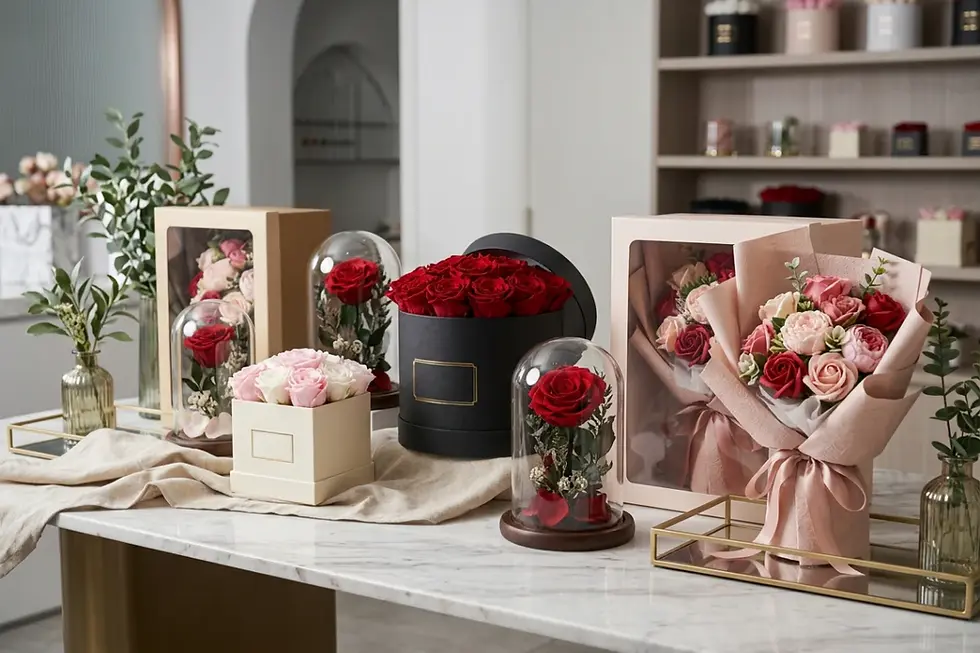
Preserved Flowers: Made from real botanical materials that have been processed to maintain their appearance for an extended period, preserved flowers are often positioned in the premium floral gift segment. Common formats include rose boxes, glass domes, bouquets, jewelry boxes, and table arrangements. Because the flowers remain natural materials, buyers should pay attention to color variation, humidity, heat, direct sunlight, product fixation, and packaging structure during storage and transport.
Soap Flowers: These are artificial decorative flowers made from a formulated soap-based material. They are commonly used in bouquets, gift boxes, promotional gifts, and retail displays. Sweetie’s soap flowers are made for gifting and decoration—not for bathing, washing, skincare, or personal cleansing. When sourcing in bulk, buyers should check color consistency, flower-head shape, fragrance requirements, assembly quality, and packaging protection.
Plush Flowers: Made from textile and plush materials, these products work well for gift shops, lifestyle retailers, events, display programs, and social-media-driven collections. Buyers should pay attention to fabric quality, stitching, filling, flower shape, color consistency, and packing volume.
Crochet Flowers: Crochet flowers use yarn and crocheted structures to create a softer, handmade look. They are suitable for bouquets, single stems, gift boxes, and customized collections. Because manual work is involved, buyers should confirm acceptable tolerances for size, shape, stitching, and color before bulk production.
Choosing the right material allows you to build a cohesive collection. Most experienced buyers mix these categories to cover various price points within their seasonal catalog, working with a versatile floral gift supplier in China to keep their product lines fresh and diverse.
Decoding MOQ: How Packaging, Accessories, and Custom Elements Drive Minimums
Many buyers assume that a factory’s MOQ is simply an assembly requirement. In practice, the minimum is often influenced by several parts of the supply chain.
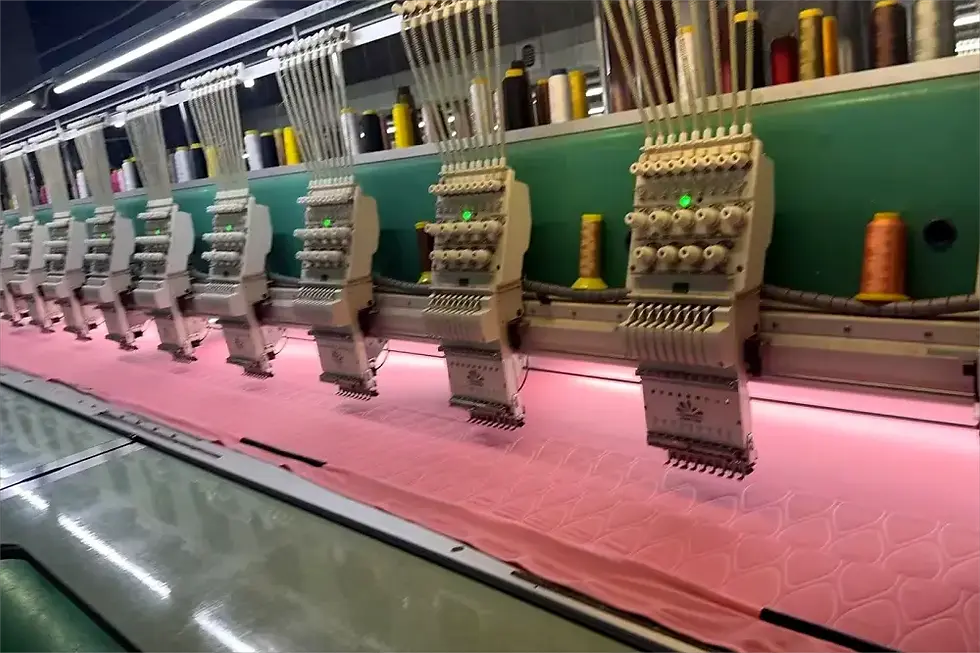
A standard floral gift may support a relatively flexible trial quantity. Once you add custom-printed boxes, specially dyed ribbon, molded acrylic components, branded metal plaques, or other made-to-order accessories, however, the MOQ may increase because each component supplier has its own production minimum.
In some projects, buyers can order a larger batch of customized packaging or accessories and use them across several production runs. This can reduce the MOQ for each finished-product shipment, but storage terms, artwork version control, remaining inventory, and future production plans should be agreed with the supplier in advance.
Packaging Strategies: Retail Display Packaging vs. E-Commerce Shipping Packaging
Retail display packaging and e-commerce shipping packaging solve different problems.
Retail packaging focuses on presentation, shelf visibility, branding, and the customer’s unboxing experience. Depending on the product, this may include paper gift boxes, clear PVC or PET packaging, acrylic displays, windows, sleeves, ribbons, or branded printing.
E-commerce packaging needs an additional layer of structural protection. There is no single packaging method that works for every floral gift. For example, a lidded flower box may be placed inside an individual protective carton with cushioning before going into the master carton. An open-top arrangement needs enough clearance so the flower heads cannot touch the walls or top of the protective box. Glass-dome products require additional fixation and shock protection to reduce movement and breakage.
At Sweetie, we also develop e-commerce packaging structures that use stronger protective cartons and internal supports to keep the product away from the outer packaging while controlling unnecessary packing volume. The right solution depends on the product shape, sales channel, shipping method, and acceptable shipping cost.
For e-commerce or retailer programs with formal transit-testing requirements, confirm the required test method with the buyer or logistics partner before bulk production. If an ISTA procedure or other drop/vibration test is required, the final product and shipping package should be tested in the agreed configuration.
How to Evaluate a Supplier (With a Practical Verification Checklist)
Selecting a manufacturing partner requires looking beyond attractive catalog photos. You need to verify their operational capacity, quality management systems, and communication efficiency. Use the following checklist when evaluating potential partners:
Evaluation Metric | What to Verify | Red Flags to Watch For |
|---|---|---|
Factory Specialization | Does the factory specialize in your specific material (e.g., wholesale preserved flowers China or soap flowers)? | Factories trying to produce everything without deep expertise in any single material. |
In-House Quality Control | Do they have a dedicated QC team at key stages (incoming raw materials, assembly, final packaging)? | Vague answers about inspection protocols or shifting QC responsibility onto workers. |
Raw Material Traceability | Can the supplier provide relevant material information and trace key raw materials or components when required? | Vague material information, inconsistent batches, or an inability to explain where key components come from. |
Customization (OEM/ODM) | Can they support the type of customization you actually need—such as colors, floral structure, packaging, printed branding, accessories, or custom components? | High resistance to modifying standard designs or slow sample turnaround times. |
Communication & Response | Do they provide clear, English-speaking account managers who understand technical specs? | Delayed replies, ignoring specific engineering questions, or over-promising on unfeasible requests. |
Working with a Chinese floral gift manufacturer that ticks all of these boxes ensures a smoother production process and minimizes the likelihood of costly manufacturing delays.
Mitigating Risks: Ensuring Consistency Between Pre-Production Samples and Bulk Cargo
A common risk in importing decorative goods is "golden sample" syndrome—where the hand-crafted pre-production sample is flawless, but the mass-produced bulk cargo suffers from inconsistent coloring, weak glue joints, or sloppy assembly. When sourcing from custom soap flower suppliers, you may also run into scent variations or color bleeding between petals if the chemical mixture is not controlled.
To mitigate this risk, never approve production based on a single sample. Before mass production, confirm a reference or pre-production sample made with the intended materials, colors, components, and packaging wherever practical. The goal is to establish a clear production standard before the full order is assembled.
Furthermore, draw up a clear Product Specification Sheet (PSS) that details acceptable tolerances for flower diameter, approved color references or tolerance ranges (using Pantone references where appropriate), glue visibility, and packaging alignment. This document should be signed by both parties and serve as the basis for any third-party quality inspections before the goods leave the factory floor in China.
Timing & Compliance: Managing Peak Season Production Schedules and Regional Certifications
The floral gift industry is highly seasonal, with demand concentrated heavily around Valentine's Day, Mother's Day, and the winter holidays. This seasonality creates intense pressure on manufacturing schedules. Factories in China typically book out months in advance of these holidays, and the weeks leading up to the Chinese New Year can bring severe labor shortages and shipping congestion. To guarantee on-time delivery, secure your production space with your factory partner at least 4 to 5 months before your peak selling season.
Compliance and documentation requirements should be confirmed by product and destination market rather than treated as one universal checklist.
A preserved botanical product, a decorative soap flower bouquet, a plush flower, and a floral gift containing an electronic or toy component may fall under very different requirements. Buyers should confirm the intended use, materials, age positioning, labeling, product configuration, and destination market before deciding what testing or documentation is needed.
For botanical products, phytosanitary documentation may be relevant when the shipment falls within the importing country’s plant-health requirements. For products sold into the EU, CE marking applies only to product categories covered by the relevant EU harmonization legislation; it is not a general certificate for every floral gift. Other material, chemical, labeling, or safety documentation may also be requested depending on the product and buyer.
The practical approach is simple: send the supplier your exact SKU, destination market, sales channel, and importer requirements early in the project, then confirm the applicable documents before production.
How Sweetie AI Can Help You Start Your Floral Gift Sourcing Project
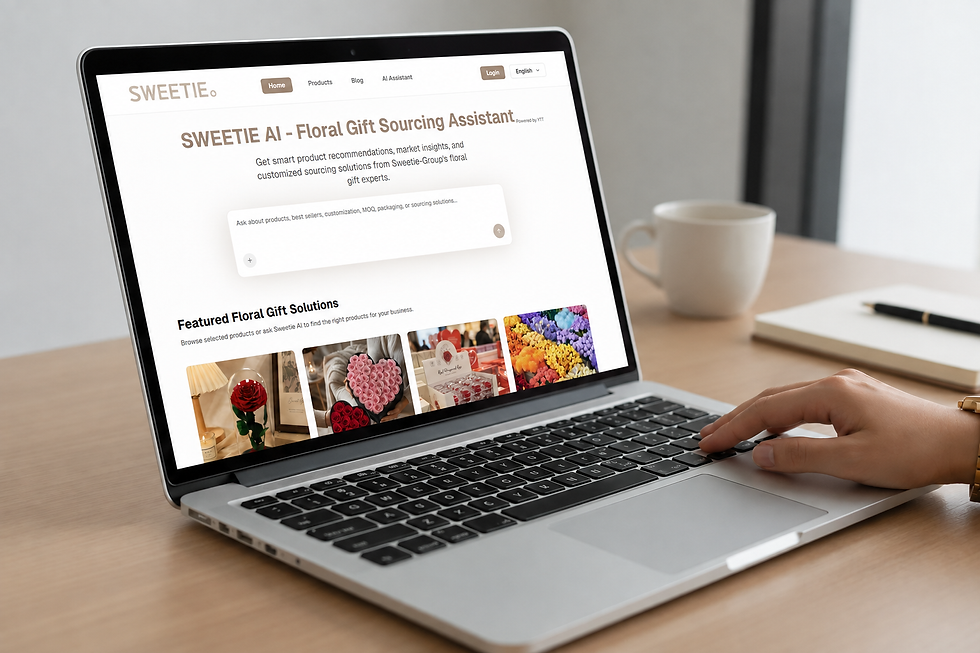
Sourcing floral gifts can feel overwhelming with so many moving parts, which is why we built Sweetie AI, an interactive tool designed to simplify your initial exploration and collection planning.
Instead of spending weeks sorting through hundreds of mismatched supplier catalogs, you can use the Sweetie AI tool to brainstorm and refine your product direction. By simply inputting your target market, sales channel, retail price points, and aesthetic preferences, the AI processes your criteria to provide curated design directions, tailored packaging recommendations, and actionable sourcing suggestions. It acts as an intelligent starting point for your collection planning, helping you narrow down your choices before physical development begins.
For example, you might tell Sweetie AI:
“We are a boutique U.S. gift retailer planning a Mother’s Day collection with a target retail range of $19.99–$29.99.”
Sweetie AI can use that information to help you explore suitable product directions, collection ideas, packaging approaches, and sourcing considerations. It may suggest, for example, a compact decorative soap flower gift, a small preserved flower format, or a crochet flower arrangement worth exploring.
Sweetie AI is an early-stage sourcing and planning tool, not an automated quotation or production approval system. Final product feasibility, exact pricing, MOQ, materials, compliance requirements, packaging specifications, samples, and production schedules are confirmed by Sweetie’s sales, R&D, and manufacturing teams.
Once you identify a direction you like, our team can move the project into physical development, sampling, quotation, and production planning.
Conclusion: Launch Your Sourcing Journey with Sweetie Group
Sourcing floral gifts from China becomes much easier when the commercial decisions are made in the right order. Start with your market, sales channel, target price, and product format. Then evaluate MOQ, packaging, quality control, production timing, and applicable documentation before committing to bulk production.
At Sweetie, we combine floral gift manufacturing, product development, packaging experience, supply-chain coordination, and digital sourcing tools to help B2B buyers move from an initial idea to a production-ready project.
Planning a floral gift sourcing project? Send your target market, sales channel, target retail price, quantity, launch date, and customization requirements to sales@sweetie-group.com for a practical sourcing recommendation.

FAQ
What is the typical lead time when importing floral gifts from China?
There is no single lead time for all floral gifts. A standard product using existing packaging may move much faster than a fully customized gift that requires new packaging, accessories, sampling, testing, and approval. For seasonal programs, calculate the timeline from your required arrival date and include sampling, production, inspection, international freight, customs clearance, and a reasonable buffer. Peak seasons and the period around Chinese New Year usually require earlier planning.
How should preserved flower gifts be packed for international shipping?
Packaging should match the structure of the finished product. A covered flower box can usually be protected with an individual protective carton, cushioning where needed, and an outer shipping carton. Open arrangements need additional spacing or supports so the flower heads do not contact the packaging walls. Glass-dome products require stronger fixation and shock protection because both the botanical materials and the glass structure need protection.
At Sweetie, we do not routinely add moisture-control bags to every preserved flower package. The packaging solution is selected according to the product format, shipping method, and sales channel. For e-commerce projects, we can also develop additional internal supports and stronger protective cartons to reduce movement and shipping damage.
Can soap flower gifts be customized with different colors, fragrances, and designs?
Yes. Decorative soap flower gifts can be customized in areas such as color combinations, bouquet structure, accessories, gift packaging, branding, and—in suitable projects—fragrance options. Requirements involving new flower-head structures, special formulations, or highly customized components may affect sampling time and MOQ, so feasibility should be confirmed before bulk production.


Comments