Cotton vs Acrylic Yarn for Wholesale Crochet Flowers: Sourcing Guide

For wholesale crochet flowers, combed cotton delivers a premium matte texture, crisp stitch definition, and natural weight ideal for high-end gifting, while acrylic provides lightweight cost efficiency and vibrant saturation for mass retail. For most commercial buyers, a cotton-acrylic blend (60/40 or 50/50) offers the optimal balance of petal rigidity, structural durability, and healthy gross margins.
What are the primary differences between cotton, acrylic, and blended yarns in commercial crochet flower production?
Selecting the right yarn fiber determines both the sensory appeal on retail shelves and the total landed cost of your inventory. Commercial crochet flower materials fall into three primary categories, each presenting distinct physical properties, processing requirements, and commercial cost profiles:
Combed Cotton (4-ply or 5-ply): Characterized by high tensile strength, minimal surface fuzz, and a structured, matte hand-feel. Cotton provides substantial weight and sharp stitch delineation, making intricate floral patterns—such as open-petal roses, calla lilies, and micro-succulents—look clean, crisp, and realistic.
High-Bulk Acrylic: Produced from synthetic polyacrylonitrile fibers, acrylic mimics wool-like softness at a fraction of the cost. It takes disperse dyes exceptionally well, resulting in vivid jewel tones and pastel hues. However, acrylic yarn exhibits slight surface halo (fuzziness) and lower structural rigidity under ambient humidity or handling.
Cotton-Acrylic Blends (Milk Cotton / 50-50 & 60-40 Blends): Engineered specifically for commercial craft production, blends combine the breathability and structural integrity of cotton with the elastic recovery, colorfastness, and lightweight bulk of acrylic. Blends resist crushing during transit while keeping raw material expenses manageable.
Fiber Type | Surface Finish | Petal Rigidity | Weight per Stem (Avg.) | Color Saturation | Raw Material Cost Tier |
|---|---|---|---|---|---|
100% Combed Cotton | Natural matte, crisp | High (holds tight tension) | 28g – 42g | Deep, natural, muted tones | Premium ($$$) |
100% High-Bulk Acrylic | Soft, subtle luster/halo | Moderate to Low (soft hand) | 16g – 24g | Bright, high-vibrancy | Budget ($) |
Cotton-Acrylic Blend | Smooth, semi-matte | High (springy recovery) | 22g – 32g | Rich, balanced tones | Mid-Range ($$) |

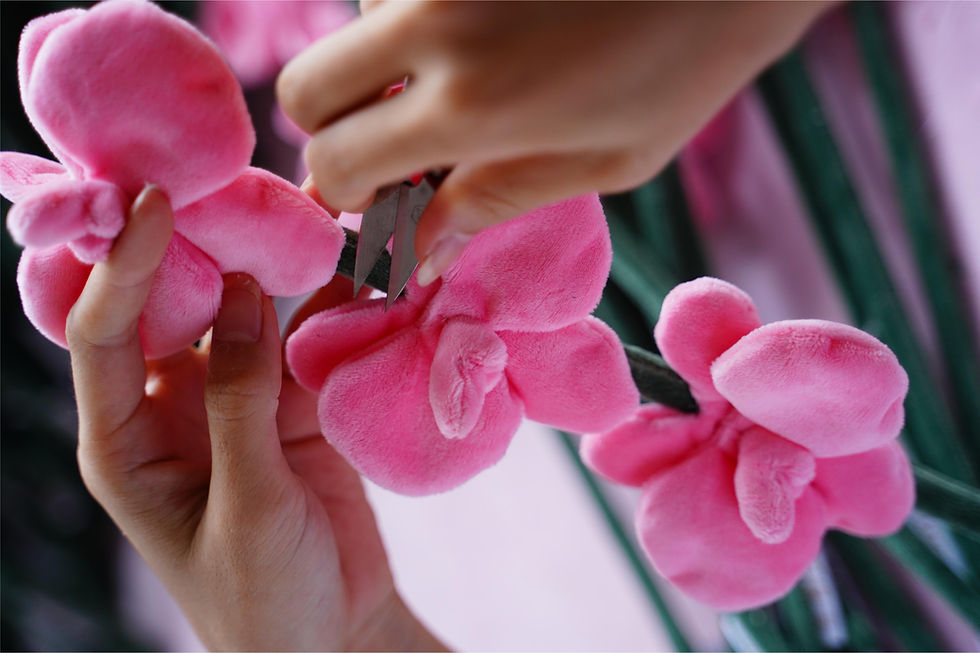
Macro stitch comparison: Cotton provides crisp structural definition, while acrylic yields a softer, fuzzier hand.
How do petal rigidity, stitch definition, and shelf longevity compare across different yarn types?
Petal architecture relies heavily on yarn elasticity and stitch retention. When conducting a crochet yarn comparison for retail, merchandising managers must evaluate how blooms hold up under store lighting, handling, and long-term shelf display.
Petal Rigidity and Dimensional Stability
Pure cotton yarn lacks natural elasticity, which means once an artisan works a tight crochet gauge, the petal holds its designed contour without sagging. This makes cotton the premier choice for broad-petal botanical specimens like sunflowers, peonies, and tulips. In contrast, 100% acrylic yields a softer drape; wide petals may droop over time unless reinforced with higher-gauge internal copper wire or industrial fabric stiffening sprays. Blended yarns provide a resilient structural compromise, offering spring-back elasticity that recovers well after packaging compression.
Stitch Definition and Macro Aesthetics
Stitch definition dictates perceived craftsmanship. Combed cotton yarn yields tightly spun plies with zero fuzz, allowing retail consumers to observe every single crochet pass, chain stitch, and picot edge clearly. Acrylic fibers have micro-filaments that loosen over time, creating a softer "plush" aesthetic that works well for miniature buds, lavender stalks, or novelty pom-pom accents, but softens the crisp borders of complex blossoms.
Resistance to Pilling, Sun Fading, and Dust Accumulation
Commercial display conditions expose faux botanicals to ambient dust, fluorescent lighting, and customer touch:
Dust & Static: Synthetic acrylic fibers carry an electrostatic charge that attracts ambient airborne dust, necessitating frequent dusting on retail shelves. Cotton possesses neutral static resistance, keeping surfaces cleaner over prolonged showroom display periods.
Lightfastness: Acrylic exhibits superior UV resistance, holding its vibrant dye formulation against sun exposure in window displays. Unmercerized cotton can gradually fade if exposed to direct sunlight over 12 to 18 months.
Friction & Pilling: In high-traffic retail environments where consumers frequently handle sample stems, acrylic develops minor pilling along high-contact petal tips. Cotton maintains surface clarity without fuzzing.
If you are planning a seasonal product line and require tactile verification of petal stiffness and yarn gauge, contact our export consulting team at sales@sweetie-group.com to request physical yarn swatch cards and commercial production samples.
How do yarn choices impact unit pricing, shipping freight, and retail margins in bulk sourcing?
Sourcing decisions require balancing unit manufacturing expenses with volumetric freight calculations. When managing wholesale crochet floral sourcing, yarn composition directly influences three financial variables: raw material purchase price, artisan labor production speed, and global logistics weight.
Raw Material and Labor Assembly Economics
Raw combed cotton yarn costs approximately 35% to 55% more per kilogram than standard bulk acrylic yarn. Additionally, cotton requires strict tension control from artisans; its lack of stretch demands consistent hand tension to prevent gauge variation, resulting in slightly longer production cycle times per stem. Acrylic's higher elasticity permits faster manual crocheting, lowering both material and labor costs per unit.
Freight Density and Landed Cost Dynamics
Crochet flowers represent volumetric cargo where dimensional weight frequently competes with actual gross weight. Because acrylic stems weigh approximately 30% to 40% less than identical cotton stems, air freight and express courier costs drop significantly. For ocean freight (FCL/LCL), dense cotton bouquets pack firmly, but acrylic's natural compressibility allows tighter inner-box nesting without permanent creasing, yielding freight savings across high-volume container shipments.
Retail Gross Margin Alignment
Mass Retail & Promotional Bins: Acrylic-based floral stems enable low unit retail price points ($3.99 – $7.99 MSRP) while maintaining gross retail margins above 60%.
Specialty Gift Boutiques & Florists: 100% cotton and high-grade cotton blends support premium positioning ($12.00 – $24.00 MSRP per stem or $45.00+ per curated bouquet), accommodating higher wholesale acquisition costs while delivering substantial cash margin per transaction.
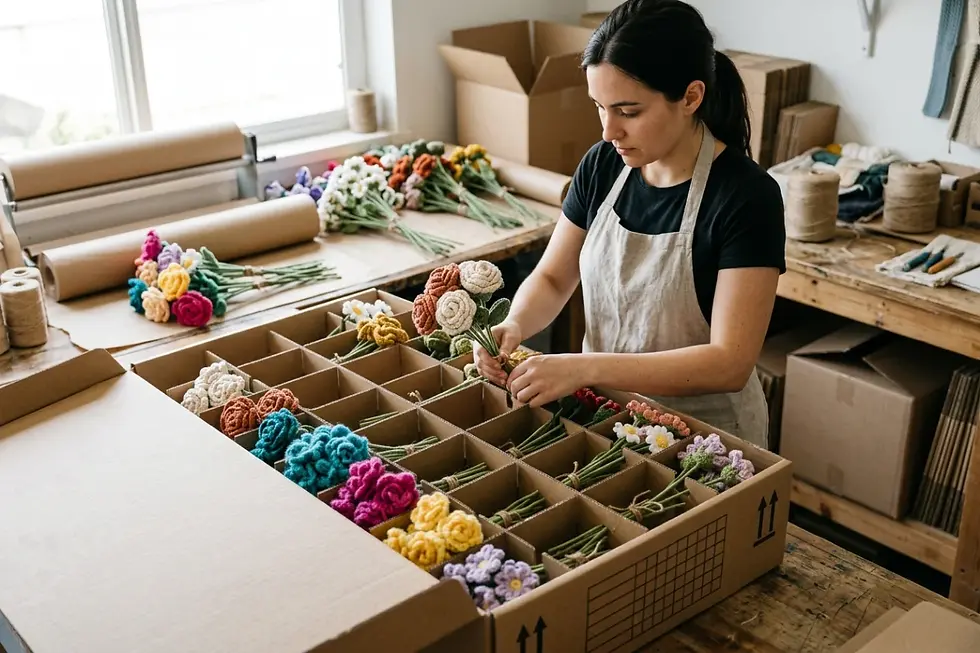
Rigid packaging and internal stem dividers prevent petal crushing and deformation during ocean and air freight.
Which yarn should buyers select based on sales channels, gifting occasions, and target regional markets?
Commercial success depends on aligning yarn selection with regional consumer sensibilities and end-use gifting contexts.
Regional Market Preferences
North America & Western Europe: Buyers in these territories place high value on natural, organic textures, sustainable materials, and matte finishes. Pure cotton and certified cotton blends perform strongly in home decor departments, lifestyle concept stores, and wedding floral registries.
East Asia & Japan: Sourcing buyers prioritize micro-level craftsmanship, consistent gauge uniformity, and refined miniature aesthetics. Blended milk cotton yarns with ultra-soft hand feel and zero structural defects dominate Japanese lifestyle retail.
Latin America & Middle East: Retailers favor high-contrast palettes, vibrant color saturation, and decorative longevity. Blended yarns and high-grade acrylics that maintain saturated hues across long retail cycles are primary choices.
Channel Application Matrix
Department Stores & Botanical Lifestyle Brands: Choose 100% Combed Cotton. The refined hand feel justifies premium gift-box packaging, Valentine's Day collections, and upscale interior styling ranges.
Supermarket Chains, Bookstores & Impulse Registers: Choose 100% Acrylic or Budget Blends. Lightweight construction facilitates clip-strip displays, impulse display units, and seasonal holiday promotions (e.g., Mother's Day, graduation mini-bouquets).
E-Commerce Subscription Boxes & Floral Hamper Assemblers: Choose 60/40 Cotton-Acrylic Blends. The resilient rebound protects flowers against transit crush during domestic parcel fulfillment, ensuring unboxing presentation matches product photography.
To quickly identify the most profitable yarn specifications and packaging configurations tailored to your specific retail margins and distribution channels, explore our interactive B2B merchandising resource Sweetie AI for streamlined assortment planning.
What quality control standards ensure consistency in mass-produced crochet flowers?
Crochet flowers are entirely handmade; no automated machine can replicate the three-dimensional hook manipulation required for lifelike petals. Consequently, maintaining bulk crochet flower supplier quality requires rigid industrial quality control frameworks across decentralized artisan production clusters.
1. Gauge and Tension Standardization
Discrepancies in artisan hand tension cause petal dimensional variations. Professional manufacturers implement metal gauge templates and strict stitch-count audits per petal layer. A tolerance limit of ±5% in overall flower diameter ensures uniform catalog consistency across production runs of 10,000+ units.
2. Internal Wire Support and Mechanical Fastening
Petal posture depends on internal framing. Export-grade flowers use paper-wrapped or PVC-coated floral wires (typically 24 to 28 gauge for petals, 18 to 20 gauge for primary stems). Quality audits must ensure wire ends are securely looped and hot-melt glued within calyx assemblies, preventing wire tips from puncturing yarn during handling.
3. Humidity Control and Anti-Crush Packaging
Natural cotton absorbs ambient moisture during ocean freight. Industrial export protocols mandate desiccants inside poly-sleeves, anti-mold inner cartons, and rigid structural divider trays. Master cartons should utilize 5-ply double-wall corrugated board (minimum 200# burst test rating) to eliminate vertical compression during transit.

Industrial QC audits verify petal gauge uniformity, internal wire safety, and color consistency across production batches.
What is the optimal sourcing framework for selecting crochet flower materials for your product catalog?
To streamline your procurement process, execute the following four-step sourcing workflow before issuing purchase orders:
Define Price Tier & Retail Channel: Establish target retail MSRP. If retail is below $8.00 per stem, specify high-bulk acrylic or blended yarns; for premium gift packaging above $15.00, specify combed cotton.
Evaluate Flower Geometry: Intricate, upright petals (roses, orchids, callas) demand cotton or reinforced blends. Clustered or small-headed blooms (lavender, daisies, baby's breath) perform well in budget-friendly acrylic.
Audit Freight & Packaging Profiles: For air shipments or compact e-commerce gift boxes, calculate the volumetric savings of blended or acrylic fibers. For ocean container orders, leverage cotton's structural mass.
Order Pre-Production Batch Samples: Review yarn colorfastness under light, seam strength at the calyx, and wire concealment before full-scale manufacturing.
For custom OEM/ODM floral specifications, Pantone yarn color matching, or volume wholesale quotes, submit your project requirements to sales@sweetie-group.com or contact our wholesale sourcing team to receive a full product catalog and sample kit.
FAQ
Why are cotton crochet flowers typically more expensive than acrylic versions?
Cotton crochet flowers cost more due to higher raw agricultural fiber costs, combed processing expenses, and slower manual production. Cotton has minimal elasticity, requiring artisans to maintain strict manual tension, which increases assembly labor time per stem.
Can acrylic crochet flowers be washed or reshaped if crushed during shipping?
Yes. Acrylic fibers possess thermal memory and can be gently reshaped using low-temperature steam (avoiding direct iron contact). However, severe crushing can permanently stretch synthetic stitches, which is why reinforced packaging is essential during bulk shipping.
What is 'milk cotton' yarn and how does it perform in commercial crochet flower production?
In commercial manufacturing, 'milk cotton' typically refers to a high-grade blend of cotton and acrylic (often 60% cotton and 40% acrylic or 50/50). It combines cotton's matte, structured petal definition with acrylic's elasticity and lightweight bulk, making it the industry standard for balanced cost and durability.
How do yarn choices impact customs tariffs and import compliance for floral gifts?
Tariff classifications (HS codes) and duty rates vary by fiber composition (synthetic fibers under Chapter 55 vs. vegetable fibers under Chapter 52/57). Importers should declare precise fiber percentage breakdowns on commercial invoices to ensure accurate tariff rates and smooth customs clearance.