


Top 8 Plush Flower Brands and Creative Projects to Know in 2026

Plush flowers are appearing across premium gift collections, contemporary art projects, licensed character merchandise, emotional gift lines, and personalized retail experiences.
The most visible examples do not follow one formula. Jellycat turns flowers into characters. Takashi Murakami uses a flower as a recognizable art symbol. CJ Hendry builds interactive installations around individual plush stems. Other companies focus on scale, affordability, emotional themes, personalization, or licensed characters.
This article reviews eight influential brands and creative projects. It is not a global sales ranking, since reliable sales figures for the plush flower category are not publicly available. The selections are based on product recognition, originality, market visibility, and relevance to floral gift development.
Top 8 Plush Flower Brands at a Glance
Brand or Project | Best Known For | Market Position | Key Product Direction |
Jellycat | Character flowers and bouquets | Premium gifting | Coordinated character collections |
Takashi Murakami | Smiling flower merchandise | Art collectibles | Recognizable visual identity |
CJ Hendry Flower Market | Interactive plush flower installations | Experiential art retail | Individual stems and event displays |
Squishable | Oversized plush flowers | Lifestyle and novelty gifts | Scale and visual impact |
Palm Pals by Aurora | Small flower characters | Affordable collectibles | Standardized, expandable series |
Relatable | Emotional Support Flowers | Emotional gifting | Clear gifting concept |
Build-A-Bear Workshop | Personalized floral plush gifts | Experiential retail | Accessories and customization |
SMOKO × Miffy | Licensed plush bouquets | Character gifting | Familiar IP in a gift-ready format |
Planning a private label plush flower collection? Share the target market and expected retail price with sales@sweetie-group.com.
1. Jellycat: Turning Flowers Into Premium Gift Characters
Product Direction
Jellycat gives its flowers simple faces, feet, names, and short character stories instead of reproducing them with strict botanical realism.
The Amuseables range includes individual flowers, potted plants, orchids, sunflowers, daisies, rose arrangements, and mixed bouquets. These floral products follow the same visual language as other characters in the wider collection. Jellycat’s official store continues to feature products such as the Amuseables Bouquet of Flowers and Rose Bouquet.
Why It Stands Out
The range is consistent across facial embroidery, proportions, materials, naming, photography, and written descriptions. A flower bouquet therefore feels like part of the Jellycat character world rather than a separate seasonal product.
The company also uses several formats within the same theme. Individual flowers, flower pots, and bouquets can be displayed together while remaining complete products on their own.
The key lesson is the value of a coordinated collection. Several related flower types and formats provide more merchandising flexibility than one isolated design. Premium positioning is also supported by the full presentation, including material quality, labeling, photography, and storytelling.

2. Takashi Murakami: Building Value Through a Recognizable Flower Icon
Product Direction
Takashi Murakami’s smiling flower has appeared across paintings, sculptures, prints, fashion collaborations, cushions, soft merchandise, and public installations.
The image uses rounded petals, a circular face, bright colors, and a broad smile. Its simple structure remains recognizable when applied to different products, sizes, and materials. The flower has become one of the recurring motifs associated with Murakami’s work and commercial collaborations.
Why It Stands Out
The flower has been used consistently across art, exhibitions, fashion, and merchandise. Its identity remains clear even when the colors or product format change.
The commercial value is closely connected to the artist and the wider body of work behind the design. This separates Murakami flower cushions and soft merchandise from conventional floral gifts.
The example shows that a strong visual identity does not need many details. Simple forms are often easier to reproduce across categories, but simplicity must be supported by originality and consistent use.
It also highlights the importance of intellectual property. Recognizable artist motifs and signature flower designs should not be reproduced without permission.
3. CJ Hendry Flower Market: Making Plush Flowers Part of an Experience
Product Direction
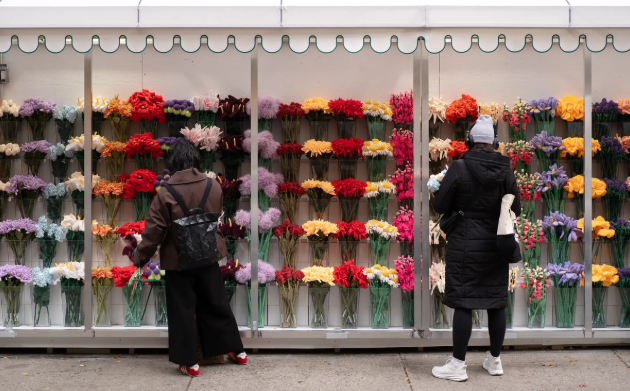
CJ Hendry’s Flower Market is an interactive art project built around large quantities of individual plush flower stems.
The first Flower Market was presented in New York in 2024, followed by later editions in other locations. Instead of displaying only finished bouquets, the project allows visitors to select individual flower varieties from large installations.
The concept has continued to attract attention through its temporary format, extensive flower selection, and large-scale presentation. Recent editions have also generated strong demand and active resale markets.
Why It Stands Out
The product and the environment are designed together. Large groups of flowers create visual impact, while the individual stems allow different arrangements to be assembled.
The display, selection process, and finished bouquet each become part of the event. This makes the concept suitable for exhibitions, temporary stores, brand activations, and promotional projects.
The individual-stem format is especially versatile. The same flower can be sold separately, combined into a custom bouquet, or used as an event gift.
For large installations, the stems must also remain attractive when displayed in quantity, handled repeatedly, and mixed with different flower types.
4. Squishable: Using Scale and Humor to Stand Out
Product Direction
Squishable changes the proportions of familiar flowers. Its rose products use oversized flower heads and long soft stems, turning a single flower into a complete plush gift.
The company currently offers several flower designs, including red and black roses. The same general format can therefore support different colors and visual themes without requiring a completely different product structure.
Why It Stands Out
The scale gives the product immediate visual impact. It also separates the design from smaller flower characters and conventional fabric bouquets.
Squishable supports the format with informal names and playful descriptions. The overall presentation feels closer to a lifestyle plush product than a traditional romantic flower gift.
An individual stem can work as a complete item when its proportions and presentation are strong enough. At the same time, oversized products need careful dimensional planning. Stem length, flower-head volume, packaging, display space, and shipping efficiency all affect commercial feasibility.
Need help turning a flower concept into a workable sample and packaging format? Contact sales@sweetie-group.com.
5. Palm Pals by Aurora: Making Flowers Affordable and Collectible
Product Direction
Palm Pals uses a compact, rounded format across animals, food, plants, flowers, and other characters.
Fallon Flower follows the same basic construction as the rest of the collection, with a small bean-filled body, flower-shaped top, and embroidered face. Aurora’s official store presents the character as part of the wider Palm Pals range rather than as a separate floral line.
Why It Stands Out
A consistent size and structure make the collection easy to expand. Flower characters can be displayed beside food and animal characters while maintaining a clear family resemblance.
The compact format is suitable for gift shops, collectible displays, checkout areas, and smaller add-on products. It also simplifies photography, packaging, shelf planning, and repeat production.
Palm Pals shows how standardization can support range development. A shared body shape and construction reduce unnecessary variation while leaving room for different colors, faces, names, and themes.
The individual flower is not expected to carry the entire category. Its strength comes from belonging to a wider collectible system.
6. Relatable: Giving Plush Flowers a Clear Emotional Purpose
Product Direction
Relatable’s Emotional Support Flowers are presented as a group of soft floral characters with different expressions.
The main concept is stated directly in the product name. The flowers are positioned as supportive gifts rather than detailed reproductions of specific botanical varieties.
The set remains part of Relatable’s larger Emotional Support Pals collection, which applies a similar group format to food, animals, and other subjects. The official site currently lists Emotional Support Flowers as a set of soft floral buds.
Why It Stands Out
The product has a clearly defined gifting purpose. That concept guides the expressions, colors, product name, packaging copy, and overall presentation.
Grouping several flowers together also creates a stronger visual product than one small character. Different facial details add variation without weakening the shared theme.
This approach shows how a specific message can support year-round gifting. Encouragement, gratitude, friendship, recovery, and teacher appreciation are not limited to one holiday.
A focused concept is usually more distinctive than broad claims about happiness, love, or comfort.
7. Build-A-Bear Workshop: Adding Personalization to Floral Gifts
Product Direction
Build-A-Bear approaches floral gifting through plush characters, flower accessories, flower pots, clothing, and other customization options.
Its Plants & Flowers category includes floral plush products and accessories that can be combined with existing characters. Current examples include a mini flower pot plush, bouquet wrist accessories, rose-themed products, and flower accessories that attach to a bear’s paw or ear.
Why It Stands Out
The company does not need to create a completely new main character for every floral occasion. Instead, flowers and accessories adjust the meaning and presentation of the base product.
This model supports several price levels. A flower accessory can be purchased separately, while a more complete gift can include a plush character, clothing, and floral elements.
Build-A-Bear shows that personalization does not always require an entirely new product structure. Gift messages, colors, removable accessories, and packaging can provide meaningful variation while keeping the core product manageable.
The options still need to be organized clearly so that production, display, and fulfillment remain practical.
8. SMOKO × Miffy: Combining Licensed Characters With Gift-Ready Bouquets
Product Direction
SMOKO’s Miffy Tulip Plush Bouquet combines the familiar Miffy character with soft tulip elements in a coordinated arrangement.
The character, flowers, wrapping, and proportions are planned as one product rather than assembled from unrelated items. The official product description emphasizes Miffy’s recognizable simplicity and the bouquet’s soft tulip details.
Why It Stands Out
Miffy provides a clear visual identity, while the tulip arrangement adds an obvious floral gifting context.
The complete bouquet format also makes the product ready for retail presentation. No separate flower selection or additional wrapping is required.
This example shows how licensed characters can be incorporated into a floral gift without weakening the original character identity. However, licensed projects must follow the intellectual property owner’s requirements for proportions, colors, labels, packaging, and marketing materials.
For projects without licensed assets, an original character system is the more appropriate route. Consistent use of the same flower face, proportions, and color language can build recognition over time.
What These Eight Examples Show
These brands and projects use different methods, but several product directions appear repeatedly.
A strong plush flower usually has a clear identity. That identity may come from a character face, artist motif, emotional concept, unusual scale, personalized format, or licensed figure.
Many of the products also belong to a broader system. Jellycat connects flowers to its Amuseables collection. Palm Pals uses a standardized character format. Build-A-Bear adds floral elements to an established customization model. This makes new products easier to develop without rebuilding the concept from the beginning.
Presentation also changes the role of the product. Individual stems, finished bouquets, flower pots, oversized blooms, cushions, and event installations each serve different retail purposes.
The category can therefore support several price positions. Small collectibles, emotional gift sets, premium bouquets, licensed merchandise, and artist products can coexist, but each requires a suitable combination of design, materials, packaging, and brand positioning.
From Market References to Original Product Development
Established brands provide useful references, but an original collection needs its own design language and product logic.
At Sweetie-Gifts, we develop custom plush flower products for retailers, importers, gift companies, e-commerce brands, and product development teams. Available formats include individual stems, bouquets, flower pots, gift boxes, display sets, blind boxes, and seasonal collections.
Development can cover flower types, proportions, facial details, fabrics, colors, stem structures, labels, and packaging. We also support concept development, 3D modeling, sampling, packaging design, and mass production through our OEM and ODM services.
The objective is not to reproduce an established bestseller. Our role is to turn a clear commercial direction into an original, manufacturable collection with consistent presentation across sampling, bulk production, and repeat orders.
For a custom plush flower project, send the concept, reference images, or product brief to sales@sweetie-group.com.

Frequently Asked Questions
Which plush flower brands are the most recognizable?
Recognizable names and projects include Jellycat, Takashi Murakami, CJ Hendry Flower Market, Squishable, Palm Pals by Aurora, Relatable, Build-A-Bear Workshop, and SMOKO × Miffy.
They represent different parts of the category, including premium plush, artist merchandise, interactive art, emotional gifts, collectibles, personalization, and licensed character products.
Why are Jellycat plush flowers widely recognized?
Jellycat uses consistent materials, facial expressions, proportions, naming, product stories, and photography across its Amuseables collection.
Its flower products fit naturally into an established character system rather than appearing as isolated seasonal gifts. The availability of individual flowers, pots, and bouquets also supports broader collection development.
Can plush flowers be sold throughout the year?
Yes. Valentine’s Day, Mother’s Day, graduation, and Christmas are important seasonal opportunities, but plush flowers can also be developed for birthdays, friendship gifts, encouragement, teacher appreciation, events, decoration, and collectible ranges.
A year-round assortment can use a stable core collection supported by seasonal colors, packaging, and limited flower varieties.
Can a retailer develop an original plush flower collection?
Yes. A custom range can include original flower types, colors, faces, sizes, bouquet combinations, labels, gift messages, and packaging.
Before sampling begins, the project should define the intended channel, product format, target retail price, market, quantity, and compliance requirements. These details help align design decisions with production and retail needs.
Annie Zhang
CEO of Sweetie Group


Comments