


Plush Flower Manufacturer vs. Plush Toy Factory: Which Supplier Is Right for Your Project?

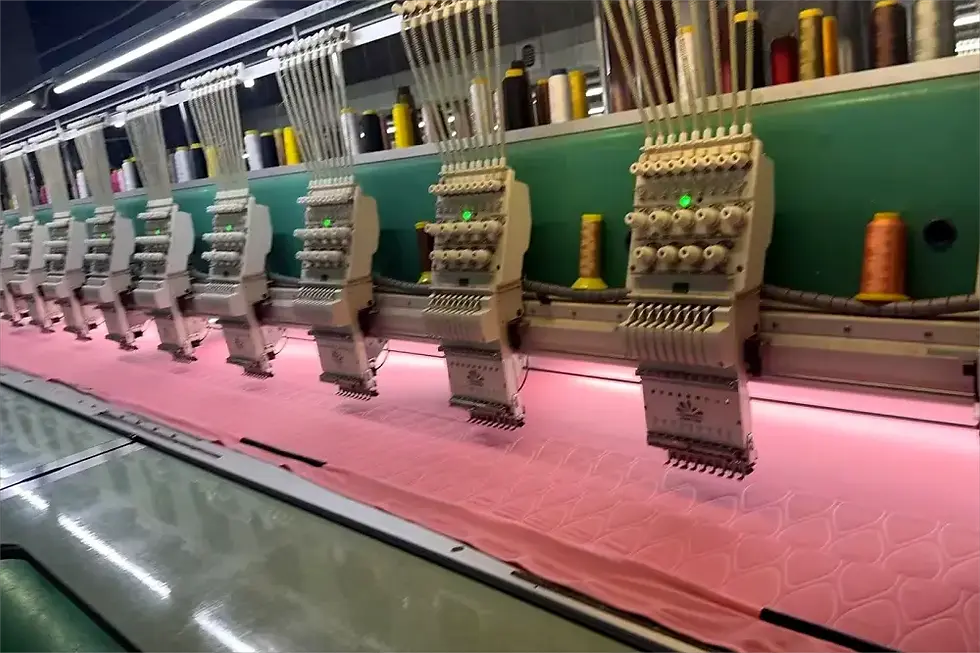
Plush flowers and traditional plush toys share several manufacturing skills, including pattern development, fabric cutting, sewing, embroidery, printing, and hand finishing. However, they are not built around the same product structure.
Traditional plush toys are usually developed as sewn and stuffed three-dimensional forms. Many single-stem plush flowers are assembled from separate floral components whose final appearance depends on material behavior, proportion, structural support, and careful hand assembly.
This difference affects product development, quality control, packaging, and mass-production consistency.
Choosing between a plush flower manufacturer and a traditional plush toy factory should therefore be based on relevant capabilities, not simply on the factory name.
Which Supplier Is Right for a Plush Flower Project?
Neither type of factory is automatically the better choice.
A traditional plush toy factory may have strong capabilities in textile pattern development, sewing, embroidery, stuffing, and complex three-dimensional construction. A plush flower manufacturer is more likely to have experience with flower shapes, layered textile components, structured stems, detailed assembly, product collections, and packaging that protects the flower’s display appearance.
The right supplier is the one that can develop a production-ready sample, control materials and workmanship, support the required customization, and reproduce the approved result consistently during mass production.
Plush Flowers vs. Traditional Plush Toys: Four Key Manufacturing Differences
Both products require textile manufacturing expertise, but that expertise is applied in different ways.
Area | Plush Flowers | Traditional Plush Toys |
Product structure | Often assembled from separate flower heads, petals, leaves, stems, and supporting components | Usually formed as a sewn and stuffed three-dimensional body |
How shape is created | Depends on component shape, material behavior, layering, structural support, and hand assembly | Depends heavily on pattern engineering, stitching, and controlled stuffing |
Quality priorities | Flower silhouette, component positioning, stem stability, clean assembly, and consistency across the collection | Body proportions, symmetry, stuffing balance, seams, facial details, and attached parts |
Packaging priorities | Preventing crushed flower heads, disturbed petals, bent stems, and poor display appearance | Protecting the stuffed form, seams, accessories, and recovery after compression |
The difference is not that one product is simpler than the other. Each requires a different type of structural control.
A traditional plush toy often gains its volume and shape from a sewn outer shell and carefully distributed filling. A plush flower depends more on how its individual components work together.
This also changes how quality is judged. A plush toy may be securely sewn but still fail inspection if its face or body proportions are uneven. A plush flower may be firmly assembled but still look wrong if its petals, leaves, stem, and flower head do not match the approved shape.
Developing a new plush flower design? Send your artwork or reference images to sales@sweetie-group.com for an initial project review.
Five Capabilities to Check Before Choosing a Supplier
1. Relevant Product Development Experience
General plush manufacturing experience provides a useful foundation, but it does not prove that a supplier can manage every plush flower project.
Ask to see products with a similar structure, material, size, or level of detail. An existing sample does not need to match the new design exactly. It should demonstrate that the development team understands how floral textile components behave when they are assembled into a finished product.
For an original design, branded collection, promotional item, or IP collaboration, the supplier should also be able to convert visual artwork into a practical physical sample.
This often requires adjustments. A design that looks attractive on paper may need changes to suit the selected fabric, construction method, packaging, production process, and target cost.
A qualified development team should be able to explain those changes rather than simply producing a sample without discussing why certain decisions were made.
The final goal is not one attractive prototype. It is a design that can be repeated efficiently and consistently.
2. Sample Quality and Mass-Production Repeatability
A polished sample is important, but one good sample does not prove that the factory can maintain the same standard across a bulk order.
Plush flower production often includes significant hand assembly after the textile components have been cut. Small variations can affect the flower head, petal arrangement, leaf position, stem balance, and overall appearance.
For this reason, reviewing several pieces of the same design is more useful than approving only one presentation sample.
Check the following areas:
Overall flower shape and proportion
Flower head size
Petal and leaf positioning
Stem length and stability
Surface cleanliness
Stitching and visible assembly marks
Color consistency
Appearance after packing and unpacking
The approved sample should be supported by clear production references. These may include dimensions, photographs, material specifications, color standards, and visible quality requirements.
This documentation helps production workers and quality inspectors follow the same expectations.
Repeat orders should also be considered before the first order is placed. The supplier should keep records of approved materials and product details so that later production does not quietly change in fabric thickness, color tone, dimensions, or appearance.
3. Material and Construction Control
The softest textile is not always the most suitable material for a plush flower.
Fabric thickness, texture, elasticity, surface finish, and support can all affect the final flower shape. A material that performs well on a stuffed toy body may be too flexible for a layered petal. Another material may hold its shape well but look too heavy for the intended flower.
A supplier should be able to explain how the proposed material supports the design, rather than recommending fabric based only on color or price.
Color control is equally important, especially when several flowers will be sold as one collection. Small differences in pink, cream, green, or purple may be difficult to notice in separate photographs but become obvious when the products are displayed together.
Construction should be evaluated through the finished result:
Does the flower maintain its intended shape?
Do the flower head and stem feel balanced?
Are the leaves and other components securely attached?
Does the product remain presentable after handling?
Are visible seams or assembly marks clean?
The supplier should also have a practical method for managing material changes. If the original fabric becomes unavailable, a replacement should not be introduced without review and approval.
4. Customization and Project Management
A custom plush flower project may include more than a new color or size.
The project could involve an original flower shape, licensed artwork, brand colors, embroidery, printed details, accessories, custom packaging, or a coordinated group of products.
Each decision can affect another part of the project. Changing the flower head size may affect stem proportions and packaging dimensions. Changing the fabric may alter the shape and cost. Adding a custom detail may influence the production schedule.
A suitable supplier should have a clear process for managing:
Design files and reference materials
Sample revisions
Color and material approvals
Custom visual details
Multiple product variations
Packaging development
Production schedules
Quality requirements
Confidential project information
For brand and IP collaborations, visual accuracy is important, but it is not the only requirement. Artwork versions, approved colors, sample comments, packaging files, and production instructions must remain organized throughout the project.
Clear project management helps reduce unnecessary sample revisions and keeps approvals, costs, and schedules under control.
5. Packaging and Commercial Readiness
Packaging should be considered while the product is being developed, not after mass production has already started.
Plush flowers have specific packaging risks. Flower heads can be compressed, petals can lose their intended arrangement, leaves can turn in the wrong direction, and longer stems may bend when the internal space is poorly planned.
At the same time, excessive packaging can increase freight costs, take up too much retail space, and reduce carton efficiency.
A practical packaging solution should balance:
Product protection
Display appearance
Packing efficiency
Shipping volume
Branding space
Barcode and product information
Unpacking experience
Target cost
The right solution will depend on the product format. A single stem, bouquet, gift set, display package, promotional item, and collectible product will not necessarily use the same packaging method.
Testing and documentation should also be confirmed according to the product’s intended use, target age group, construction, destination market, and applicable requirements.
This classification should be discussed before production. A plush flower marketed as an adult decorative gift may not follow exactly the same testing route as a product designed and promoted as a children’s toy.
To discuss materials, sampling, MOQ, or packaging options, contact sales@sweetie-group.com.
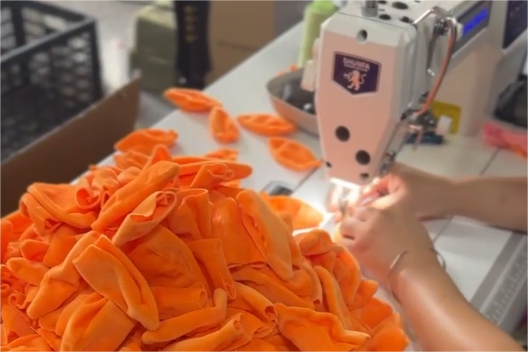
Why Proven Experience Matters More Than the Factory Label
Factory descriptions are only a starting point.
A traditional plush toy factory may already have relevant plush flower experience. A company using the term “plush flower manufacturer” may have attractive product photographs but depend heavily on outside production.
The name alone does not prove capability.
More useful evidence includes:
Relevant physical samples
Experience with similar product structures
Clear material recommendations
An organized sampling process
Consistency across several pieces
Documented production standards
Suitable packaging experience
Previous custom or branded projects
Reliable repeat-order control
It is also important to confirm whether the supplier understands the complete project.
Some factories can produce the textile flower itself but have limited experience developing coordinated collections, gift sets, retail packaging, or display solutions. Other suppliers may present attractive packaging but struggle to maintain the approved flower shape during bulk production.
The more suitable supplier combines sound textile manufacturing with relevant flower-form development, customization, packaging, and production control.
Price remains an important consideration, but quotations should be compared using the same product specifications. Material, size, construction, packaging, quantity, quality requirements, and trade terms should all be aligned before comparing figures.
A lower quotation may reflect better efficiency. It may also reflect a different material, simpler construction, weaker packaging, or a lower inspection standard.
Without a consistent specification, price comparisons provide limited value.
How We Develop Plush Flower Projects
At Sweetie-Gifts, we treat plush flower development as a complete product program rather than a simple sewing order.
A project may begin with an original concept, a brand brief, a reference direction, or an IP design. Our teams then coordinate the product structure, materials, colors, sampling, customization, packaging, and preparation for mass production.
Depending on the project, we can develop single stems, bouquets, gift and display sets, promotional collections, and custom IP-related products.
Our background in floral gifts also influences the way we approach plush products. We consider how each design will look when it is grouped, wrapped, displayed, packed, shipped, and presented in its intended retail setting.
This does not mean every project needs a complicated structure or a large number of SKUs. In many cases, one carefully developed flower with the right material, color, packaging, and price position can be more effective than an oversized collection.
The most practical solution is the one that balances design, production stability, target cost, packaging, and the intended sales channel.

Conclusion: Choose the Supplier That Can Repeat the Approved Result
Plush flower manufacturers and traditional plush toy factories share many textile production skills, but they apply those skills to different product structures.
Traditional plush toys are commonly developed as sewn and stuffed three-dimensional forms. Many single-stem plush flowers depend more heavily on separate floral components, material behavior, structural support, hand assembly, and shape-sensitive packaging.
The right supplier is not determined by the label on its website.
It is the supplier that understands the design, develops a production-ready sample, controls materials and workmanship, protects the product through packaging, and consistently reproduces the approved result during mass production.
For custom plush flowers, branded collections, promotional programs, or IP collaborations, email sales@sweetie-group.com.
Frequently Asked Questions
Can a plush toy factory make plush flowers?
Yes. Many plush toy factories already have relevant capabilities in pattern development, fabric cutting, sewing, embroidery, printing, stuffing, and production management.
However, relevant plush flower experience should still be evaluated. Review products with similar structures and compare several pieces of the same design. Pay attention to flower shape, component alignment, stem stability, packaging, and production consistency.
General plush manufacturing skills are valuable, but the final decision should be based on actual samples and proven production control.
What is the main manufacturing difference between a plush flower and a traditional plush toy?
A traditional plush toy is usually constructed as a sewn three-dimensional textile shell. Its pattern, stitching, and filling work together to create the final body shape and hand feel.
Many single-stem plush flowers are assembled from separate floral components, such as flower heads, petals, leaves, and stems. Their appearance depends more heavily on material behavior, proportion, support, and hand assembly.
Both require technical skill, but their engineering priorities are different.
What should be checked in a plush flower sample?
Check the complete flower silhouette rather than looking only at the front.
Review the flower head size, proportions, petal arrangement, leaf position, stem length, material texture, color, surface finish, and construction stability. Comparing several samples helps reveal whether the result is repeatable.
The sample should also be evaluated after packing and unpacking. This can show whether the flower head becomes compressed, the stem bends, or the leaves lose their intended position.
Can a plush flower manufacturer support brand and IP projects?
Yes, provided the supplier has the required design development, customization, visual-detail control, project management, production, packaging, and confidentiality capabilities.
An IP project may include custom patterns, embroidery, printing, licensed colors, packaging, and several rounds of sample approval. The supplier should be evaluated by its process and previous custom work, not only by the category used to describe the factory.
Should packaging be confirmed before mass production?
Yes. Packaging can affect the flower shape, product arrangement, carton size, shipping cost, and retail presentation.
The product and packaging should be evaluated together before mass production begins. A suitable package should protect the flower without creating unnecessary volume or making the product difficult to display.

CEO of Sweetie Group


Comments