


Plush Flower Event Giveaway Planning Guide: Budget, Customization, Display & Bulk Production


A plush flower giveaway often starts with a very simple idea. Choose a flower. Match it to the campaign colors. Add a branded tag. Give it to guests.
Then the procurement questions begin.
How many should be ordered? Should the flower itself be customized, or would a branded hangtag do the job? Does every piece need individual packaging? What happens if one color runs out halfway through a two-day pop-up? How early does the final sample need to be approved?
Once an event needs a few thousand pieces, the project becomes more than a merchandise order. It becomes a small product development and event logistics project. That is why the best planning usually starts with the campaign itself, not with the flower catalog.
Start With the Campaign Goal and Distribution Method
Before deciding on flower type, size, or packaging, define what the giveaway is supposed to achieve.
A trade show booth may want a low-friction gift that can be handed out quickly. A beauty launch may care more about color matching and visual presentation. A VIP event may need fewer pieces, but each piece may require a stronger gift experience.
A simple planning framework looks like this:
Campaign type | Practical product direction | Main priority |
Trade show or large promotion | Single plush flower stem | Cost and fast distribution |
Product launch | Campaign-color flower collection | Brand connection |
Pop-up experience | Pick-your-flower display | Interaction and visual impact |
Gift with purchase | Tagged or sleeved flower | Stock control and easy redemption |
VIP or media event | Custom flower, bouquet, or gift set | Presentation |
The way guests receive the flower matters just as much as the product itself.
For a direct giveaway, staff need flowers that are easy to handle and replenish. A pick-your-flower station needs enough variety to feel interactive, but not so many SKUs that inventory becomes difficult to manage. A gift-with-purchase program should connect giveaway quantity to expected qualifying transactions, not simply to total foot traffic.
VIP and media gifts are different again. A smaller guest list may justify a mini bouquet, premium sleeve, message card, or gift box because the presentation is part of the campaign experience.
Once the distribution method is clear, the product brief becomes much easier to build.
Estimate Quantity and Budget From the Campaign, Not Just Attendance
A common mistake is to start with total event attendance and treat that number as the order quantity.
In reality, not every visitor will be eligible for the giveaway, reach the activation area, or choose to redeem the gift.
A better starting point is:
Planned quantity = expected eligible visitors × estimated redemption rate + reserved allocations + contingency stock
Suppose an event expects 4,000 visitors. If about 60 percent are likely to enter the activation area, that gives roughly 2,400 eligible visitors. If the team expects about 70 percent of them to redeem the giveaway, expected distribution would be around 1,680 pieces.
The team may then reserve additional stock for media, creators, staff, partners, or later event sessions. Depending on the campaign, the final quantity might be closer to 1,900 or 2,000 pieces rather than the full 4,000-person attendance figure.
The exact percentage is not the important part. The planning logic is.
Contingency quantity should depend on how reliable the attendance forecast is, whether the event lasts one day or several, and whether leftover stock can be reused. A flower made in a reusable brand palette is easier to carry into another campaign than a product printed with a one-time event date.
Budgeting should follow the same logic.
Looking only at the EXW price per flower can be misleading. A more useful figure is the effective campaign cost per distributed flower.
That cost may include the product itself, branding, packaging, freight, duties, local delivery, display materials, testing or inspection where needed, and on-site handling.
This matters especially with plush products because volume affects shipping. A rigid individual box may look attractive, but it can also increase carton size, freight cost, event waste, and unpacking time.
In many cases, an existing flower in a campaign color with a custom hangtag and a good display can make more sense than creating a completely new flower structure.
The right question is not, “How much can we customize?”
It is, “Which custom elements actually help the campaign?”
Planning a plush flower event and unsure how far to customize the product? Send your event date, estimated quantity, market, and branding requirements to sales@sweetie-group.com. We can help narrow the product direction before sampling starts.

Choose the Right Level of Customization
For event projects, customization can usually be divided into three levels.
Level | Typical changes | Best fit |
Brand it | Hangtag, card, ribbon, sleeve, sticker | Large giveaways and trade shows |
Adapt it | Colors, flower mix, packaging, display | Pop-ups and product launches |
Develop it | New flower shape, structure, material, packaging system | Hero campaigns and original merchandise |
Brand an Existing Flower
This is often the most practical option when the event date is fixed.
A standard plush flower can become campaign-specific through a hangtag, printed card, ribbon, sleeve, QR card, or event label.
The flower itself can remain visually clean while the surrounding elements carry the branding.
This approach also reduces development complexity, which can be important when the project is large or the approval window is short.
Adapt the Product to the Campaign
The next level changes the visual direction without creating everything from scratch.
A brand may select several flower types, develop a campaign palette, adjust packaging, or create a specific display format.
Pantone references are useful when communicating brand colors, but they should not replace physical sample approval. Fabric texture, lighting, dyeing, and material construction can all affect how the finished color looks.
For campaigns where color is central to the visual identity, the real sample matters more than the number on the color reference.
Develop an Original Plush Flower
Some campaigns need a product that does not already exist.
The concept may come from a signature flower, a botanical reference, an illustration, a product story, or a brand IP.
At this level, the project may involve petal construction, flower proportion, fabric, filling, leaves, stem structure, logo placement, packaging, and display.
This should be treated as a genuine OEM/ODM development project with enough time for sampling and revision.
Use Sweetie AI to Explore Product Options
If the team is still comparing single stems, bouquets, gift sets, or display formats, Sweetie AI can help organize product options around the event type, target market, quantity, and purchasing plan. It can be useful early in the project, before the final brief is sent to the supplier.
Plan Display, Packaging, and Inventory as One System
Display, packaging, and inventory are often discussed separately, but operationally they are connected.
The real question is:
How does the flower move from the shipping carton to the guest?
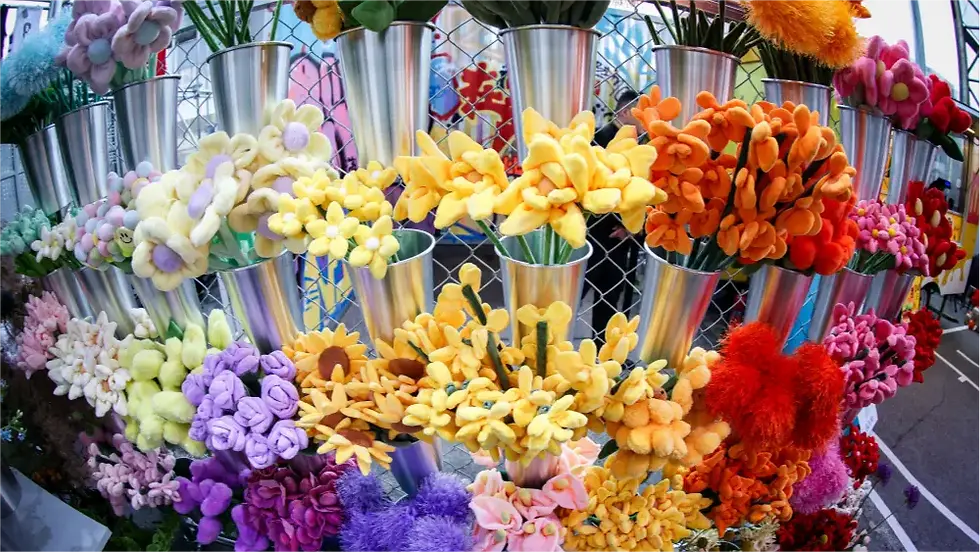
For a pick-your-flower activation, single stems may go directly from bulk cartons into buckets or display containers. In that case, the team should test whether the flowers look crowded, whether different colors need to be separated, and whether guests can remove one stem without disturbing the rest.
The display should also be tested with multiple samples.
One flower can look attractive in a product photo while 40 identical flowers packed together look too dense or uneven. For event programs, group presentation matters.
For high-volume handouts or gift-with-purchase programs, simpler packaging often works better. Flowers can arrive tagged, counted, or sleeved so staff can begin distribution without doing extra assembly on site.
VIP and media gifts may justify more presentation. A paper sleeve, mini bouquet, product card, or gift box can make sense when the number of recipients is controlled and the unboxing experience matters.
More packaging is not automatically more premium.
It should protect the flower and support the event experience without adding unnecessary freight volume or staff work.
Inventory planning should stay simple. In most cases, three categories are enough: active stock for current distribution, back stock for replenishment, and reserved stock for VIPs, media, later event sessions, or other locations.
For multi-day or multi-city programs, carton identification can also save a surprising amount of time.
A label such as:
Chicago / Day 1 / Pink Flowers / 400 pcs / Carton 1 of 5
is much easier for an event team to understand than a generic SKU number.
The person opening cartons early in the morning before a launch should not need ten minutes of detective work to find the right inventory.
Prepare the Supplier Brief Before Sampling
A strong supplier brief makes quoting and sampling much more efficient.
It does not need to be complicated, but it should explain the real project.
At minimum, the supplier should know the event type, event date and location, expected quantity, intended distribution method, preferred flower type and size, color direction, branding requirements, packaging needs, budget range, destination market, and required arrival date.
If testing, labeling, or compliance requirements are already known, include those as well.
One detail is especially useful:
Share the actual event date, not only the requested shipping date.
That allows the supplier to look at the complete timeline rather than one isolated deadline.
Approve the Physical Sample in the Way It Will Actually Be Used
A digital rendering can confirm the concept. A physical sample confirms whether the product works.
The final sample should be checked for flower shape, head size, petal construction, fabric, color, stitching, filling, stem support, and leaf placement.
Branding details also need attention. Logo size, tag position, print color, sleeve dimensions, and QR readability can all look different in real production than they do on a computer screen.
Packing should be part of the approval process too. The flower should be tested using the intended bulk packing method to make sure it does not become excessively compressed and can recover properly after unpacking.
For a display-based event, it is worth reviewing several samples together.
If five colors will appear in the same installation, approve them as a group. If the flowers will sit in buckets, put the samples into a similar container. If they will be handed out in sleeves, review the complete unit.
That gives the team a much more realistic picture of what guests will actually see.
Confirm Compliance Before the Final Product Specification Is Locked
Product classification should be addressed before mass production begins.
One of the most important questions is whether the plush flower is being marketed as a toy or as a general promotional gift or decorative product.
That distinction can affect testing, labeling, traceability, materials, and other requirements.
The answer will also depend on the destination market, target age, intended use, and product construction.
A plush flower intended as a children's plaything may follow a different compliance route from a general-use promotional gift distributed to adult event visitors.
For that reason, blanket statements such as “all plush flowers need CE” should be avoided.
Before finalizing the product, buyers should confirm the intended use, target age, destination market, classification, materials, required labels, traceability information, and applicable testing.
Doing this before bulk production is much easier than trying to correct documentation or labeling after the goods are finished.
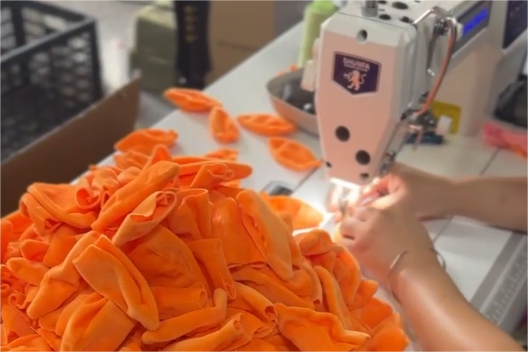
Lock Bulk Production and Work Backward From the Event Date
Once the physical sample is approved, all major decisions should be converted into one clear production specification.
That specification should connect the approved sample with the final dimensions, materials, colors, artwork, branding position, packaging method, SKU quantities, carton assortment, and delivery allocation.
This matters most when several similar colors or campaign versions are being produced at the same time.
The production timeline should then be built backward from the event date.
The sequence normally includes venue delivery, local transport, customs where applicable, international freight, final QC and packing, bulk production, packaging preparation, final sample approval, sample revisions, initial sampling, and design confirmation.
There is no single lead time that applies to every plush flower project.
An existing flower with a new hangtag is very different from a completely new structure using custom fabric.
The supplier should therefore attach realistic dates to the actual project.
This also makes approval delays easier to manage. If the brand team takes an extra week to approve the sample, that week has to come from somewhere. It may reduce production flexibility, shipping options, or the buffer before the event.
Quality Control Should Consider the Full Campaign
For bulk event orders, quality control is not only about whether each individual flower is technically acceptable.
Consistency matters too.
Flower shape, stitching, color, stem support, and packing recovery all become more noticeable when hundreds or thousands of units are displayed together.
Color consistency is especially important for campaigns built around a brand palette.
Packing recovery also deserves attention. A flower may look good before shipment but lose its intended shape if the packing method compresses the head too aggressively.
The goal is not laboratory perfection. It is a stable presentation across the full campaign quantity.
Three Practical Event Models
The most suitable product solution often depends on campaign scale.
A trade show giveaway may work best with an existing single flower, a custom hangtag, simple bulk packing, and fast handout.
A beauty or lifestyle pop-up may use several campaign colors, an interactive pick-your-flower display, and carefully planned replenishment.
A VIP product launch may justify a custom flower, mini bouquet, or premium gift format where presentation carries more weight than unit cost.
The most customized option is not automatically the best option.
A simple flower produced consistently can be the right answer for a 10,000-piece campaign. A completely original design may be more appropriate for a 300-piece flagship launch.
Plush Flower Event Planning Checklist
Before confirming the bulk order, make sure the project has clear answers to these questions:
What is the campaign objective and distribution method?
How many eligible recipients are realistically expected?
What level of customization is actually necessary?
How will the flowers be displayed, packaged, and replenished?
Has the physical sample been approved in the intended event format?
Have product classification and market requirements been reviewed?
Is the final production specification clear enough for mass production?
Does the delivery plan work backward from the actual event date?
If those eight questions have clear answers, most of the major sourcing risks are already visible.
How Sweetie-Gifts Supports Plush Flower Event Projects
Sweetie develops floral gifts for international B2B customers, including single plush flower stems, bouquets, gift formats, and display solutions.
Event projects can range from simple branded existing designs to full OEM/ODM development with custom flowers, campaign colors, packaging, and presentation.
The goal is not to add as many custom elements as possible.
It is to build a product plan that fits the campaign, budget, timeline, and distribution method.
Ready to move from campaign concept to sampling? Contact sales@sweetie-group.com to discuss product options, samples, and bulk production.
Frequently Asked Questions
How far in advance should I order plush flowers for an event?
There is no single lead time for every project. Existing flower styles with simple branding usually require less development than completely new designs. The safest approach is to work backward from the venue delivery date and include time for sampling, revisions, bulk production, QC, freight, customs, and local delivery.
How many plush flowers should I order?
Start with expected eligible visitors rather than total event attendance. Estimate the likely redemption rate, then add reserved quantities for VIPs, media, staff, partners, or later event sessions, plus a reasonable contingency based on the actual campaign.
Can plush flowers match Pantone brand colors?
Pantone references are useful for communicating color direction, but a physical sample should still be approved when color accuracy matters. Fabric texture, lighting, and production conditions can affect the finished appearance.
What is the most cost-effective way to brand a plush flower?
For many high-volume events, a hangtag, card, ribbon, sleeve, or branded display creates enough campaign identity without requiring a fully custom flower structure.
Should event giveaway flowers be individually packaged?
Not always. Individual packaging should be used when it improves protection, presentation, or distribution. For large events, unnecessary packaging can increase freight volume, material cost, waste, and unpacking time.
Do plush flower giveaways require product safety testing?
It depends on the intended use, target age, destination market, product construction, and classification. A product marketed as a children's toy may follow different requirements from a general promotional gift. The applicable requirements should be confirmed before bulk production.
Final Thoughts
A successful plush flower giveaway is not only about choosing an attractive flower.
The project works best when quantity, customization, packaging, display, sampling, and delivery are planned together.
The strongest campaigns usually make a few important decisions early. They estimate quantity from realistic redemption, spend customization budget where it adds visible value, test samples in the way they will actually be used, and build the production schedule backward from the event date.
That makes the project easier to quote, easier to produce, and much easier to manage when the event begins.
Annie Zhang


Comments