


How to Plan Floral Decor for Restaurant Pop-Ups, Themed Nights, and Brand Collaborations

To plan floral decor for experiential dining, match your material selection directly to event duration, venue zones, and guest touchpoints: use plush and fabric flowers where tactile interaction, branded photo moments, merchandise, or take-home keepsakes drive marketing ROI; preserved florals for premium VIP tables and lasting gifts; fresh blooms for short-term luxury styling; and artificial arrangements for high-impact, reusable architectural installations.
How Should Restaurants Align Floral Concepts with Event Goals, Timelines, and Guest Interaction?
Planning floral decor for restaurant pop-ups and brand collaborations requires shifting from routine visual decor to experiential dining floral styling. Unlike everyday dining table arrangements that serve as passive background dressing, pop-up and collaborative florals must achieve specific commercial objectives: driving social media virality, expressing co-branded storytelling, activating tactile guest touchpoints, and generating tangible retail revenue.
To build a structured floral strategy, hospitality event planners and beverage directors must balance four operational parameters before selecting materials or ordering inventory:
Core Event Objective: Identify whether the activation focuses on brand awareness (requiring photogenic backdrops), product launch storytelling (requiring custom brand colors and motifs), VIP relationship building (requiring tactile luxury), or direct ancillary revenue (requiring retail-ready merchandise).
Activation Duration: A single-evening press dinner has vastly different material requirements than a weekend tasting menu, a month-long seasonal pop-up, or a recurring quarterly brand takeover. Fresh cut stems degrade rapidly over multi-week runs, whereas fabric or preserved options endure extended exposure.
Guest Interaction Level: Determine how close guests get to the floral elements. Staged ceiling canopies require zero physical contact, while table settings, menu attachments, interactive photo booths, and parting gifts demand materials that can withstand repeated handling without shedding, wilting, or bruising.
Venue Flow and Layout: High-traffic corridors, narrow booth partitions, bar counters, and outdoor patio dining require floral designs tailored to floor circulation, sightlines, and staff tray-clearance zones.
Event Type | Typical Duration | Primary Objective | Recommended Floral Strategy |
|---|---|---|---|
VIP Press / Influencer Launch | 1 Evening | High-touch luxury, unboxing content, exclusive storytelling | Custom preserved floral keepsakes, fresh table accents, branded fabric floral menu ties |
Co-Branded Beverage / Fashion Pop-Up | 2–4 Weeks | Social sharing, brand visibility, retail merchandise | Large-scale plush flower photo displays, artificial overhead canopies, branded plush retail merchandise |
Themed Holiday / Seasonal Dining Takeover | 4–8 Weeks | Immersive atmosphere, repeat bookings, family appeal | High-density artificial architectural arches, tactile plush floral props for booth seating |
Charity Gala / Brand Anniversary Dinner | 1–3 Days | Memorable guest experience, premium gift-giving | Preserved botanical centerpieces that double as hospitality event keepsake flowers for patrons to take home |
When these goals are mapped out early, procurement teams can select materials based on operational lifespan, handling durability, and guest takeaway value rather than settling for generic fresh arrangements that require daily water changes and frequent stem replacement.

How Do You Map Floral Decor Across Specific Restaurant Venue Zones?
Successful commercial restaurant floral decor sourcing relies on spatial zoning. Placing delicate or perishable flowers in high-friction pathways leads to rapid damage, whereas using understated materials at major entrance photo points wastes organic marketing potential. Designing for experiential dining means dividing the restaurant floor plan into distinct functional zones.
Entrance and Façade Photo Backdrops
The entrance is your primary viral engine. Guests decide within the first thirty seconds whether they will pull out their smartphones to capture content. Because this zone experiences high foot traffic, fluctuating outdoor drafts, and physical guest contact, the decor must be visually dimensional and physically resilient.
Design Focus: High-impact, full-coverage backdrops, freestanding floral arches, or oversized 3D flower characters.
Material Choice: High-density artificial greenery framing tactile plush flowers or durable fabric floral blooms. This combination allows guests to lean in, hold stems, or pose closely without damaging delicate petals.
Operational Note: Ensure the base is weighted properly and leaves at least 1.5 to 2 meters of clear floor space so queuing guests do not block the host stand or primary entry doors.
Dining Tables, Banquettes, and Booth Dividers
Tabletop decor directly influences guest comfort, meal presentation, and staff service speed. Oversized or strongly scented centerpieces interfere with conversation, food photography, and platter placement.
Design Focus: Low-profile runners, compact botanical clusters, or vertical overhead hanging elements suspended above eye level.
Material Choice: Preserved roses, foliage, and subtle dried elements for seated luxury; compact fabric blooms or branded fabric floral accents incorporated into menu packaging and napkin rings for themed activations.
Operational Note: Maintain centerpieces below 25 cm (10 inches) in height or suspend them at least 65 cm (26 inches) above the tabletop. Strictly avoid heavily scented fresh lilies or treated botanicals that could overpower the culinary aroma.
Bar Counters and Mixology Display Shelves
Bars are active prep areas with high moisture, frequent liquid spills, and rapid glassware movement. Decor placed here must resist moisture and remain clear of cocktail prep wells.
Design Focus: Floating bar back floral shelving, tiered bottle-display frames, or overhead hanging floral clouds.
Material Choice: Commercial-grade artificial stems or durable textile flowers fixed to modular mesh grids.
Operational Note: Keep all floral elements at least 30 cm away from garnish stations, ice wells, and liquor pourers to prevent accidental fiber shedding or cross-contamination.
Restroom Foyers and Mirror Accents
Restrooms represent a high-engagement, secondary photography spot. Guests frequently take mirror selfies, making restroom vanity floral styling an effective social media driver for pop-up dining activations.
Design Focus: Mirror-framing floral garlands, petite vanity displays, and branded wall art.
Material Choice: Artificial framing accents paired with preserved botanicals in enclosed glass vessels.
Operational Note: Ensure all materials used around sinks are water-resistant and securely anchored to wall fixtures.
When Should You Choose Plush, Preserved, Fresh, or Artificial Florals?
Each floral material category solves a distinct design, budgetary, and operational challenge. Rather than viewing materials as direct substitutes, hospitality buyers should blend them strategically across the venue based on touch points and functional life cycles.
                    ┌─────────────────────────────────────────┐
                    │   EXPERIENTIAL FLORAL SELECTION MATRIX  │
                    └────────────────────┬────────────────────┘
                                         │
            ┌────────────────────────────┼────────────────────────────┐
            ▼                            ▼                            ▼
     Tactile & Retail            Luxury & Keepsake           Scale & Structure
  ┌─────────────────────┐     ┌─────────────────────┐     ┌─────────────────────┐
  │    PLUSH/FABRIC     │     │      PRESERVED      │     │     ARTIFICIAL      │
  │ Interactive Corners │     │ VIP Dining Tables   │     │ Overhead Ceilings   │
  │ Photo Hand Props    │     │ Exclusive Gifts     │     │ Large Arches        │
  │ Gifting/Merch Store │     │ Private Dining Runs │     │ High-Traffic Walls  │
  └─────────────────────┘     └─────────────────────┘     └─────────────────────┘
Plush and Fabric Flowers: The Interactive and Retail Hybrid
Plush and fabric flowers combine textile toy manufacturing with botanical silhouettes. Crafted from materials like velour, felt, structured canvas, faux fur, or soft-touch polyester, these flowers are engineered for physical interaction.
Best For: Co-branded pop-ups with lifestyle, gaming, beauty, or apparel brands; interactive photo stations where guests hold floral props; branded take-home souvenirs; and dedicated merchandise displays.
Advantages: Highly tactile, virtually unbreakable, fully customizable with embroidery and brand PMS colors, lightweight, and capable of generating direct retail margin.
Limitations: Requires protection from food stains and kitchen grease; accumulates dust if deployed for extended months without cleaning; subject to textile flammability regulations.
Preserved Botanicals: The Long-Lasting Luxury Standard
Preserved flowers are real, natural blooms harvested at peak beauty and treated with a biodegradable glycerin-based preservation solution. This replaces the plant's natural sap, freezing its soft texture, flexibility, and vibrant hue for months or years without water.
Best For: Upscale pop-up dinners, luxury private dining rooms, co-branded spirit tastings, and high-end VIP gift boxes.
Advantages: Genuine botanical realism, soft natural touch, zero watering or sunlight requirements, and lasting utility as hospitality event keepsake flowers.
Limitations: Higher initial piece price than standard fresh cut stems; sensitive to high humidity (above 70%) and direct sunlight; brittle under aggressive handling.
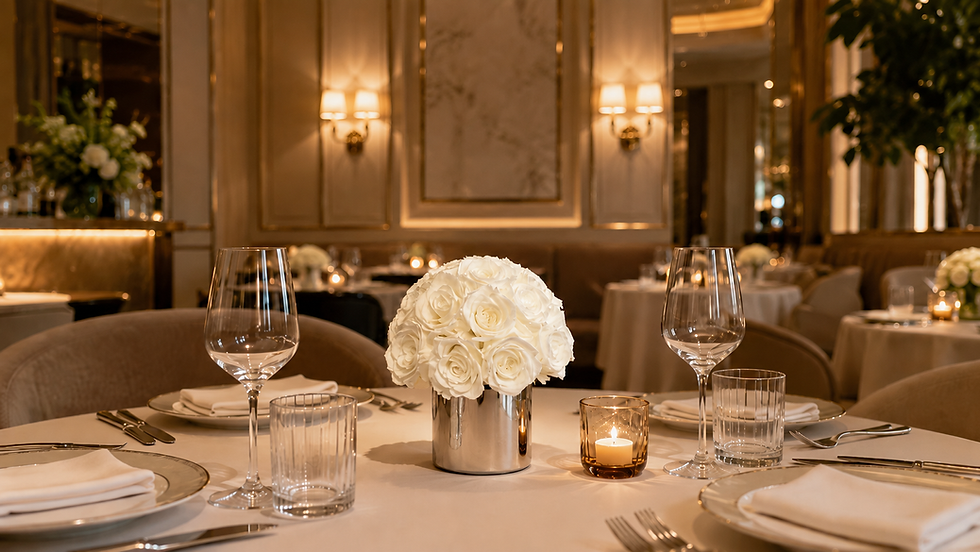
Fresh Flowers: Short-Term Perishable Elegance
Fresh cut flowers offer unmatched organic fragrance, subtle petal translucency, and classic appeal. However, their short lifespan makes them costly and operationally complex for extended runs.
Best For: One-night influencer dinners, media preview luncheons, and single-weekend seasonal launches.
Advantages: Unrivaled classic luxury feel, authentic seasonal scent, and traditional prestige.
Limitations: Requires daily watering, stem trimming, and spent-bloom replacement; wilts under warm dining room spotlights; carries high labor costs for daily maintenance.
High-Grade Artificial Botanicals: Reusable Architectural Frameworks
Modern commercial artificial flowers use high-density silk, polyurethane (PU), and molded wire framing to replicate botanical structures for heavy-duty commercial environments.
Best For: Suspended ceiling installations, exterior entry canopies, exterior courtyard pergolas, and month-long architectural activations.
Advantages: Weatherproof, structural rigidity, easily disinfected, and completely reusable across multi-city tour pop-ups.
Limitations: Lacks the organic prestige of natural preserved flowers; can appear stiff or synthetic under macro-photography if budget materials are selected.
Material Type | Reusability | Tactile / Play Value | Maintenance Need | Ideal Restaurant Zone | Cost-Per-Guest Dynamic |
|---|---|---|---|---|---|
Plush / Fabric | High (Multi-event or Sold) | Exceptional (Huggable, Wearable, Playable) | Low (Spot clean / Lint roll) | Interactive Corners, Photo Stations, Merch Bars | Recovers cost through retail sales or high social share rate |
Preserved | High (Months to Years) | High (Soft Natural Petals) | Minimal (Keep dry, dust gently) | VIP Tables, Private Dining, Gifting Boxes | High initial cost offset by zero replacement labor over 1–6 months |
Fresh Cut | Low (2–5 Days) | Moderate (Fragile Petals) | Heavy (Daily water, ice, trimming) | Single-evening Centerpieces, Press Tables | High recurring cost; continuous labor spend |
Commercial Artificial | Very High (Multiple Seasons) | Low to Moderate | Low (Periodic dusting / cleaning) | Ceilings, Arches, Wall Framing, Perimeters | Low amortized cost over repeated activations |
Why and When Should Restaurants Use Plush Flowers for Interactive Displays, Keepsakes, and Merchandise?
Plush and fabric flowers are not a universal replacement for traditional floristry; rather, they serve as a powerful experiential medium. In traditional restaurant styling, floral arrangements are strictly hands-off decor. When a brand pop-up seeks emotional engagement, playful self-expression, and consumer interaction, fabric-based florals bridge the gap between decor, entertainment, and retail.
1. Tactile Engagement and Photo Props
Standard floral backdrops often carry an implied "do not touch" barrier because fresh or dried stems snap easily. Plush flower photo displays eliminate this friction entirely. Flexible wired stems, oversized plush petals, and tactile textures encourage guests to hold, pose with, bend, and wrap the flowers around themselves.
Prop Design: Construct oversized plush daisies, sunflowers, or custom character blooms with flexible internal armatures. Guests can shape them into handheld accessories, oversized bouquets, or playful wearables for short-form video content.
Gamified Photo Booths: Set up interactive plush flower walls where visitors pluck a flower to reveal a discount code, co-branded cocktail coupon, or branded takeaway gift hidden in the stem pouch.
2. Memorable Take-Home Keepsakes
When a pop-up ticket or set tasting menu includes a tangible keepsake, guest satisfaction and perceived value increase. While fresh stems wilt within days of returning home, a custom plush flower remains on a patron's desk, vanity, or tote bag for months, serving as an ongoing visual reminder of the restaurant activation.
Co-Branded Stem Ties: Wrap a branded mini plush tulip around a customized cocktail straw, napkin ring, or VIP menu card. Guests take the plush piece home at the end of the evening.
Milestone & Themed Dining Gifts: For holiday takeovers (such as Valentine’s Day, Mother’s Day, or themed IP collaborations), incorporate a customized fabric flower as a bundled gift with the dining reservation package.
3. Ancillary Retail and Merchandise Opportunities
For lifestyle, entertainment, and luxury brand collaborations, the dining room often functions as a physical pop-up shop. Plush flowers serve as low-barrier, high-margin impulse merchandise when displayed near the checkout counter or host stand.
Limited-Edition Drops: Offer numbered, co-branded plush floral stems or plush potted plant characters featuring the restaurant’s logo and the partner brand’s color palette.
Tiered Merchandise Bundles: Pair a bottled signature sauce, batch cocktail, or branded glassware with a coordinating plush flower in branded gift packaging.
If you are mapping out product options across different price tiers, fabric textures, and packaging formats, you can use Sweetie AI to compare specific plush and preserved flower specifications based on your venue parameters, estimated guest count, and activation budget.
What Operational and Safety Rules Apply to Commercial Floral Decor?
Deploying experiential florals in food and beverage environments requires strict adherence to health, fire, and sanitation standards. Neglecting operational boundaries can lead to health code citations, fire hazards, or degraded dining experiences.
Fire Safety and Building Code Compliance
Restaurants are subject to stringent commercial fire safety standards regarding open flames, interior decorations, and suspended materials.
Flame Retardancy: Artificial greenery, large fabric structures, and plush floral props placed in public assembly spaces must comply with local fire regulations (such as NFPA 701 standards in the United States, DIN 4102-B1 in Europe, or equivalent regional safety rules). Request fire-retardant material certificates or post-treatment compliance sheets from your supply partner before installation.
Clearance from Heat and Lighting: Keep all fabric, preserved, and artificial florals clear of high-wattage halogen accent lights, kitchen heat lamps, table candles, and patio heaters. When open tabletop candles are used, ensure flowers are encased in glass hurricanes or maintain a minimum safe buffer.
Kitchen Boundaries and Food Contact Sanitation
No Direct Food Contact: Fabric, plush, and preserved flowers are decorative items and must never come into direct, unshielded contact with edible food or beverages. If used as cocktail garnishes or dessert plate decor, place them on external glassware stems, wooden picks with food-safe barriers, or outer plate rims.
Proximity to Open Food Prep: Never mount plush or loose-fiber floral decor directly above open kitchen plating lines, salad bars, or ice storage bins to prevent airborne lint or fiber shedding.
Odor Management and Culinary Neutrality
Dining experiences rely heavily on olfactory perception. Strong artificial perfumes or heavy preservation chemistry can overpower the aroma of fine wine and cuisine.
Odor Off-Gassing: Ensure all preserved, artificial, and plush florals undergo adequate off-gassing and airing before installation. Quality preserved flowers should have a neutral or faint natural organic scent, while plush toys must be free of chemical manufacturing odors.
Zero Artificial Floral Spraying: Avoid spraying synthetic floral fragrances onto centerpieces in dining rooms, as this interferes with the restaurant's culinary profile and may trigger guest allergies.
Maintenance, Dust, and Hygiene Protocols
Regular Maintenance: In activations lasting more than two weeks, fabric and plush surfaces collect ambient airborne dust and airborne kitchen grease. Implement a bi-weekly maintenance routine using high-efficiency lint rollers and compressed air to keep displays fresh.
Deformation Handling: Plush props handled by hundreds of guests will shift over time. Train floor staff during pre-shift briefings to reset flexible wire stems, reshape petal padding, and remove soiled units.
How Should Hospitality Buyers Source and Customize Floral Elements for Brand Collaborations?
Executing a seamless brand pop-up requires a structured sourcing timeline. Collaborative campaigns involve multi-stakeholder approvals between restaurant operators, partner brand directors, and production manufacturers. Working with specialized manufacturing partners that handle multi-material production ensures quality consistency and brand compliance.
                               SOURCING & PRODUCTION ROADMAP

  Week 1–2                Week 3–4                Week 5–7                Week 8+
┌──────────────────────┐ ┌──────────────────────┐ ┌──────────────────────┐ ┌──────────────────────┐
│ Concept & Sizing     │ │ 3D Tech Pack &       │ │ Mass Manufacturing   │ │ Logistics &          │
│ • Theme alignment    │ │ Sampling             │ │ & Strict QC          │ │ Installation         │
│ • PMS color matching │ │ • Fabric swatches    │ │ • Batch production   │ │ • Export crating     │
│ • Zone dimensioning  │ │ • Physical sample    │ │ • Safety inspection  │ │ • On-site staging    │
│ • Budget modeling    │ │ • Client sign-off    │ │ • Custom packaging   │ │ • Staff briefing     │
└──────────────────────┘ └──────────────────────┘ └──────────────────────┘ └──────────────────────┘
1. Conceptualization and Color Matching (Weeks 1–2)
Define the visual design language, scale, and material combinations based on the brand partner’s style guide. For plush flowers and co-branded retail items, precise Pantone Matching System (PMS) color matching across velour, felt, and ribbon trims is vital. For preserved elements, select specific botanical grades, stem lengths, and flower head diameters.
2. Tech Pack Generation and Sampling (Weeks 3–4)
Translate 2D visual sketches into detailed technical manufacturing packs specifying interior wire gauges, filler foam density, stitch counts, woven brand label placement, and base attachments.
Produce physical pre-production samples to test tactile feel, stem flexibility, and visual balance alongside actual tableware and branded merchandise.
Verify that preserved floral colors match partner brand palettes under both daytime natural light and evening restaurant warm-light conditions.
3. Bulk OEM/ODM Production and Quality Control (Weeks 5–7)
Once pre-production prototypes receive stakeholder sign-off, mass manufacturing commences. A robust multi-material supply network is essential here:
Preserved Botanicals: Sourced and processed from high-altitude agricultural bases like Kunming, ensuring robust petal structure and consistent dye absorption across thousands of stems.
Plush and Fabric Florals: Manufactured through specialized gift and textile hubs like Yiwu, where multi-material integration (combining embroidery, metal wire armatures, specialty fabrics, and custom retail hangtags) can be scaled efficiently.
Quality Control: Comprehensive pre-shipment inspections check seam strength, armature stability, color fastness, absence of loose threads, and secure mounting brackets.
4. Export Packaging, Palletization, and Staging (Week 8+)
Hospitality shipments require protective packing to prevent compression damage during air or sea freight:
Preserved flower heads are secured in custom thermoformed blister trays to prevent petal friction.
Plush displays are packed in protective inner polybags and heavy-duty corrugated export master cartons to resist moisture and crushing.
Individual retail items come pre-tagged with barcodes, SKU labels, and custom display packaging, ready for immediate placement on restaurant retail shelves upon delivery.

Frequently Asked Questions (FAQ)
How far in advance should a restaurant begin sourcing custom floral decor for a brand pop-up?
For standard off-the-shelf preserved and artificial decor, lead times of 3 to 4 weeks are typically sufficient. However, for fully customized OEM/ODM projects—such as branded plush flowers with custom PMS fabric dyes, embroidered logos, custom retail packaging, or bespoke photo booth sculptures—you should begin the planning and sampling process 8 to 12 weeks before your launch date to account for prototyping, mass production, quality control, and international logistics.
How do you clean and sanitize plush floral displays during multi-week dining activations?
Plush displays should be maintained daily using clean lint rollers to remove surface dust and fibers. For light surface marks, use a damp microfiber cloth with a mild, enzyme-based upholstery cleaner, testing a small hidden patch first. For multi-week activations, rotate high-touch props with fresh inventory and use low-heat handheld garment steamers during pre-shift setup to sanitize fabric surfaces and refresh petal volume.
Are preserved flowers cost-effective compared to fresh florals for extended restaurant takeovers?
Yes. While preserved flowers carry a higher initial purchase price per stem than common fresh cut flowers, they require zero refrigeration, daily water management, or floristry labor. In activations running longer than two weeks, preserved florals eliminate the recurring cost of replacing wilted fresh stems every 3 to 5 days, typically resulting in lower total operational spend over the duration of the campaign.
Can custom plush flowers be certified for commercial restaurant safety standards?
Yes. Commercial plush products can be engineered with flame-retardant outer fabrics, polyester batting that complies with regional textile standards, and non-toxic dyes. When placing custom manufacturing orders, specify your venue’s local fire code requirements and request material safety data documentation from your production partner prior to bulk manufacturing.
Planning a pop-up, themed night or brand collaboration? Email sales@sweetie-group.com with your venue, budget, quantity and timeline, or use Sweetie AI to explore products and build a sourcing plan.


Comments