


How a Japanese Floral Gift Retailer Expanded Its Product Line Over Time

A product category can perform well for years, then quietly lose momentum. Sales soften. The display still looks attractive, but the urgency is gone. Customers who used to buy quickly start hesitating, comparing, or moving on.
That is a familiar problem in gift retail.
For many retail buyers, the challenge is not launching a product. It is keeping a product line commercially relevant without turning the assortment into a random collection of new ideas. The real question is not whether to add products. It is which products should come next, and why.
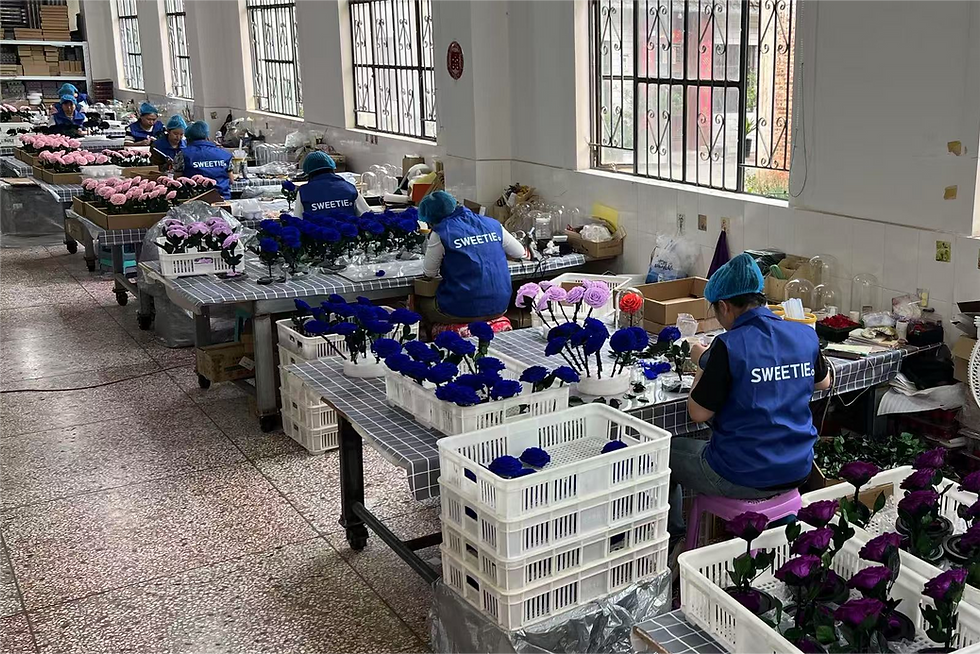
This Japanese case matters because it shows how one retail customer expanded its floral gift line in a practical, profitable direction. The line did not grow because the buyer wanted more SKUs. It grew because each added category solved a different retail need, and we helped guide that expansion with product selection support and manufacturing execution.
Key points from this case
Start with one proven category instead of an overcrowded catalog.
Expand only when the next product format truly fits the channel.
A strong manufacturing partner helps make the product line more relevant over time.
If you are reviewing your floral gift assortment for the next selling season, email us at sales@sweetie-group.com.

The kind of retail customer this case represents
This customer is a floral gift retailer in Japan with both offline retail stores and online sales channels. That matters more than it may seem.
When a retailer sells both in stores and online, the product has to work in more than one way. It has to look right in a physical display, photograph well for e-commerce, feel giftable, and still make sense across different selling seasons. It also needs enough flexibility to perform during holiday peaks without becoming difficult to sell once the season ends.
That was the environment behind this cooperation.
This was not a one-time holiday buyer. It was a mature retail customer with recurring demand, seasonal spikes, and a clear need to keep its product line fresh without losing commercial focus.
Starting with one proven category, not a wide catalog
One of the biggest mistakes I see in B2B product development is trying to impress a retail customer with too many categories too early.
That was not the right move here.
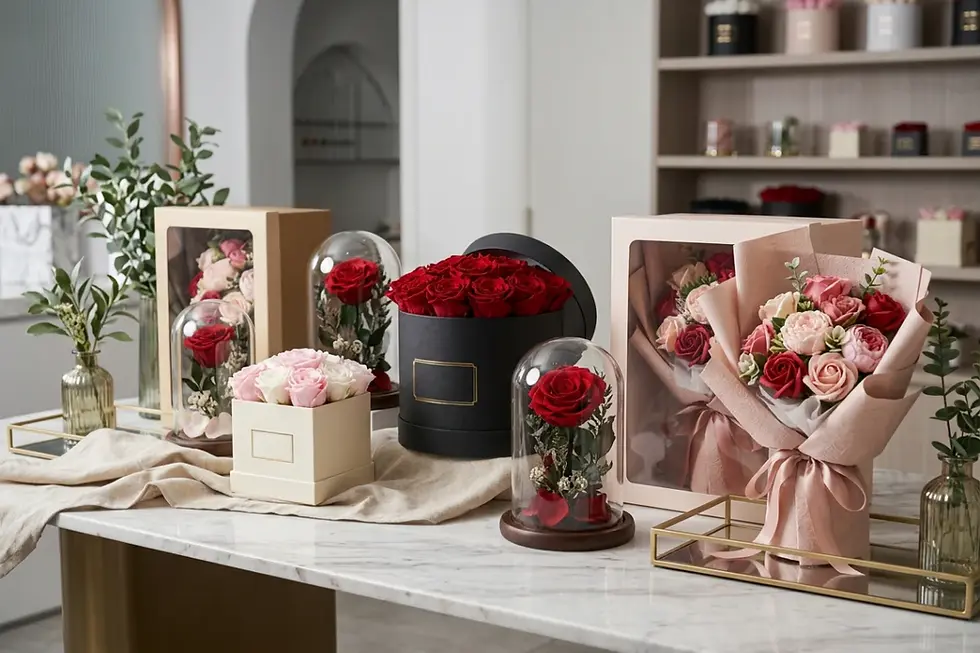
Our direct cooperation began in 2024, and the starting point was very clear. Instead of pushing a broad assortment, we focused on one category that already had proven retail potential: decorative soap flowers. More specifically, soap flower bouquets.
That category already had strong retail logic behind it:
clear gifting appeal
easy shelf presentation
strong visual communication online
room for seasonal adaptation
stable repeat-sales potential
Within that category, the retailer kept buying the soap flower bouquet. Most designs centered on roses with small filler materials. For Mother’s Day, carnations fit naturally. For Teacher’s Day, sunflowers made sense.
What I like about this structure is that it was not built around short-term excitement. It was built around products that could stay commercially useful.
That is an important distinction. A successful retail line usually does not begin with the widest catalog. It begins with a category that is already strong enough to carry repeat sales.
Why soap flower bouquets stayed commercially relevant
Many buyers still treat soap flower bouquets as seasonal novelty items. In our experience, that view is too narrow.
This case shows why the category can keep working over time when the product logic is right. The bouquets stayed relevant because they were not overloaded with short-lived holiday messaging. They had gifting value first, and seasonal flexibility second.
That gave the customer several advantages:
Roses with filler flowers worked as reliable everyday gift products.
Carnations could strengthen Mother’s Day without changing the whole product identity.
Sunflowers could support Teacher’s Day while still fitting broader gift occasions.
Different bouquet counts created clear retail price ladders.
New forms like baskets and rectangular boxes added freshness without forcing a new category.
In other words, the category evolved without becoming unstable.
That is why I do not see this line as a short-term holiday line. I see it as a repeat-sales category with enough flexibility to stay useful in retail.

What helped this customer expand beyond one proven category
This is where the case becomes more valuable.
A retailer may know its market. A buyer may know what sells in stores. But turning one successful category into a broader and stronger product line does not happen automatically. That is where the right manufacturing partner should create value.
Our role was not simply to supply what was requested. Our role was to help the customer expand in the right direction.
That meant:
giving product selection suggestions
evaluating which new categories actually fit the channel
helping avoid products that looked interesting but were not commercially right
supporting line growth only when the next category made practical sense
That difference matters.
A factory can produce many items. A stronger manufacturing partner helps a retailer understand which items are worth turning into real product opportunities.
The turning point in this case came when product discussions became more direct. Once communication was closer, it became much easier to focus on what truly fit the retailer’s market instead of treating all floral gift products the same way.
If you want a manufacturing partner that can help you expand in the right direction, not just ship more products, contact us at sales@sweetie-group.com.
Why preserved flowers became the right next step
For some time, preserved flowers were not moving forward in the right way for this customer. In our experience with this account, the issue was not whether preserved flowers could work in Japan. It was whether the product format matched the channel.
That is a much better question.
Once communication became more direct, we were able to support the customer with a more focused product direction. Instead of treating preserved flowers as a broad category, we looked at which preserved flower formats actually fit this retailer’s needs. One of the products that moved forward was a mini preserved flower ring box set with display packaging.
That made sense for several reasons:
it felt small and refined
it was easy to merchandise
it had a clear gift identity
it matched Japanese retail preferences for compact, polished presentation
it worked well both online and offline
it was not limited to one selling season
That is exactly the kind of expansion I like to see. Not “let’s add preserved flowers because preserved flowers are popular.” Instead, “let’s add a preserved flower format that truly fits the retailer’s channel.”
That is where manufacturing support matters. We were able to help narrow the direction so the customer was not just adding a category. They were adding the right version of that category.

Why plush flowers were added at the right time
Plush flowers are a newer trend than decorative soap flowers, and they bring a different emotional tone. They feel softer, lighter, and more playful. That makes them especially interesting for retailers who want to refresh a gift assortment without losing the floral identity of the line.
In this case, the customer visited our factory, saw the products in person, and quickly recognized the opportunity. The items selected were single-stem plush flowers and fabric flowers for Mother’s Day sales.
That quick reaction did not happen by accident.
The category fit because it offered something the existing assortment did not:
a younger visual style
a lighter gifting mood
stronger impulse-buy potential
good compatibility with seasonal displays
a fresh addition without replacing the core line
That last point is important.
Plush flowers did not replace soap flower bouquets. They gave the retailer another layer. They added a newer, softer gift option that could work especially well for a seasonal moment like Mother’s Day.
From our side, the job was not just to show something trendy. It was to help translate that trend into a product format the customer could actually use in retail.

How the product line became stronger, not just wider
By this stage, each product category had a different role inside the assortment.
Product category | Why it fit the retailer | Retail role |
Decorative soap flower bouquets | Proven gifting appeal, flexibility across seasons, strong fit for both online and offline retail | Core repeat-sales line |
Mini preserved flower ring boxes with display packaging | Small, refined, easy to merchandise, strong visual gift value | Delicate and more premium-feeling gift option |
Single-stem plush flowers and fabric flowers | Younger look, trend-driven appeal, strong fit for impulse gifting and seasonal add-ons | Newness and emotional add-on line |
That distinction was important because the goal was never to add more products for the sake of variety. The goal was to make the assortment more complete.
A mature retail customer does not just need a wider line. It needs a better-matched line.
What this case shows about Sweetie as a manufacturing partner
When I look at this case as a manufacturer, I do not think the biggest takeaway is that we supplied multiple categories. I think the bigger takeaway is how the cooperation evolved.
This case shows three things about the role we aim to play for retail customers.
1. We know how to start with a category that already has retail potential
We did not begin by offering everything. We began with a category that already made sense for the customer’s retail channel and had proven repeat-sales value.
2. We help customers expand only when the next category makes sense
We do not believe in expanding a product line just to make it bigger. We believe in helping customers add the next product only when it genuinely improves the assortment.
3. We combine product judgment with manufacturing execution
That combination matters. A supplier can have many samples and still fail to help a retailer grow. What creates long-term value is the ability to connect product direction with real production support.
That is the kind of value we try to create.
Why long-term cooperation matters more than a single order
A single order can prove that a product got attention. Long-term cooperation proves something much more important. It proves that the category works, the fit is right, and the product line can continue to evolve.
That is what happened here.
The cooperation started with one strong category. Over time, it grew into a broader floral gift line that better matched the customer’s channel and selling opportunities. That did not happen because we simply kept making the same products. It happened because the cooperation became more useful.
For us, the biggest lesson from this case is simple: long-term retail partnerships become more valuable when product expansion is guided by channel fit, not by product quantity alone.
If you are expanding a floral gift line and need product ideas that fit your channel better, email us at sales@sweetie-group.com.
CEO of Sweetie Group


Comments