


How Beauty Brands Win Valentine’s Day with Everlasting Flowers: Gift Set Strategy That Converts

Valentine’s Day is one of the few moments when a beauty purchase stops being about personal preference and becomes a social decision. The buyer is not only choosing a fragrance or a lip product. They are choosing a message, a mood, and a level of effort that will be judged the second the box is opened.
That is why the brands that consistently win Valentine’s Day do three things well: they reduce gifting risk, they create a clear emotional story, and they make the set instantly “giftable” in photos and in real life. Everlasting flowers fit that job unusually well.
What Valentine’s Day Shoppers Really Buy
Most Valentine’s Day buyers are not hobbyists. They are trying to avoid three outcomes:
Picking something too generic
Picking something too risky (wrong shade, wrong vibe, wrong taste)
Picking something that looks “last minute”
A gift set helps because it feels complete. But completeness alone is not enough anymore. Buyers want a set that looks intentional before they even understand the ingredients or notes. The best sets deliver immediate certainty: “This is the right kind of gift.”
That is where a well-designed everlasting flower element can change the perception of value. It turns a beauty set into a keepsake, not just a bundle.
The 5 Levers Behind a High-Performing Beauty Gift Set
High-performing Valentine’s sets usually share the same mechanics, even when the aesthetics differ. Here are five levers brand teams can actually design for.
Lever | What it solves for | What “good” looks like |
Bundle architecture | Reduces gifting risk | A hero item plus a supporting item plus a “gift signal” element |
Visible value | Increases perceived worth fast | One glance communicates “more than products” |
Story device | Makes the set memorable | A theme buyers can repeat in one sentence |
Shareability | Drives organic visibility | A layout that invites photos and unboxing |
Operational readiness | Prevents last-mile failure | Stable quality, low damage, predictable packing |
These levers matter because Valentine’s Day is not only a marketing moment. It is a stress test across creative, merchandising, and supply chain. A beautiful concept that cannot ship safely becomes a return risk and a brand risk.

Why Everlasting Flowers Increase Gift-Set Appeal
Everlasting flowers work in beauty gifting for a simple reason: they make intangible benefits feel tangible.
Fragrance is invisible. Texture is invisible. “Mood” is invisible. A flower is visible immediately, and it carries built-in cultural meaning. When it is preserved, it also carries durability, which quietly reinforces the buyer’s intention: “I didn’t buy something temporary.”
In practice, everlasting flowers can lift conversion for three reasons:
They act as a gift receipt without words. Even before the recipient reads the label, the set looks like a gift.
They create a photo-ready proof point. The buyer can show they chose something thoughtful.
They bridge product to emotion. A fragrance story becomes a physical memory, not only a scent profile.
The key is restraint. The flower component must feel like an extension of the brand’s language, not a generic add-on. Size, color palette, and packaging material do most of the work.
Case Study: Prada Paradoxe + Mini Everlasting Bouquet
Prada’s Paradoxe Valentine’s concept is a great example of how to translate fragrance character into a gift experience.
What the set gets right
1) A theme that carries the story.
The record-style packaging gives the set a clear narrative device. It signals “limited,” “collectible,” and “designed,” which is exactly what a Valentine’s buyer wants to convey.
2) A low-risk hero pairing.
Fragrance plus lip is a reliable gift combination because it feels complete without requiring the buyer to know someone’s exact foundation shade or skincare regimen.
3) A small everlasting bouquet that turns scent into a keepsake.
The bouquet is sized for one-hand hold and box compatibility, which matters more than most people realize. If the flower component forces a bigger carton, raises damage risk, or complicates fulfillment, it stops being a scalable tactic. In this set, it supports the story without breaking operations.
Turning Paradoxe’s scent profile into a bouquet language
The most effective flower add-ons are not “flowers added to a set.” They are the product story made visible.
Paradoxe is positioned around a warm, intriguing profile often described in terms like “milky woods,” with a bright opening and a clean, skin-like finish. The bouquet can mirror that structure in a way consumers understand intuitively:
Top (bright, airy opening): transparent layers and lighter accents that suggest lift and clarity
Heart (warm, enveloping core): saturated petals and fuller shapes that read as depth and warmth
Base (clean, soft finish): smooth wraps and tidy lines that feel skin-close and refined
This is similar to how some prestige beauty activations externalize a hero ingredient or sensory benefit into a physical art object. The difference is that a preserved bouquet is easier to integrate into gifting at scale when it is designed for packaging and shipping from day one.
If you want to develop a “scent-to-bouquet” mapping for your own hero fragrance or holiday theme, email sales@sweetie-group.com. At Sweetie-Gifts, we work with brand and retail programs on preserved flower components that match brand colors, storytelling, and e-commerce shipping realities.

A Quick Comparison: Dior & Jo Malone Use Flowers Differently
The tactic is similar, but the expression changes with brand DNA and channel.
Dior: Often leans into romantic floral framing, pairing fragrance and lip with visuals that feel classic and celebratory. The flower element supports a recognizable “romance” code, and it tends to be more overtly feminine and bright.
Jo Malone London: In some overseas retail and store gifting activations, the flower element appears as part of a gift presentation experience rather than a loud “free gift” message. The emphasis is on ritual: wrapping, personal touches, and elevated finishing.
The useful takeaway for brand teams is this: the same underlying strategy can work in different markets, but the channel changes how you should present it. In China e-commerce, the gift signal often needs to be explicit. In the US and Europe, the gift signal can be embedded in the experience, especially in retail.
How to Apply This Strategy to Your Next Seasonal Launch
If you want to use everlasting flowers without turning your program into a fragile fulfillment project, I recommend starting with three decisions.
1) Pick the right flower format for your price tier and channel.
Mini bouquet, preserved rose box, single-stem keepsake, or a small floral insert can all work. The best choice depends on unboxing expectations, shelf display, and shipping method.
2) Translate your product story into a simple visual rule.
Do not start with “which flowers look nice.” Start with “what should the set communicate in one glance?” Then choose palette, shape, and texture that reinforce that message.
3) Design for the box first, then for the camera.
A flower add-on that increases damage rate is not marketing. It is operational debt. Size, internal fixation, and protective structure must be part of the concept, not an afterthought.
Common Mistakes Brands Make When Adding Flowers
I see the same failure patterns repeat across seasonal programs:
Color mismatch: Flowers that photograph differently from the brand palette can create a perception gap.
Overstuffing: Too much volume makes the set feel messy and increases damage risk.
Weak internal protection: Flowers shift, crush, or shed, turning unboxing into disappointment.
No story connection: A generic bouquet can feel like a promotion instead of a brand moment.
The fix is not complicated, but it does require a unified brief across marketing, packaging, and sourcing.

Questions Brand Teams Ask Before Greenlighting a Flower-Included Set
Will this feel premium or promotional?
It depends on integration. Packaging materials, restraint, and color discipline decide the outcome.
What size works best for e-commerce?
Small formats usually scale better. They fit existing cartons and reduce damage exposure.
How do we control color consistency across batches?
Define acceptable ranges early and align them with photography and listing images.
Will flowers introduce fragrance conflicts, dust, or shedding?
They can if materials are not selected and processed correctly. This is where supplier process control matters.
What lead time should we plan for seasonal programs?
Build enough time for concept, sampling, transit testing, and final production. Valentine’s schedules compress quickly.
Closing: Make the Gift Feel Like a Memory
The brands that win Valentine’s Day do not win because they discount harder. They win because they make the gift feel like a memory the moment it is opened. A well-designed everlasting flower element can amplify that effect by turning scent and emotion into something visible, durable, and worth photographing.
If you’re planning a Valentine’s Day set, Mother’s Day set, or a year-round gifting strategy and want a practical concept proposal, you can reach me at sales@sweetie-group.com.
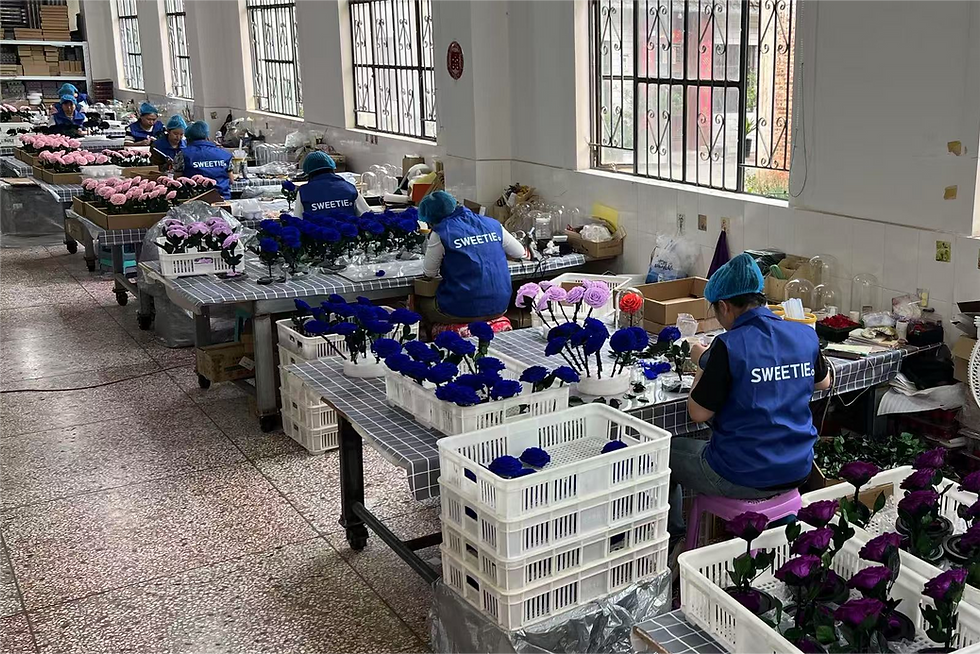
CEO of Sweetie Group


Comments