


Stop Competing on Price: How Scent Can Differentiate Preserved Rose Gifts on Amazon


If you sell preserved rose gifts on Amazon, you already know how quickly this category starts to look the same. The box styles are similar. The product titles are similar. The gifting angles are similar. Even when the products are not identical, shoppers often see them as close substitutes. And when that happens, price becomes the easiest way to compare listings.
That is a tough place to compete.
Preserved rose gifts are not purely decorative products. They are emotional purchases. Customers buy them for Valentine’s Day, Mother’s Day, and other moments that are supposed to feel personal. So when the product looks nice but feels generic, sellers often end up relying on discounts, coupons, and ad spend to stay competitive.
That is why scent deserves more attention.
Not because fragrance can do all the work. It cannot. But in a crowded category, scent can add a layer of experience that is harder to copy than color, box shape, or ribbon choice. When it is done well, it can help a preserved rose gift feel more premium, more giftable, and less interchangeable.
Why Preserved Rose Gifts on Amazon Become So Easy to Copy
This category is highly visual, and visual details are usually the first things competitors imitate.
A seller can copy a box style. A seller can borrow the same romantic language. A seller can follow the same holiday positioning and use a similar photo style. That means visible differentiation often disappears fast, even when product quality is not the same.
Once listings begin to look interchangeable, sellers usually respond in predictable ways:
What shoppers notice first | What sellers usually do | What happens next |
Similar box styles and flower colors | Adjust packaging details | Competitors catch up |
Similar gift positioning | Update images and copy | Listings still feel alike |
Similar-looking products | Lower prices or add coupons | Margins get thinner |
That is the real problem. If customers cannot quickly feel a meaningful difference, they compare what is easiest to compare: price, discount, and review count.
Packaging still matters, of course. Good presentation helps. Better photography helps. But in a category where the visible parts of the product are easy to imitate, surface-level upgrades rarely create lasting separation.
Why Scent Is an Overlooked Differentiator
Gift products are judged differently from everyday products.
Customers are not just buying preserved roses. They are buying a gift experience. They want the product to feel thoughtful, elevated, and worth giving. That judgment does not happen only on the product page. It happens after delivery, when the package is opened and the product is experienced in real life.
That is where scent can matter.
A preserved rose gift may look beautiful in photos, but scent adds something the customer cannot evaluate until the product is in hand. That makes it different from most visible design details. It also makes it harder to copy in a superficial way.
When handled well, scent can help a product feel:
less generic
more complete
more premium
more memorable as a gift
That does not mean every product needs a strong fragrance. In fact, that can work against the product. The real advantage comes from fit, not intensity.
If you are developing preserved rose gifts for Amazon and want them to feel less interchangeable, contact us at sales@sweetie-group.com.
How Scent Helps Sellers Move Beyond Price Competition
In a crowded Amazon category, the goal is not just to look different. The goal is to feel meaningfully different to the buyer.
That is where scent becomes commercially useful.
It makes the product feel less generic
Two listings may look similar online, but the in-hand experience can still be very different. A more thoughtful scent experience can help a preserved rose gift feel more polished and less ordinary once it is opened.
It supports perceived value
Customers do not judge gift products only by materials and specifications. They also respond to emotional value. If a preserved rose gift feels more refined and intentional, it is easier for the product to support a stronger price position.
It gives sellers a point of differentiation beyond packaging
Most listings already talk about roses, box design, holiday gifting, and long-lasting beauty. Scent gives sellers another layer of positioning, one that does not depend entirely on what the customer sees in a thumbnail image.
In other words, scent helps shift the conversation from “How cheap can this be?” to “How complete does this gift feel?”
What Kind of Scent Strategy Works Better on Amazon
This is where many sellers get it wrong. A better scent strategy does not mean making the fragrance stronger.
Stronger is not automatically better. If the scent feels too heavy, too artificial, or too perfume-like, it can make the product feel less elegant rather than more premium.
A better scent strategy usually does three things:
matches the product’s positioning
supports the packaging and gift presentation
feels appropriate for the customer expectation
For Amazon, that matters because the buyer’s experience has to match the promise of the listing. If the scent feels disconnected from the product, it weakens the overall impression. If it feels natural to the gift concept, it can strengthen the product’s value.
The best goal is not “noticeable fragrance.” The best goal is a better gift impression.

Where Amazon Sellers Often Get It Wrong
Mistake 1: Treating scent like an afterthought
The product is designed, the packaging is finished, and only then does the question of fragrance come up. At that stage, scent often feels added on instead of integrated into the experience.
Mistake 2: Focusing only on what customers see in photos
Strong images are essential on Amazon, but the customer’s real judgment happens after delivery. If the listing looks premium but the actual gift feels ordinary, that gap becomes a problem.
Mistake 3: Competing only on unit cost
Lower prices may generate short-term movement, but they do not create memory or emotional difference. In a gifting category, that is a weak long-term strategy.
Mistake 4: Creating scent claims that raise the wrong expectations
If the listing suggests a fragrance experience that feels stronger or more luxurious than the real product, disappointment follows quickly. Scent should support the promise, not overstate it.
How We Help Amazon Sellers Build a Better Scent Experience
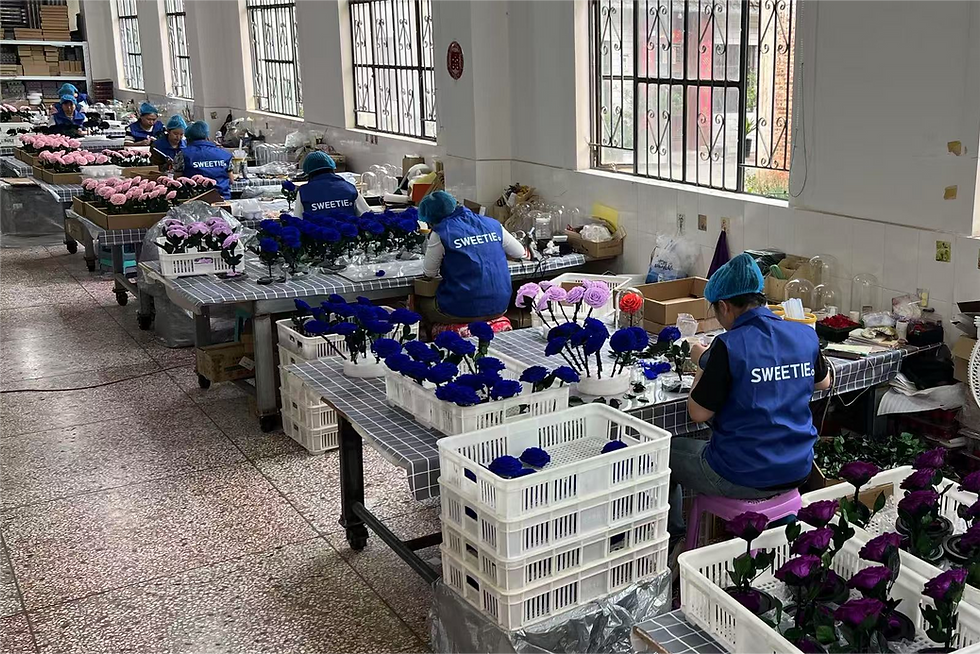
At Sweetie-Gifts, we pay attention to end-customer feedback, not just production results.
That is one reason we developed our own scent management system.
It was built through repeated testing, sampling, adjustments, and feedback from real projects. Some buyers care strongly about rose scent. Some want a fragrance direction that better fits their product concept. Our goal is not simply to add fragrance. It is to help Amazon sellers create a scent experience that fits the product, the packaging, and the customer expectation.
If you want to explore a more premium scent experience for your Amazon preserved rose gift, email us at sales@sweetie-group.com.
Final Thoughts: If Your Product Feels the Same, It Will Be Priced the Same
Amazon is not getting less competitive. More listings will enter the category, more products will look similar, and more sellers will try to win with visible tweaks and lower pricing.
That is exactly why deeper differentiation matters.
Packaging still matters. Photography still matters. Product quality still matters. But if every seller stops at what the customer can see, too many preserved rose gifts will continue to feel interchangeable.
Scent is not the only way to differentiate, but it can be one of the most effective ways to make a preserved rose gift feel more premium, less generic, and less dependent on price competition.
If your product looks like everyone else’s and feels like everyone else’s, it will eventually be priced like everyone else’s.
CEO of Sweetie Group


Comments