


How to Prevent Bad Smell Reviews for Preserved Rose Gifts on Amazon


I have seen this situation many times when working with Amazon sellers. The product images look great. The packaging feels premium. The listing is solid. Yet the rating stays stuck around 4.1 or 4.2.
When we read the reviews, one sentence keeps showing up:
“Smells like chemicals.”
On Amazon, customers can forgive a small scratch or a slightly off ribbon. But when a gift smells “chemical” the quality impression drops instantly, even if the roses look beautiful. And once that theme shows up across multiple reviews, it becomes hard to fix quickly.
In this article, I will break down why smell-related reviews are so common with preserved rose gifts, which scents tend to backfire, and how brands can solve odor issues properly instead of trying to cover them up.
If you are already seeing smell-related reviews or want to lower this risk before peak seasons, feel free to contact us at sales@sweetie-group.com. I’m happy to review your current packaging structure and share what I would adjust first.
Why Smell Is a Bigger Problem on Amazon Than Most Sellers Expect
Preserved rose gifts are judged like gifts, not like commodities. That changes everything.
On Amazon, customers open the box at home, often without context. They are not comparing it to other products on a store shelf. They are reacting in real time to the unboxing experience.
Smell is powerful because it feels like “truth.” A customer may not know if your velvet insert is premium or mid-grade, but they know immediately if something smells wrong. And because preserved rose gifts are typically shipped fully sealed, odors can build up during storage and shipping, then hit the customer all at once when the box is opened.
That is why smell-related reviews can appear even when sellers believe their product is “fine” at the time it leaves the warehouse.
Where the Bad Smell Really Comes From
Here is the first thing I tell sellers: in many cases, the preserved roses are not the main source of the odor.
High-quality preserved roses typically have very light natural scent, and sometimes none at all. Most “chemical smell” complaints come from the full system around the roses.
The most common sources we see are:
Adhesives used to secure roses, decorations, or internal structures
Foam inserts, sponge bases, or velvet linings that release “new material” odor
Printing, lamination, and coatings on gift boxes that can carry residual odor
Humidity and long sealed storage, which can create a musty, trapped smell
A key detail many sellers miss is timing. A box might smell acceptable during assembly. But after it is sealed, stored, and shipped, the odor becomes concentrated. The customer’s first impression is based on the most intense moment of that odor release.
Why “Just Add Fragrance” Can Backfire
Once sellers see “smells like chemicals,” the instinct is to add fragrance.
Sometimes fragrance is the right strategy, but only under one condition: you must remove the unwanted odor first.
If you apply fragrance on top of a chemical or plastic-like smell, you often get something worse. Customers may describe it as “cheap perfume,” “too strong,” or “gave me a headache.” Those reviews are just as damaging on Amazon, especially for gifts.
Fragrance should be treated as a brand choice, not a cover-up. When it is optional, subtle, and consistent, it can improve the unboxing experience. When it is used to mask problems, it usually creates new complaints.
If you want help diagnosing whether your issue is coming from materials, sealing, storage, or something else, email us at sales@sweetie-group.com. A few details and photos are often enough for us to narrow down likely causes.

How Preserved Rose Gifts Should Smell
In my view, the best preserved rose gifts do not smell “strong.” They smell clean and intentional.
A good scent profile for preserved rose gifts is:
Light
Smooth
Non-intrusive
Stable after sealed shipping
Below is a simple guide to scent directions that tend to work well for Amazon gift buyers, and why.
Scent direction | Why it tends to work for preserved rose gifts |
Light lavender or soft herbal | Calm, clean, widely accepted for gifts |
Fresh or ocean-inspired | Feels modern and premium, rarely polarizing |
Soft rose | Matches customer expectation without feeling like perfume |
Very light vanilla or amber | Warm and gift-like when kept subtle |
Scent directions that often cause problems include heavy perfume-style florals, overly sweet notes, aggressive citrus, and anything that feels sharp or alcohol-like on first open.
One more practical point for Amazon: fragrance should usually be optional. A fragrance-free version reduces risk for customers with sensitivities and keeps you from losing buyers who prefer “no scent.”
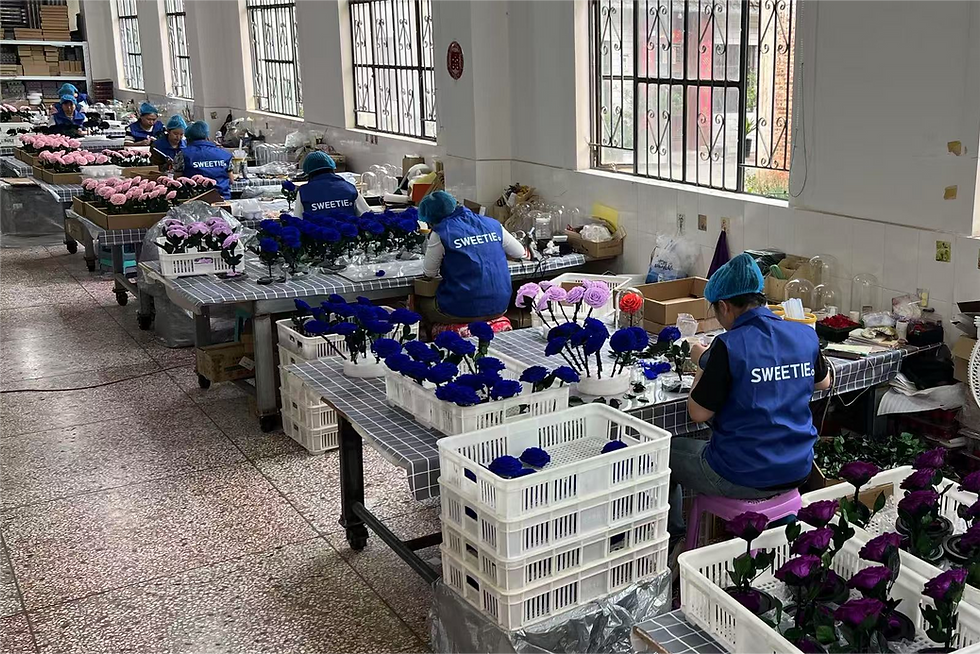
How Sweetie-Gifts Manages Scent from the Start
At Sweetie-Gifts, we built our scent approach specifically around the reality of sealed packaging and cross-border shipping. We call it our Scent Management System, and it has two goals:
Reduce or eliminate unwanted odor sources
Offer controlled fragrance customization when it fits the brand
1) Odor control at the source
We focus on the parts most likely to cause “chemical smell” reviews:
Choosing low-odor packaging components (inserts, linings, trays)
Using low-odor adhesive strategies suitable for gift boxes
Building in airing and stabilization time before final sealing when needed
2) Packaging design for sealed shipping
A gift box that looks great in a showroom is not always the best box for Amazon shipping. We evaluate how odor can build up in:
Fully sealed gift structures
Long storage cycles
Peak-season inventory holding
3) Controlled fragrance customization
For brands that want scent as part of the experience, we offer:
Fragrance-free as a stable baseline option
Light, brand-appropriate fragrance options with controlled intensity
Scent directions that fit preserved rose gifts (for example, soft herbal, fresh, and gentle rose profiles)
This is where many sellers gain an edge. When odor is controlled and scent is designed intentionally, customers stop mentioning “chemicals” and start describing the gift as “luxury,” “clean,” or “high-end.”
If you want us to recommend a scent direction that matches your price point and buyer profile, contact us at sales@sweetie-group.com. We can suggest a safe starting set for testing without overcomplicating your SKU strategy.

What Amazon Sellers Should Take Away From This
Bad smell reviews are rarely random. They are usually predictable.
If you remember only a few points, make them these:
Odor control comes first. Fragrance comes second.
Sealed shipping concentrates smell, so “fine at the factory” may not be fine at delivery.
Subtle and optional scent is safer than strong scent.
The best results come from a system, not a quick fix.
Preserved rose gifts can be a high-margin category on Amazon, but only when the unboxing experience stays consistently premium.
Frequently Asked Questions
Do preserved roses have a natural smell?
Usually very little. Many preserved roses have almost no natural fragrance. Strong odors are more often caused by packaging materials, adhesives, or trapped shipping odors.
Why does the box smell worse after shipping?
Sealed packaging traps odor. During storage and shipping, volatile smells can build up. When the customer opens the box, the odor is released all at once.
Should I add fragrance to reduce “chemical smell” complaints?
Not as a first step. Fragrance works best only after the unwanted odor source is controlled. Otherwise it can create a mixed smell that customers dislike even more.
What causes musty smell in preserved flower gifts?
Musty smell is usually related to moisture. Humid storage, insufficient drying, or long sealed holding periods can create that trapped odor.
Can I fix smell problems without redesigning my whole product?
Often yes. Adjusting inserts, adhesives, and pre-sealing airing practices can reduce odor significantly without changing the overall look of the gift.
Which scents are safest for Amazon preserved rose buyers?
Light herbal profiles (like lavender), fresh clean profiles, soft rose, and very subtle vanilla or amber tend to be safer than strong perfume-style scents.
Final Thoughts
On Amazon, sellers compete with photos, pricing, and packaging design. But long-term performance often comes down to small details that customers feel immediately. Smell is one of those details.
If you are seeing “chemical smell” in reviews, or you want to prevent it before Valentine’s Day, Mother’s Day, or Q4 gifting, I’m happy to take a look at your current packaging and recommend practical adjustments. You can reach us at sales@sweetie-group.com.
CEO of Sweetie Group


Comments