


Mother’s Day in Supermarkets: What Shoppers Actually Buy vs. What Buyers Expect


Mother’s Day is one of those calendar events that looks “safe” on paper.Every year it comes back. Every year shoppers say they will buy something. And every year, supermarkets prepare early assortments based on past sales, familiar categories, and internal forecasts.
Yet if you talk privately with category managers and buyers in the U.S. and Europe, many will admit the same concern:“We did everything right, but some items still didn’t move the way we expected.”
The gap between what buyers plan and what shoppers actually buy during Mother’s Day has been quietly widening. Not because buyers are careless—but because shopper behavior has changed faster than traditional buying assumptions.
This article looks at that gap from a retailer’s point of view, using real consumer behavior patterns rather than product promotion.
What Buyers Traditionally Expect from Mother’s Day
From a supermarket buying perspective, the logic has long been consistent—and reasonable:
Mother’s Day is a reliable gifting occasion
Shoppers will plan ahead
Flowers and classic gift items will anchor sales
Mid-range price points will convert best
The assortment can be largely seasonal and cleared after the holiday
These assumptions were built when shopping journeys were more linear:customers planned, visited stores earlier, and made decisions with more time.
For many years, that model worked.
What Shoppers Actually Do Today
Recent consumer behavior data in the U.S. and Europe tells a more complex story.
1. The Rise of Experience-Driven Gifting
A growing share of Mother’s Day spending is no longer tied to “things” alone. Dining out, shared experiences, and symbolic gifts now compete directly with physical products.
For supermarkets, this matters because shoppers are not always asking:
“What product should I buy?”
They are asking:
“How do I express appreciation quickly and appropriately?”
That shift favors items that feel meaningful immediately, not necessarily those that are most traditional.
2. Fast Decisions and Strong Price Anchors
Mother’s Day is increasingly a last-minute holiday.
Many shoppers:
Decide within days (or hours)
Spend limited time comparing options
Gravitate toward familiar price anchors like:
$9.99 / $14.99 / $19.99
€12.99 / €19.99 / €24.99
This creates a buying environment where:
Emotional clarity matters more than detailed features
Packaging and shelf presentation influence decisions more than brand stories
Simplicity converts better than variety
If you are currently reviewing how your Mother’s Day assortment performs at specific price points, we are happy to exchange insights from recent U.S. and EU retail programs. You can reach us directly at sales@sweetie-group.com.
3. Amazon’s Quiet but Powerful Influence
Amazon does not replace supermarkets on Mother’s Day—but it reshapes expectations.
Online platforms absorb:
Highly planned purchases
Standardized gifts
Shoppers who prioritize delivery certainty
As a result, supermarkets increasingly capture:
Immediate, emotional purchases
In-store decisions made under time pressure
“I need something now” moments
This means supermarkets are no longer competing on range alone. They are competing on speed of decision, emotional clarity, and risk reduction for the shopper.

Where Expectations and Reality Start to Diverge
The mismatch usually appears in three areas:
Buyer Assumption | Shopper Reality |
Shoppers plan ahead | Many decide late |
Seasonal-only items are acceptable | Shoppers prefer items that don’t feel “expired” after the day |
Variety increases conversion | Too many choices slow decisions |
Flowers lead, others support | Shoppers often look for alternatives to fresh flowers |
None of these are mistakes. They are simply assumptions formed in a different retail environment.
The Real Risk Buyers Face
The biggest risk is not choosing the “wrong” product.It is overestimating how much time and certainty shoppers have.
When assortments are built primarily for:
Planned purchases
Narrow seasonal use
Single-day relevance
they become vulnerable to:
Slower sell-through
Higher post-holiday markdown pressure
Missed impulse opportunities
Modern Mother’s Day shopping rewards products that:
Communicate purpose instantly
Feel gift-ready without explanation
Can still sell after the holiday without discomfort
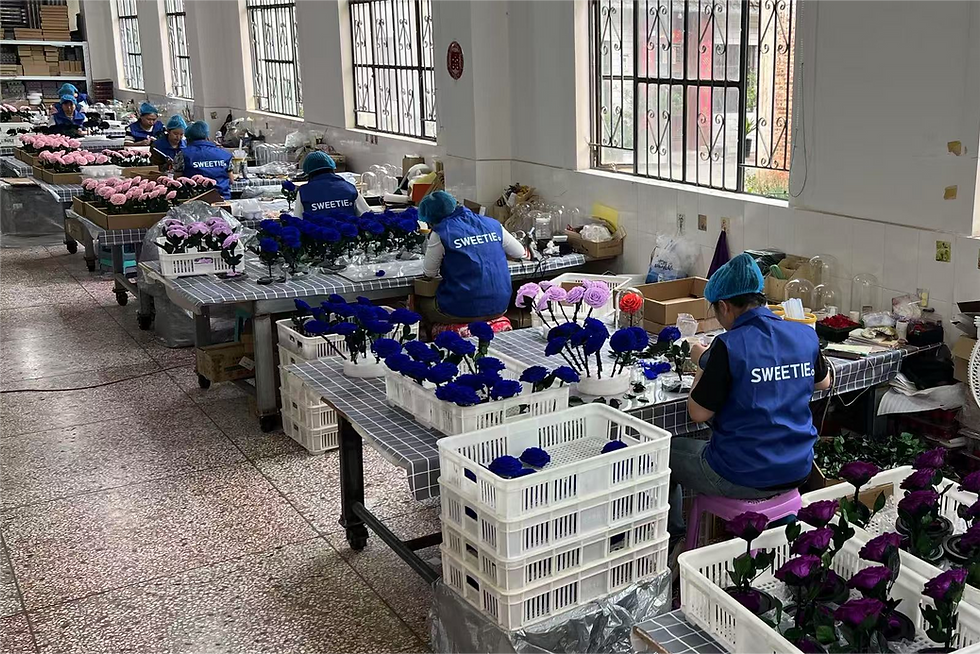
Why Work With Sweetie for Mother’s Day Programs
For Mother’s Day, many buyers are not looking for novelty—they are looking to reduce execution risk in a very short selling window.
Some supermarket and brand teams choose to work with us because our gifting programs are built around a few practical priorities:
Gift-ready presentation that supports fast decisions
Stable quality that avoids surprises during peak season
Product structures that can continue selling beyond Mother’s Day without creating clearance pressure.
We’re not positioned as a universal solution, but as a reliable option for teams balancing emotional appeal with operational control.
If this way of thinking aligns with how you approach Mother’s Day planning, you’re welcome to reach us at sales@sweetie-group.com.
Rethinking Mother’s Day Without Rebuilding Everything
This is not a call to abandon traditional categories.Flowers, chocolates, and classic gifts will remain central.
The shift is more subtle:
Designing assortments for decision speed, not just category coverage
Balancing seasonal messaging with year-round usability
Planning for extension beyond Mother’s Day, not just clearance after it
Buyers who adjust their assumptions—even slightly—often see more stable performance without increasing risk.
Final Thoughts
Mother’s Day has not become unpredictable.It has become behavior-driven rather than calendar-driven.
The buyers who perform best are not those who guess trends, but those who understand how shoppers actually behave under time pressure, emotional intent, and multiple channels.
That understanding—not a bigger assortment—is what closes the gap.
If you would like to compare notes or explore how Mother’s Day buying behavior is evolving across U.S. and European supermarkets, feel free to contact us at sales@sweetie-group.com.

CEO of Sweetie Group


Comments