


How Product Managers Can Out-Innovate Chinese Sellers on Amazon


Amazon product managers are under more pressure than ever. You are expected to launch new products faster, differentiate clearly, and still protect margin. At the same time, Chinese sellers seem to release look-alike products within weeks, often at lower prices.
The frustration is real. Many product managers are not losing because their ideas are weak. They are losing because the system behind their innovation is slower and less integrated.
The good news is this: competing successfully with Chinese sellers does not require copying their playbook. It requires understanding why they move fast, and then building a smarter innovation system that plays to your strengths as a brand.
This article breaks down how that works in practice.
Index:
Why Chinese Sellers Move So Fast on Amazon
Before talking about how to win, it is important to clearly understand what you are competing against.
Chinese Amazon sellers are not just “fast.” Their speed is structural.
Integrated supply chains reduce friction
In many cases, the seller, product developer, packaging designer, and factory are part of the same organization or tightly connected. There are fewer handoffs, fewer approval layers, and fewer misunderstandings.
A design tweak does not require weeks of back-and-forth emails. It can be adjusted the same day and tested immediately.
Modular product design enables rapid iteration
Most fast-moving Chinese sellers do not design products from scratch every time. They work with modular systems.
A single product structure might support:
Multiple sizes
Several color variations
Different packaging styles
Seasonal design changes
This allows them to launch ten SKUs with the effort it takes many Western teams to launch one.
Execution is prioritized over perfection
Chinese sellers often launch earlier, test faster, and adjust based on live data. This mindset reduces internal debate and speeds up decision-making.
If you are trying to compete with that pace using traditional, linear product development, you will always feel behind.
If your team is rethinking how to shorten development cycles or restructure supplier collaboration, our design and development team regularly works with Amazon brands facing this exact challenge. You can reach us anytime at sales@sweetie-group.com.
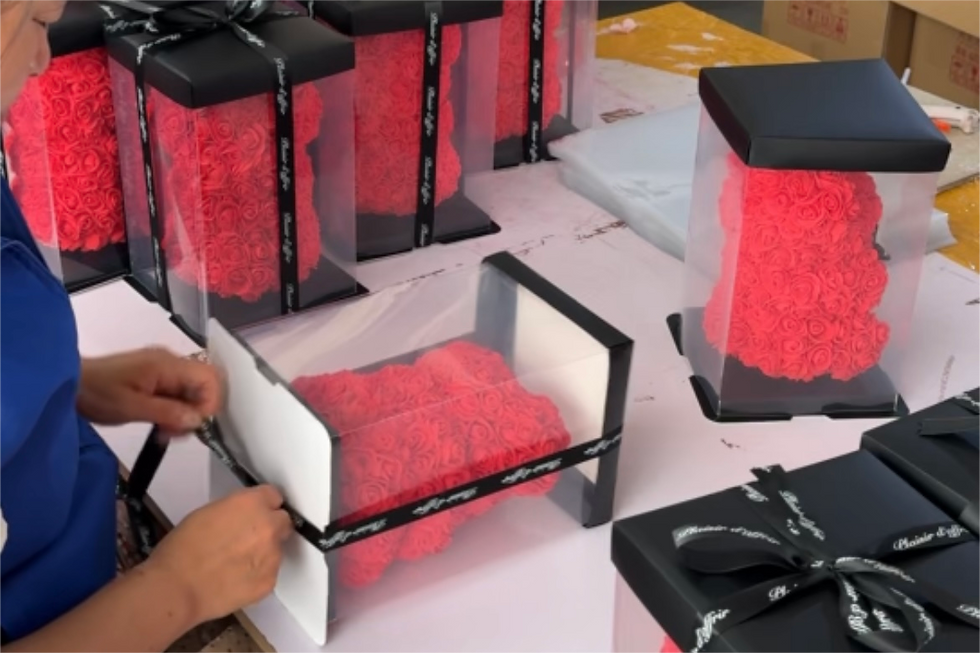
Why Competing on Speed Alone Is a Losing Strategy
Many U.S. brands react by trying to “move faster.” That instinct is understandable, but incomplete.
Speed alone is not the real battlefield.
Different strengths require different strategies
American and European brands typically have advantages that Chinese sellers do not:
Stronger consumer insight
Clear brand positioning
Better storytelling and packaging logic
Higher expectations for quality consistency
Trying to match Chinese sellers purely on launch speed often leads to compromised differentiation.
The real risk is becoming interchangeable
When speed becomes the only goal, products start to look generic. Once that happens, price becomes the main decision factor, and margin erodes quickly.
The goal is not to be the fastest seller on Amazon.The goal is to build products that are hard to copy and easy to recognize.
That is where product managers can regain control.
Winning Through Creative Co-Development
The most effective product managers I work with have shifted from a sourcing mindset to a co-development mindset.
This change is subtle, but powerful.
From supplier to development partner
Traditional development often looks like this:Product manager defines the product.Procurement sources a factory.The factory executes instructions.
In a co-development model, design, engineering, and manufacturing input happen earlier and in parallel. Feasibility, materials, and packaging constraints are considered at the concept stage, not after design approval.
Designing differentiation into the product itself
True differentiation does not rely only on marketing copy. It comes from decisions made early:
Product structure
Combination of materials
How the product is experienced when unboxed
How it fits into a gifting or lifestyle scenario
When these elements are built into the product, copying becomes harder and slower.
Protecting brand identity during co-development
Co-development does not mean giving up control. Strong product managers define:
Core design language
Non-negotiable brand elements
Clear boundaries around IP and customization
When done correctly, co-development increases creativity instead of diluting it.
If you are exploring this type of collaborative development and want to understand what it looks like in practice, our team is always open to discussing early-stage concepts at sales@sweetie-group.com.
Case Insight: How “Flower + Everything” Accelerates Innovation
One model that illustrates this approach well is Sweetie’s “Flower + Everything” concept.
Rather than treating flowers as a standalone product category, we treat them as a design platform.
What “Flower + Everything” actually means
The idea is simple: preserved flowers become a core element that can be combined with different product types, such as:
Jewelry boxes
Home décor
Plush and lifestyle gifts
Seasonal and event-driven packaging
Each combination creates a distinct product experience while sharing a common production foundation.
Why this works for Amazon product managers
This model allows brands to:
Test multiple concepts quickly
Adapt designs for different markets
Reduce development risk by reusing proven components
Instead of betting everything on one SKU, you are building a flexible product system.
From concept to launch with fewer bottlenecks
Because design, materials, and packaging are already integrated into the system, iteration is faster and smoother. Product managers stay focused on consumer value rather than operational friction.
A Practical Framework for Product Managers
Below is a simplified framework that many successful Amazon product teams follow when competing against fast-moving sellers.
Stage | Key Question | Focus |
Concept | What makes this product hard to copy? | Structure, use case, brand fit |
Design | Can this scale without losing identity? | Materials, modularity, packaging |
Development | Are design and production aligned early? | Co-development, feasibility |
Testing | Can we validate quickly with low risk? | Small batches, fast feedback |
Launch | Does the product tell its story visually? | Listing, imagery, unboxing |
This approach does not slow innovation. It stabilizes it.
Innovation on Amazon Is a System, Not a Moment
Many product managers are looking for a breakthrough idea. In reality, the teams that win consistently on Amazon are the ones that build repeatable innovation systems.
Chinese sellers excel at execution speed.Strong Amazon brands win by combining:
Creative differentiation
Smart co-development
Scalable design systems
When innovation becomes systematic instead of reactive, competition becomes manageable.
If you are looking to develop differentiated, Amazon-ready products through thoughtful co-development, our design team is happy to explore possibilities with you. You can reach us directly at sales@sweetie-group.com.
Final Thoughts
Out-innovating Chinese sellers is not about working harder or rushing launches. It is about designing smarter products with the right partners and the right systems in place.
When product managers lead innovation strategically, speed follows naturally.
If this perspective resonates with you and you want to explore how co-development could support your next product line, feel free to contact us at sales@sweetie-group.com.
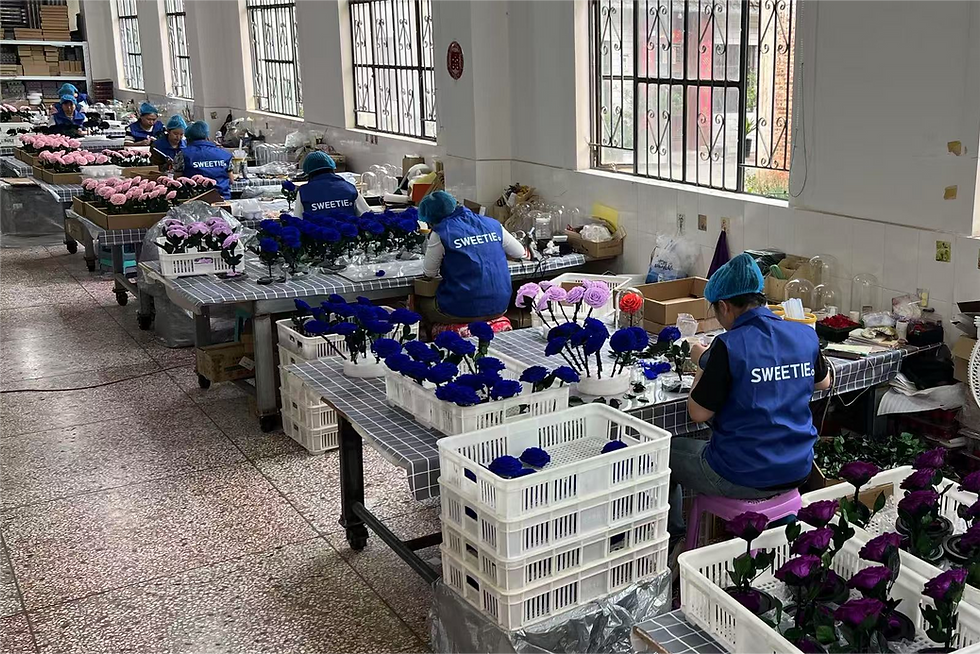
CEO of Sweetie Group


Comments