


A Practical Guide to Product Bundling on Amazon for Brand Owners

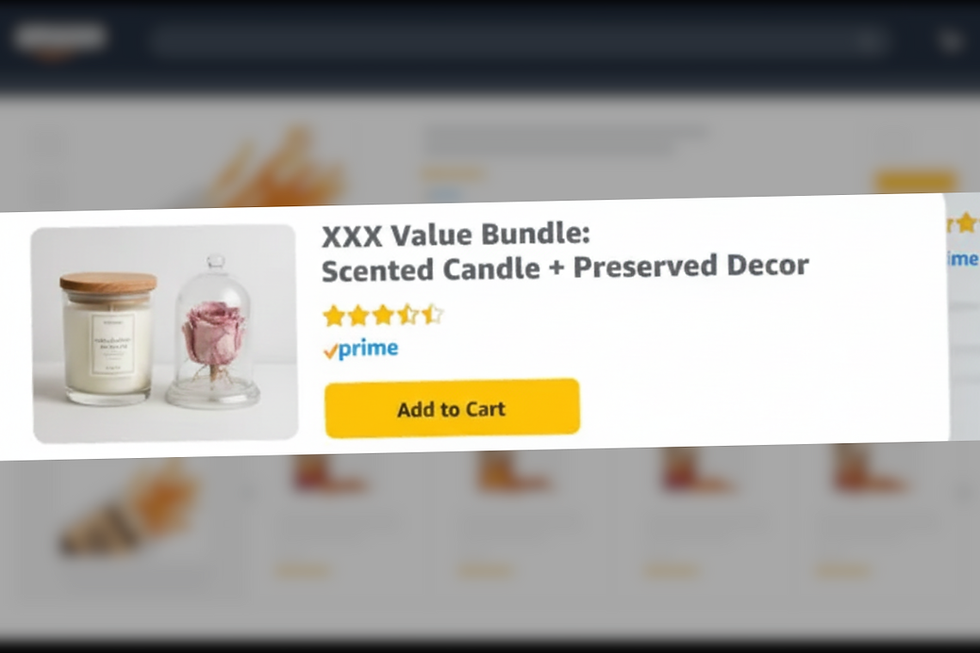
Product bundling has become one of the most reliable ways for Amazon brand owners to increase average order value, improve conversion rates, and differentiate in crowded categories.Yet many brands hesitate to test bundles because they seem operationally complex or difficult to evaluate.
This guide focuses on the practical side of bundling for Amazon Brand Owners. It explains when bundling makes sense, how to choose the right bundle items, and how to test gift or bundle strategies without disrupting your core product.
If you are currently exploring ways to increase AOV or improve perceived value on Amazon and want to sanity-check your ideas, you can always reach us at sales@sweetie-group.com for a practical discussion.
Index:
What Product Bundling Means for Amazon Brand Owners
For brand owners, bundling is not about adding random items to inflate price. It is about shaping how customers experience your product.
On Amazon, bundling usually appears in three forms:
Physical bundles where multiple items are packed and sold as one ASIN
Virtual bundles created through Brand Registry
Gift bundles or free gifts tied to a promotion or season
Brand owners tend to favor virtual bundles and gift-based strategies because they allow testing with less operational risk and more flexibility.
When Bundling Makes Sense and When It Does Not
Bundling is most effective when your brand already has basic stability.
It usually makes sense when:
Your conversion rate is stable but AOV has plateaued
Your product is functional and lacks emotional differentiation
You want to create a premium or gift-ready perception
You are preparing for seasonal traffic like Valentine’s Day or Q4
Bundling often does not make sense when:
Your product positioning is still unclear
Margins are not well defined
Fulfillment constraints are already tight
The bundle item would confuse the product story
The goal is not to bundle often, but to bundle deliberately.
How to Choose the Right Bundle or Gift Item
A useful way to evaluate potential bundle items is to separate perceived value from operational cost. Brand owners who succeed with bundles usually choose items that are emotionally appealing but operationally simple.
The table below summarizes a practical evaluation framework used by many brand teams.
Evaluation Factor | Why It Matters for Brand Owners |
Perceived value | Customers should feel the bundle adds meaning, not clutter |
Weight and size | Directly impacts FBA and fulfillment costs |
Shelf life | Reduces risk of returns and inventory loss |
Brand fit | The item should reinforce, not dilute, your brand image |
Ease of explanation | The value should be clear in one sentence |
This framework naturally leads many brands to consider gift-oriented items rather than purely functional accessories.
Using Preserved Flowers as a Bundle or Free Gift
Preserved flowers are increasingly used by brand owners as bundle items or gifts, not because they are decorative, but because they deliver emotional value with relatively low operational complexity.
A practical way to approach this is step by step.
Step 1: Define the role of the flower
For most brands, preserved flowers work best as a symbolic or premium accent, not the hero product.
Step 2: Choose bundle or free gift
Paid bundles tend to increase AOV, while free gifts often improve conversion. The choice depends on your pricing strategy.
Step 3: Control scale and presentation
Small formats and neutral or brand-aligned packaging help keep the focus on your main product.
Step 4: Test before committing
Limited runs tied to holidays or promotions allow you to measure impact without locking inventory.
If you want to evaluate whether preserved flowers fit your category or brand positioning, we are happy to share practical input based on similar projects. You can reach us at sales@sweetie-group.com.

Common Mistakes Brand Owners Make with Gift Bundles
Several issues come up repeatedly when brands test bundles for the first time.
Choosing items that look inexpensive or generic
Over-customizing packaging too early
Ignoring lead times before peak seasons
Treating the gift as an upsell instead of a value signal
Most of these mistakes are avoidable with a small-scale test mindset.
What to Ask a Supplier Before Testing a Bundle
Before committing to any gift or bundle item, brand owners should clarify a few operational basics.
What is the real minimum order for testing
How consistent are colors and materials across batches
Can packaging remain neutral or lightly branded
How lead times change during peak seasons
Clear answers here reduce risk far more than aggressive pricing.
How We Typically Support Brand Owners During Testing
When we work with Amazon brand owners at Sweetie-Group, the focus is usually on controlled testing rather than full-scale rollout.
That often includes:
Small MOQ support for bundle validation
Packaging options that align with existing brand aesthetics
Stable quality suitable for photography and reviews
Experience with gifting scenarios for Amazon and DTC brands
We aim to support the testing phase first, so brand teams can make decisions based on data rather than assumptions.
Final Thoughts
Product bundling is not a shortcut. For brand owners, it is a design and positioning tool that works best when applied thoughtfully.
When done well, bundles and gifts can improve AOV, strengthen brand perception, and make your product easier to choose in a competitive marketplace.
If you are planning a bundling or gift strategy and want to explore whether preserved flowers make sense for your brand, feel free to reach out at sales@sweetie-group.com. We are always open to practical, no-pressure discussions.
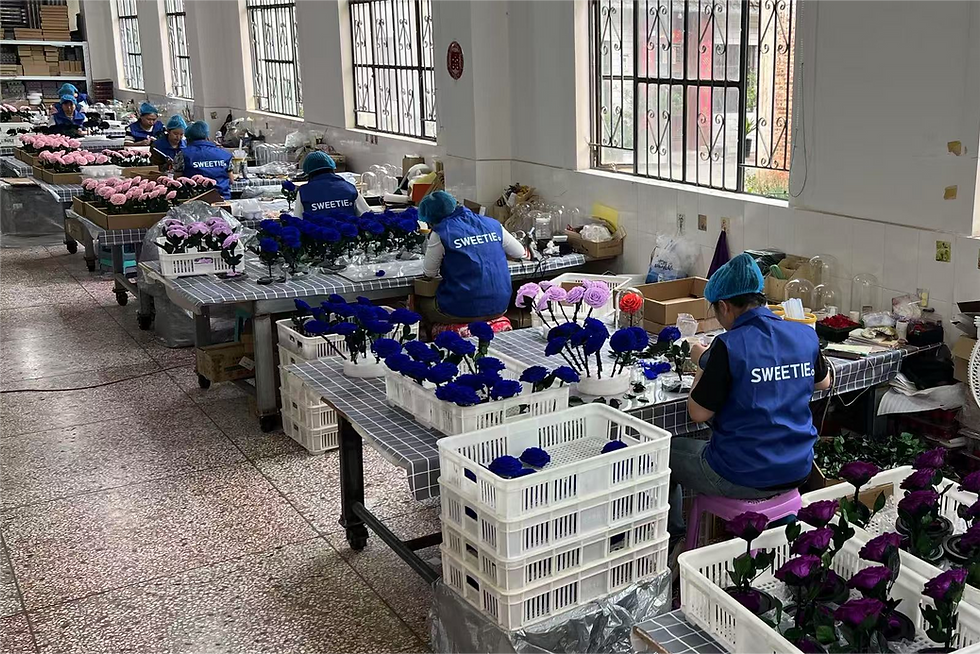
CEO of Sweetie Group


Comments