


Optimizing Your Supply Chain: Insights into Preserved Flowers Cultivation and Distribution
- Annie Zhang

- Mar 20, 2025
- 3 min read

In the ever-evolving floral industry, preserved flowers have emerged as a game-changer, offering long-lasting beauty that appeals to both consumers and businesses alike. Understanding the intricacies of their cultivation and distribution can significantly enhance your supply chain efficiency.
Index:
What are Preserved Flowers?
Preserved flowers are natural blooms that have undergone a preservation process to maintain their freshness and appearance for extended periods, often months or even years. This innovation has led to a burgeoning market, with the global preserved flowers market size valued at approximately USD 180.03 million in 2023 and projected to reach USD 272.17 million by 2032, reflecting a compound annual growth rate (CAGR) of 4.77% during the forecast period. This growth underscores the increasing relevance of preserved flowers in various business applications, from interior décor to event planning.
Cultivation Regions and Practices
The quality of preserved flowers is deeply rooted in their cultivation origins. Notably, regions like Yunnan in China, Ecuador, and Colombia have become prominent hubs for growing these blooms.
Yunnan, China: Known as the "Kingdom of Flowers". With its high altitude, moderate climate, and optimal soil conditions, Yunnan produces some of the world's finest blooms. The steady temperatures and ample rainfall in this region create an environment where roses, hydrangeas, and other flowers thrive with rich color and strong petals. Click here to learn about our Yunnan factory.
Ecuador and Colombia: These South American countries are traditionally florist powerhouses, with Colombia being the world's second-largest exporter of flowers. Their geographical landscapes offer optimal climates for flower cultivation, particularly roses. In these regions, roses are typically grown at elevations between 2,000 and 3,100 meters, where temperatures range from 10°C at night to 24°C during the day, fostering blooms of exceptional beauty and size.
Sustainability is also a growing concern. Ethical farming practices, such as integrated pest management and reduced water consumption, are becoming industry standards. Many farms, including those we work with, adhere to eco-friendly cultivation methods that align with corporate social responsibility (CSR) goals. This not only preserves the natural ecosystem but also enhances a brand's reputation in eco-conscious markets.
Harvesting and Preservation Techniques
The journey of a preserved flower from farm to consumer involves meticulous processes to ensure quality.
Harvesting: Timing is crucial. Flowers are picked at their peak bloom to capture optimal beauty. In regions like the Andean mountains, specific altitudes and climates are selected to cultivate flowers that meet high-quality standards.
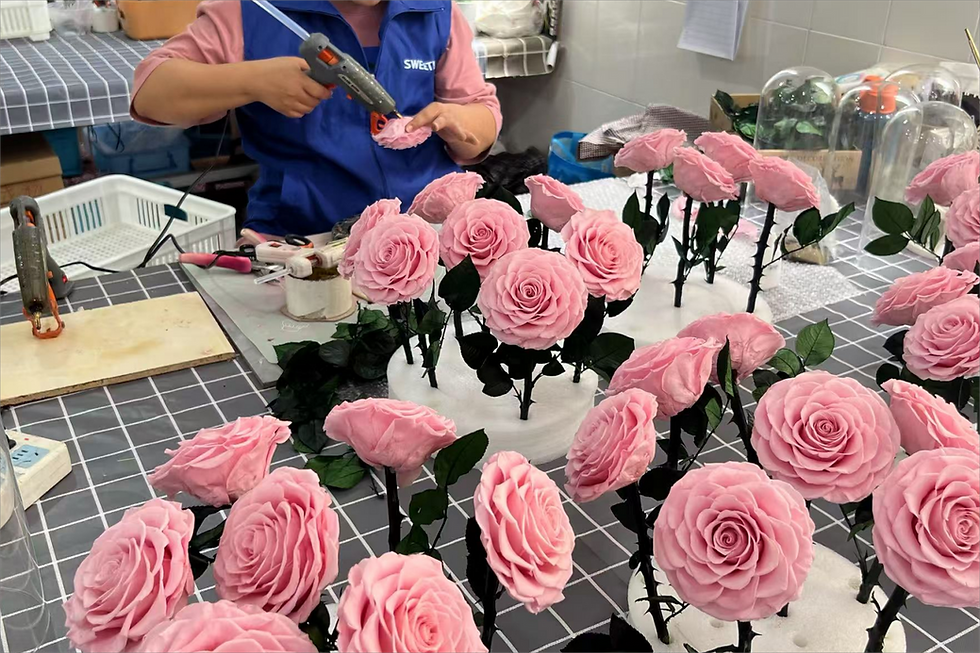
Preservation: Post-harvest, flowers undergo preservation methods such as dehydration, decolorization, dyeing, and drying. These techniques maintain the flowers' natural aesthetics and significantly extend their shelf life, making them ideal for long-term use.

Logistics and Distribution
Getting preserved flowers from farm to market requires a well-structured logistics system. Unlike fresh flowers, which demand cold-chain shipping, preserved flowers have more flexibility. However, they are still delicate and must be transported in climate-controlled environments to prevent exposure to extreme temperatures and humidity.
Some of the key logistical challenges include:
Customs Regulations – Different countries have varying import regulations for preserved flowers, requiring proper phytosanitary certificates and compliance with chemical treatment guidelines.
Shipping Conditions – Temperature fluctuations during transit can impact flower quality, making it essential to use packaging that offers sufficient protection.
Lead Times – While preserved flowers have a longer shelf life, maintaining steady inventory levels requires meticulous planning to prevent stock shortages or overproduction.
At Sweetie-Gifts, we have optimized our distribution channels, working with trusted freight partners and using environmentally friendly packaging to ensure flowers arrive in pristine condition.
Quality Assurance and Compliance
Consistency is key when dealing with preserved flowers. Multiple quality control checkpoints are in place throughout the supply chain:
Farm-Level Inspections – Ensuring flowers meet size, color, and structural requirements before harvesting.
Preservation Process Testing – Monitoring absorption rates and chemical composition to guarantee longevity.
Pre-Shipment Quality Checks – Conducting final inspections on packaging integrity and flower condition before dispatch.
International compliance is also crucial. We ensure all our products meet REACH, CE, and phytosanitary certifications, making them suitable for export to the U.S., EU, and beyond. These certifications help businesses avoid regulatory issues while providing customers with assurance of safety and quality.

Conclusion
An optimized supply chain is the backbone of any successful preserved flower business. By understanding where flowers are grown, how they are preserved, and the logistics behind their distribution, businesses can make informed decisions that enhance efficiency and profitability.
If you’re looking for a reliable preserved flower supplier with a strong track record in quality and compliance, we at Sweetie-Gifts are here to help. With over 16 years of experience and global partnerships, we can support your business with high-quality preserved flowers tailored to your needs.
For inquiries and partnerships, feel free to contact us at sales@sweetie-group.com.

Warm regards,
Annie Zhang
CEO, Sweetie-Group


Comments