


How to Display Plush Flowers in Supermarkets and Gift Retail Stores


A plush flower is easy to like. It is soft, colorful, and emotionally simple. A shopper does not need a long explanation to understand it.
But in retail, a product being cute is only the beginning.
For supermarkets and gift retail stores, the real question is much more practical: Can shoppers notice it quickly? Can they understand it as a gift? Can they pick it up easily? Can the store keep the display tidy without spending too much labor?
This is why plush flower displays matter.
A good display does not just hold the product. It gives the product a reason to be bought.
Why Plush Flowers Need Retail-Ready Displays
Plush flowers are emotional products. People often buy them because they feel warm, soft, sweet, funny, romantic, or giftable.
But most shoppers do not walk into a supermarket thinking, “I need to buy a plush flower today.” They notice it because the display catches their eye.
A good plush flower display should do three things:
Attract shoppers quickly
Color matters. Shape matters. A display should be visible from several steps away.
Make the product easy to understand
Shoppers should know immediately whether the product is a single stem, bouquet, blind box, gift item, or seasonal decoration.
Make store operations simple
For supermarkets, the display must be easy to place, easy to refill, and easy to keep tidy.
That is why retail-ready packaging matters. A beautiful plush flower without a clear display plan can easily become messy on the shelf. A simple display box, bucket, or wall bay can turn the same product into a giftable retail program.
For buyers planning a seasonal plush flower program, Sweetie can help review display formats, packaging options, and sample plans. Contact us at sales@sweetie-group.com.
5 Practical Plush Flower Display Formats
1. PDQ Display Boxes for Supermarkets and Seasonal Shelves
For supermarkets, drugstores, discount stores, and convenience retail, the most practical display is often not the most dramatic one. It is the one that can be opened, placed, replenished, and repeated across many stores.
That is where a PDQ display box works well.
A PDQ display box is useful because it turns plush flowers into a ready-to-sell unit. Store staff do not need to arrange every stem one by one. The product arrives with a basic selling structure already built in.
This format is especially suitable for single-stem plush flowers, small Valentine’s Day items, Mother’s Day colors, mini gift stems, and low-to-mid-price seasonal products.
The key is not to overdesign it. A good supermarket display box should:
Show the flower heads clearly
Keep the stems upright
Leave enough room for shoppers to pick one piece
Have a clear price or barcode area
Stay stable after several pieces are removed
Protect the product during shipping
For supermarkets, the display box should feel cheerful, but not fragile. Attractive, but not complicated.
This is also where many retail programs fail. A plush flower may look beautiful in a showroom, but if the display box bends, the flower heads are crushed, or the shopper has to dig through the box, the product loses value at store level.
For mass retail, the best display is usually the one that makes selling easy.

2. Bucket Displays for Gift Stores and Character Retail
Bucket displays create a softer shopping experience. They make plush flowers feel closer to fresh flowers because shoppers can “pick” one by hand.
This is why bucket displays work well in gift stores, toy sections, lifestyle shops, theme retail stores, museum shops, and tourist gift stores.
Disney-style plush flower displays are a useful reference here. In the examples you shared, the product is not just placed in a bin. It is arranged in buckets with a themed visual board behind it. That does two things at once: it gives the shopper a picking experience, and it gives the product a story.
For Disney, the story comes from IP. The character makes the gift easier to understand.
For ordinary retail brands, the same idea can still work without IP. The story can come from color, occasion, or emotion.
For example:
A red and pink bucket display for Valentine’s Day
A soft cream and lavender display for Mother’s Day
A bright yellow display for graduation season
A pastel display for spring gifting
The mistake is to mix too many things together. A bucket display should feel abundant, but not random.
If every bucket has different flowers, colors, tags, and packaging, the display becomes noisy. A shopper should be able to understand the theme in one glance.

3. Wall Bay Displays for Larger Retail Stores
Large retail stores in Europe and North America do use wall-based displays, especially in seasonal areas, toy departments, children’s gift zones, apparel accessories, and promotional sections.
But for plush flowers, this does not always mean building a full flower wall.
A more realistic version is a wall bay display: one modular section of wall or shelving designed around one theme.
This can work well when the retailer wants more visual impact than a small shelf display, but still needs something manageable for daily retail.
A wall bay display is useful when:
The retailer has enough space
The product range has a clear color story
The store wants a stronger seasonal message
The display can be replenished without constant rearranging
For plush flowers, wall bay displays should be edited carefully. Too many flower types can make the wall look messy. Too few can make it look empty.
The best approach is to use controlled abundance.
That means:
Fewer SKUs
Stronger color grouping
Clear visual height
Easy access for shoppers
Simple restocking logic
A wall bay should look rich from a distance, but still be easy to manage from the back room.
For smaller supermarkets or stores with limited staff, PDQ boxes are usually easier to execute than wall bays.

4. Flower-Market-Style Displays for Pop-Ups and Brand Events
The flower-market-style display is the most emotional format.
Cj Hendry’s plush flower market concept shows why. A large wall or market-style setting filled with soft, colorful flowers creates a sense of abundance. People do not just look at the flowers. They want to choose one.
That “choosing” moment is powerful.
It turns the product into an experience.
For everyday supermarket shelves, a full flower-market display is usually not the most practical choice. It needs space, maintenance, and a clear traffic flow. But for the right setting, it can be very effective.
This format is better suited for:
Brand pop-ups
Shopping mall campaigns
Department store events
Beauty and fragrance launches
Jewelry or lifestyle brand activations
Holiday gift events
Flagship retail spaces
The important point is not to copy the entire flower market. Most retail buyers do not need that.
What they can borrow is the emotional structure:
Let shoppers choose. Let colors create impact. Let the display feel like a small event.
A supermarket might translate this into a Valentine’s Day endcap. A gift store might create a small “pick your bloom” corner. A beauty brand might use custom-colored plush flowers as event giveaways.
For brand teams or retail buyers developing custom event displays, Sweetie-Gifts can support concept development, sample making, packaging, and production planning. Email sales@sweetie-group.com to discuss your project.

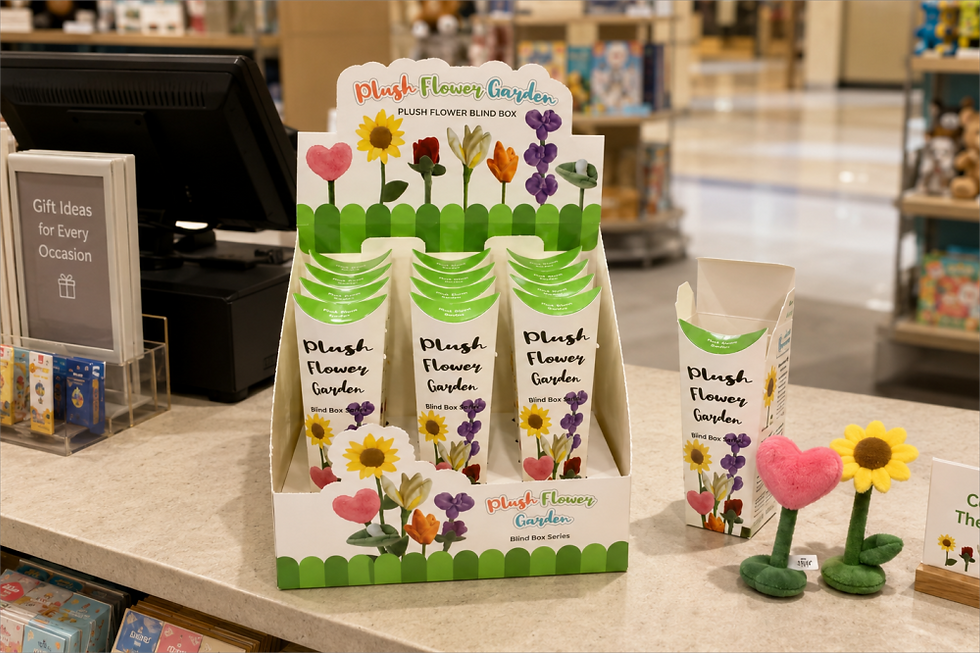
5. Blind Box Counter Displays for Gift and Toy Sections
Plush flower blind boxes should not be treated the same way as single stems.
A single plush flower is usually an instant gift.A blind box is a small moment of curiosity.
That makes blind boxes better for toy sections, bookstore gift areas, museum shops, lifestyle stores, checkout counters, and younger consumer channels.
The display should be small, neat, and easy to understand. It does not need a large footprint. It needs a clear series concept.
A good plush flower blind box display should tell shoppers:
What the collection theme is
How many styles are available
Whether there are special or hidden designs
What makes each flower worth collecting
The flower itself still matters, but the real driver is repeat purchase.
If a blind box has no series logic, it is just a small packaged product. If it has a clear theme, it becomes collectible.
For supermarkets, blind boxes are better as a secondary display, not the main plush flower program. For gift and toy retail, they can be much stronger.
Which Display Format Fits Each Retail Channel?
Not every retail channel needs the same display.
A supermarket needs efficiency. A gift store needs emotional presentation. A toy section needs fun and repeat purchase. A brand event needs visual impact.
Retail Channel | Best Display Direction | Why It Works |
Supermarkets | PDQ boxes, seasonal shelves, endcaps | Easy to place, refill, and repeat across stores |
Discount Stores | Simple shelf trays or PDQ boxes | Keeps cost and store labor under control |
Drugstores | Small counter displays | Works for impulse gifting and limited space |
Gift Stores | Bucket displays or curated shelves | Makes the product feel more giftable |
Toy or Character Retail | Bucket displays and blind boxes | Adds playfulness and collection value |
Lifestyle or Museum Shops | Themed shelf displays | Supports story, color, and design value |
Brand Events | Flower bars or flower-market-style displays | Creates interaction and photo value |
This is why plush flower suppliers should not offer only one packaging option. A product that works in a supermarket display box may need a different structure for a gift shop, and another version for a pop-up event.
The product is the starting point.The display decides how the shopper understands it.
Where to Place Plush Flowers in the Store
Seasonal Gift Area
This is one of the most natural placements.
Plush flowers fit emotional buying occasions: Valentine’s Day, Mother’s Day, spring promotions, graduation season, birthdays, and Christmas gifting.
In seasonal areas, the display should be very clear. Shoppers should not need to think too much.
Red and pink usually signal romance.Cream, blush, and lavender feel softer and more suitable for Mother’s Day.Yellow works well for celebration and graduation.Pastels are easier for spring and Easter.
The product should tell the occasion through color before the shopper reads any words.
Checkout or Impulse Purchase Area
Small plush flowers can work near checkout when the product is compact, affordable, and easy to pick up.
This area is not suitable for complicated packaging or large bouquets. The shopper is already leaving the store. The decision has to be quick.
A good checkout plush flower item should feel like:
“Let me add this.”
Not:
“Let me stop and think about this.”
That is why mini stems, small heart flowers, and blind boxes are better than large flower arrangements in this location.
Gift and Lifestyle Section
Gift and lifestyle sections allow a softer, more curated display.
This is where plush flowers can be arranged with more attention to color, mood, and home decoration value.
The product does not have to be only a holiday item. It can also feel like a birthday gift, desk decoration, small comfort gift, or cheerful everyday present.
For this area, the display can be calmer than a supermarket seasonal shelf. Soft colors, small bouquets, flower pots, and gift-ready packaging usually work better than a high-volume mixed box.
Toy or Character Gift Section
In toy or character gift sections, plush flowers can lean more playful.
This is where IP-style design, bright colors, bucket displays, and blind boxes make more sense. The shopper may be buying for a child, a fan, or someone who likes cute collectible gifts.
The key is organization. Playful should not mean messy.
How to Plan a Plush Flower Display Program
Start with the Sales Scenario
Before choosing a display, define the sales purpose.
A Valentine’s Day supermarket program and a museum gift shop program should not use the same display plan. A brand pop-up and a drugstore counter display have completely different needs.
Start with the question:
What job should this product do in the store?
It may need to drive impulse purchase.It may need to create a seasonal gift table.It may need to support a brand event.It may need to become a collectible series.
Once the sales scenario is clear, the display choice becomes much easier.
Choose the Right Product Form
The most common mistake is trying to force one product format into every channel.
Single stems work well for supermarkets because they are easy to understand and easy to price.
Small bouquets work better when the retailer wants a more complete gift.
Blind boxes work when the store has younger shoppers or collectible gift traffic.
Flower pots and baskets are better for lifestyle retail, home decoration, or curated gift areas.
Custom colors and event packaging work best for brands, campaigns, and promotional gifting.
The product form should follow the channel, not the other way around.
Limit SKUs for Retail Clarity
A showroom can display many styles. A retail shelf should not.
For supermarkets and mass retail, too many choices can weaken the display. It becomes harder to read, harder to replenish, and harder for shoppers to decide.
A stronger first program may only need:
A few core styles
A clear color theme
One main price tier
One display format
One seasonal message
This is not less professional. It is more retail-friendly.
Gift stores and lifestyle stores can carry more variety, but even there, the display needs rhythm. Shoppers should feel guided, not overwhelmed.
Make Replenishment and Shipping Easy
A display is not finished when the sample looks good.
It still has to survive packing, shipping, unpacking, shelf placement, customer handling, and replenishment.
For plush flowers, the main risks are shape deformation, messy stems, unstable display boxes, and unclear labeling.
A retail-ready program should consider:
How the flower head is protected
Whether the display box can be shipped safely
Whether store staff can place it quickly
Whether the product still looks good after shoppers remove several pieces
Whether barcodes and tags are easy to scan
Whether reorder quantities are practical
Retail buyers remember products that make their work easier.
Buyer Checklist Before Ordering Plush Flower Displays
Before placing a bulk order, buyers should confirm the details that affect store execution.
Which display format best fits the store: PDQ box, bucket, wall bay, counter box, or event display?
How many pieces are packed in each display unit?
Can the display box go directly onto the shelf?
Does the display require extra assembly?
Will the flower heads keep their shape during shipping?
Are barcodes, tags, and labels placed correctly?
Is the product classified as a toy, decoration, or gift item?
Are safety tests or age labels needed in the target market?
Can packaging be customized for a holiday or retail campaign?
What are the MOQ, lead time, and reorder options?
These are not small questions. They decide whether the product is easy to launch or difficult to manage.
How Sweetie-Gifts Supports Retail-Ready Plush Flower Programs
For B2B buyers, choosing plush flowers is not only about choosing flower shapes. It is about building a program that can work in real retail conditions.
Sweetie-Gifts supports buyers from concept to shipment. That includes helping clients think through the right product format, display structure, seasonal color direction, packaging method, sample development, and production schedule.
For supermarket and retail customers, our value is not just manufacturing. It is helping make the product easier to sell.
That means:
Suggesting display formats based on channel needs
Developing samples for buyer review
Adjusting packaging for shelf, counter, or event use
Supporting seasonal colors and custom visual details
Considering transport protection before mass production
Managing production and quality control for bulk orders
Some clients come with a clear design. Some only have a sales target or a seasonal theme. In both cases, our role is to help turn that idea into a product and display solution that can be produced, packed, shipped, and presented properly.
A good plush flower program should not stop at “beautiful.”It should be beautiful, practical, and ready for retail.
To discuss a supermarket display box, gift retail collection, blind box program, or custom event display, contact Sweetie-Gifts at sales@sweetie-group.com.

FAQ: Displaying Plush Flowers in Retail Stores
What is the best way to display plush flowers in supermarkets?
PDQ display boxes, seasonal shelves, and endcaps are usually the most practical choices. They are easy to place, easy to refill, and suitable for single stems or simple seasonal gift items.
Can plush flowers be displayed like fresh flowers?
Yes. Bucket displays and flower-market-style displays can create a fresh-flower picking experience. For supermarkets, this idea usually works best in a smaller and more controlled format.
Are plush flower walls suitable for retail stores?
They are suitable for pop-ups, brand events, mall activations, flagship spaces, and large seasonal campaigns. For daily supermarket use, modular wall bays or display boxes are usually more practical.
Are plush flower blind boxes good for gift stores?
Yes. They work well when the store has younger shoppers, collectible gift traffic, or limited counter space. The key is to create a clear series theme instead of random single designs.
Where should plush flowers be placed in a supermarket?
They can be placed in seasonal gift areas, checkout zones, endcaps, toy gift sections, or lifestyle gift areas. The best location depends on size, price point, packaging, and season.
What should buyers confirm before ordering plush flower displays?
Buyers should confirm display format, packing quantity, packaging size, shipping protection, labeling, product classification, testing needs, MOQ, lead time, and reorder options.
Conclusion: Turn Plush Flowers into a Retail Program
Plush flowers do not sell only because they are cute.
They sell when shoppers notice them, understand them, pick them up, and imagine giving them to someone.
Disney-style bucket displays show how plush flowers can become themed gifts. Flower-market-style displays show the power of color, abundance, and choice. But for supermarkets and gift retail stores, the strongest solution is usually more practical: a display that is attractive, clear, easy to place, and easy to replenish.
That may be a PDQ display box.It may be a bucket display.It may be a wall bay, counter box, or seasonal event display.
The best format depends on the channel.
For retailers and importers, the opportunity is not simply to buy plush flowers. It is to build a plush flower display program that shoppers understand and stores can manage.
For plush flower display boxes, seasonal retail collections, blind box programs, or custom event displays, please contact sales@sweetie-group.com.

CEO of Sweetie Group


Comments