


From Trial Order to Long-Term Supply: How Preserved Flower Manufacturers Are Evaluated

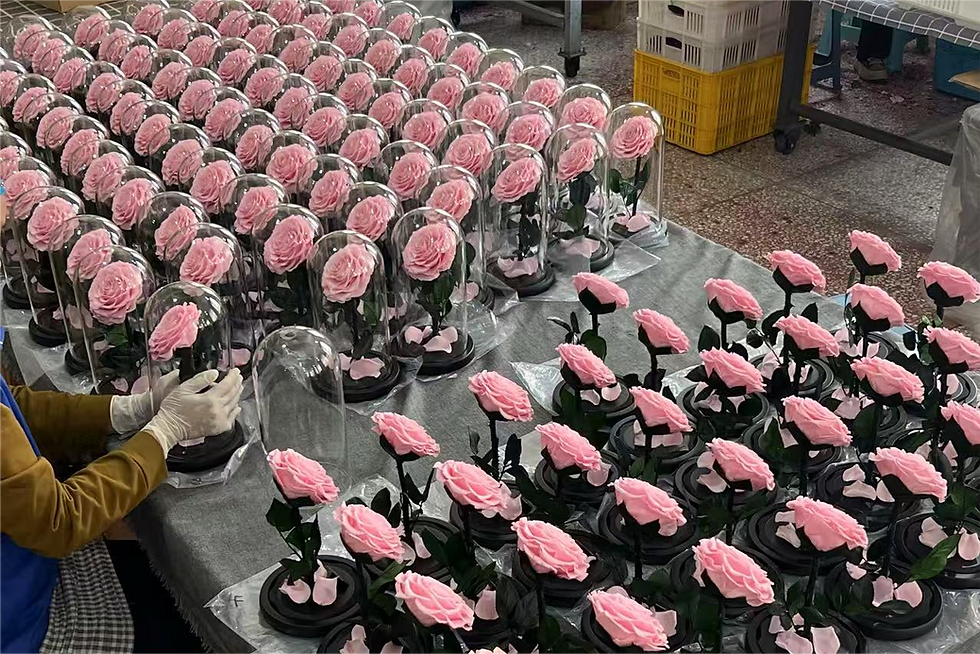
Most preserved flower buyers recognize this moment: the trial order arrives, the products look acceptable, and yet there is hesitation about placing the next order.
That hesitation rarely comes from price alone. It comes from questions that are harder to answer upfront. Will quality remain stable at scale? Will damage rates increase? Can the manufacturer handle real volumes, real deadlines, and real problems once the trial order turns into a commitment?
This is why, in the preserved flower industry, a trial order is never just a trial. It is the first step in a deeper evaluation process that determines whether a manufacturer is suitable for long-term supply.
Index:
1. Arrival Quality: The First Real Signal of Reliability
1.1 Flower Head Quality Sets the Baseline
At the trial stage, arrival quality becomes the first concrete reference point. Once products are unpacked, attention naturally goes to the flower heads themselves. Buyers look at bloom fullness, petal condition, color accuracy, and consistency within the same box.
What matters most is not perfection, but predictability. The trial order reveals whether what arrives matches what was agreed, not only in appearance but in condition after transportation.
1.2 Overall Product Condition Shapes Confidence
Beyond individual flowers, the condition of the complete product carries equal weight. Glass domes, flower boxes, internal supports, and fixing methods all influence how the product feels when handled.
When products shift, loosen, or lose balance during shipping, concerns appear quickly. At that point, the issue is no longer flower quality alone, but whether production decisions were made with real transport conditions in mind.
If you are reviewing your first preserved flower shipment and want to clarify quality checkpoints before moving forward, our team is always open to aligning expectations early. You can reach us at sales@sweetie-group.com.
2. Damage Rate: Where Small Issues Become Structural Risks
2.1 Why Damage Rate Quickly Overtakes Unit Price
In small trial quantities, limited damage may seem manageable. However, once order volume increases, even a low breakage rate can significantly affect margins, delivery schedules, and customer satisfaction.
This is why damage rate often becomes a decisive factor before scaling. It reflects not only packaging quality, but also how well production, assembly, and logistics work together as a system.
2.2 Packaging Decisions Reveal Long-Term Readiness
Packaging is often seen as a material choice. In practice, it reveals much more. Structure, internal fixing, and volume efficiency all indicate whether packaging was designed for repeat international shipments or only for a single delivery.
At this stage, the focus shifts from “Is the box strong enough?” to “Is this packaging suitable for long-term, scaled supply?”
3. Cost Evaluation: How Total Cost Is Reassessed Before Scaling
As sourcing moves beyond the trial stage, cost evaluation becomes more comprehensive. Unit price remains visible, but it is no longer viewed in isolation.
Cost Element | Why It Matters at Scale |
Product unit price | Sets a reference point, but rarely decides alone |
Packaging efficiency | Directly affects freight cost and damage rate |
Logistics structure | Determines stability for repeat shipments |
Replacement and rework | Creates hidden costs when issues occur |
Coordination effort | Impacts internal time and operational cost |
3.1 Unit Price Alone Stops Being Informative
At this stage, decisions are rarely based on the lowest quote. Buyers look for pricing that reflects realistic quality control, packaging design, and production planning. Transparency becomes as important as the number itself.
3.2 Logistics Cost Becomes Predictive, Not Estimated
With volume, logistics costs shift from estimates to real data. Packaging size, weight efficiency, and shipping methods begin to influence long-term feasibility and planning accuracy.
If logistics cost or shipping stability is part of your evaluation, we are always open to reviewing practical options together. You can contact us at sales@sweetie-group.com.

4. Service Capability: How Support Is Tested Under Real Conditions
4.1 Material Support Beyond the Product
As cooperation deepens, supporting materials become part of the evaluation. Clear photos, videos, specifications, and usage guidance reduce friction across sales, marketing, and internal approvals.
At this stage, responsiveness and accuracy matter more than quantity.
4.2 Problem Handling as a Measure of Reliability
Production issues are not unusual. What becomes meaningful is how they are handled. Speed of response, clarity of communication, and the ability to offer workable solutions often carry more weight than the issue itself.
Trial orders provide early insight into how coordination functions under pressure.
4.3 Design Execution in Real Production Conditions
Ideas are easy to present. Execution is harder to sustain. As cooperation progresses, attention turns to whether designs can be produced consistently, without compromising structure, cost, or delivery time.
5. Lead Time and Scheduling: A Risk Often Recognized Too Late
5.1 Trial Orders Mask Real Production Constraints
Small orders are often flexible. Larger ones are not. As volume increases, production scheduling, material preparation, and workforce planning become critical factors.
Understanding this transition early helps avoid misunderstandings later.
5.2 Holiday Pressure Exposes Timing Gaps
In the preserved flower industry, many challenges around Valentine’s Day, Mother’s Day, or regional holidays result from compressed timelines rather than quality issues.
Clear communication about production capacity and scheduling becomes essential before commitments are made.
6. Consistency Over Time: The Point Where Decisions Are Finalized
6.1 Sample Consistency Versus Batch Stability
A successful sample does not guarantee stable mass production. As orders grow, consistency across batches becomes a primary concern. Variations in flower condition, color tone, or assembly quickly undermine confidence.
This stage often confirms whether early expectations were realistic.
6.2 Quality Stability Comes From Systems, Not Promises
Long-term consistency depends on process control, material sourcing, and internal coordination. It is demonstrated through repeat performance, not assurances.
At this point, evaluation is no longer theoretical. It is based on accumulated experience.

7. Beyond the First Order: How Long-Term Supply Relationships Are Built
Long-term cooperation is rarely decided in a single moment. It develops through repeated confirmation across shipments, timelines, and communication. Each step either reinforces trust or introduces doubt. Manufacturers that understand this progression tend to approach cooperation with a long-term mindset rather than focusing solely on individual orders.
Much of what determines whether a preserved flower manufacturer can move from trial orders to long-term supply only becomes visible after the first shipment. We see this clearly in our daily work.
At Sweetie, most cooperation begins at the same point many buyers are at now: a small trial order, followed by careful evaluation of arrival quality, damage rate, packaging performance, lead time, and consistency as volumes increase.
Over the past 16 years, we have supported buyers across Europe, the Middle East, and America as their sourcing moves from samples to repeat production. In many cases, the decision to scale is not driven by price, but by whether quality remains stable, logistics risks stay manageable, and production schedules hold under seasonal pressure.
Because our manufacturing is based in China with direct access to Yunnan’s flower supply, we are closely involved in the parts of the process that matter most at scale: raw material selection, preservation control, batch consistency, and packaging structures designed for international shipping.
This is why we approach trial orders as the first stage of a longer evaluation process, not as isolated transactions.
If you are moving from trial orders toward stable preserved flower supply and want a manufacturing partner that understands this evaluation process, we welcome an open discussion. You can reach us at sales@sweetie-group.com.
Conclusion: Why Evaluation Continues Even After Scaling
In preserved flower sourcing, evaluation does not end with the first successful order. It continues through scale, seasonal pressure, and long-term performance. The most reliable partnerships are built when both sides understand how decisions evolve over time and what truly matters at each stage.
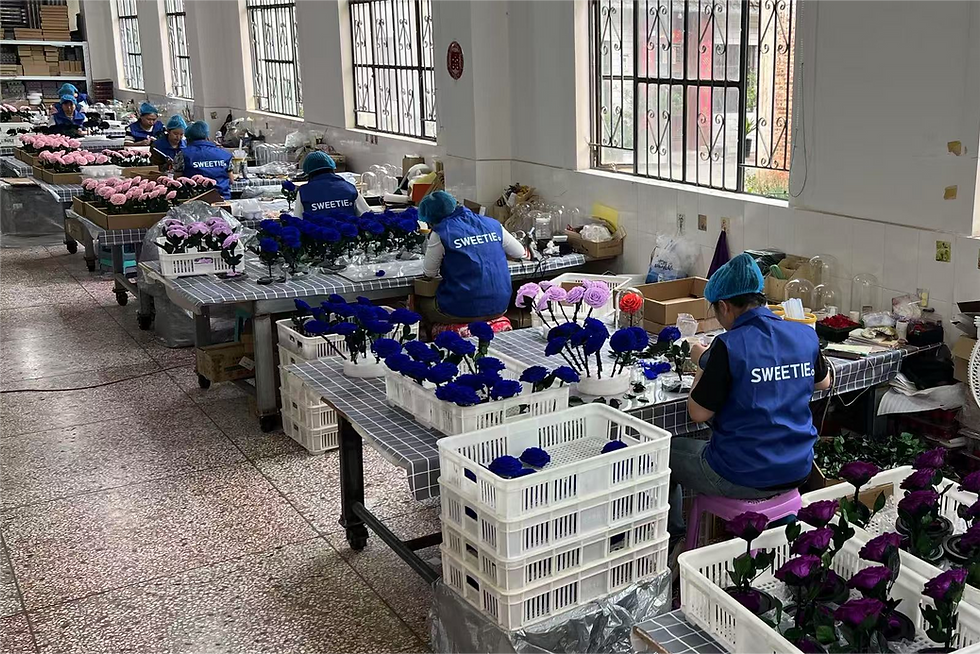
CEO of Sweetie Group


Comments