


Collectible Gifts Trends 2026: What Customers Keep, Display, and Collect


A few years ago, a “great gift” was something useful, pretty, and easy to wrap. In 2026, I’m seeing a different test quietly take over: does this deserve a permanent spot on a shelf, a desk, or in a display cabinet?
That shift changes everything. It changes how products are designed, how they’re packaged, how they’re merchandised—and most importantly, how they’re reordered. The fastest-moving collectible gifts aren’t always the flashiest. They’re the ones that feel personal, photograph well, and come with a built-in reason to come back for “the next one.”
Key takeaways for 2026
Display value is now the #1 driver of “keep-worthy” gifting.
Affordable micro-collections are replacing one-off novelty buys.
Cozy, tactile materials are turning comfort into a collectible trigger.
Nature and botanical themes are evolving into year-round collectible programs.
Event-led commemorative drops are shaping seasonal planning in 2026.
Story-led personalization is outperforming simple name customization.
Trust signals matter more when “limited” is part of the promise.
What makes a gift collectible in 2026
A collectible gift is a gift people don’t just use—it’s something they keep, display, and often collect as a series.
In 2026, “collectible” usually shows up when at least three of these signals are present:
Display-first design that looks good in real homes and offices
Series logic (colors, seasons, editions, variations, sets)
A reason to keep it (emotion, identity, comfort, memory)
Specificity (store exclusive, venue exclusive, dated edition, limited batch)
A clear story that can be told in one sentence
Trust cues when needed (transparent edition rules, numbering, authenticity inserts)
Trend 1: Kidult buying keeps expanding into everyday retail
What it is
Adult collecting continues to move further into the mainstream, reshaping what “giftable collectibles” look like outside of traditional hobby categories.
What it looks like in retail
“Playful, but grown-up” collectibles that blend into home décor
Higher attention to finish, materials, and packaging
Licensed and collaboration-style products that feel like desk art, not toys
Why it’s growing in 2026
Adult collecting is no longer a fringe behavior—it’s a sustained demand pattern that influences how retailers plan assortments, especially for pop-culture-adjacent or design-forward collectibles.
Buyer signals to watch
Reviews that mention “my collection,” “display,” “desk,” “shelf,” “set”
Sell-through driven by multiple variants, not just a single hero SKU
Risk note
The mistake is treating this as a toy trend. In 2026, the winners are often decor-first collectibles that happen to be collectable.
Trend 2: Display-first collectibles win the reorder battle
What it is
More customers are filtering gifts through a simple question: will I still want this visible in my space next month? Display value is becoming the primary reason an item gets kept.
What it looks like
Compact footprints that fit small shelves and desks
Packaging that becomes part of the display (windows, rigid boxes, stands, domes)
Shapes that read cleanly from a distance and photograph easily
Why it’s growing in 2026
As gifting leans more emotional and identity-driven, the product’s “afterlife” matters. A gift that becomes décor naturally stays in the home longer—and gets talked about more.
Buyer signals to watch
Higher conversion when products are featured on tables/endcaps versus deep shelving
“Looks great on my desk” language showing up in reviews and UGC
Risk note
Display products are punished quickly for damage and presentation flaws. If the unboxing feels messy or the item can’t “sit nicely,” it stops behaving like a collectible.
Trend 3: Affordable micro-collections replace one-off novelty
What it is
Collecting is becoming more accessible. Instead of committing to one expensive collectible, shoppers build micro-collections through small, repeatable purchases.
What it looks like
Color sets and palette-based series
Seasonal sets and year-stamped editions
Mini variations designed for “one now, the rest later”
Why it’s growing in 2026
Value-conscious consumers still want the satisfaction of collecting. Micro-collections deliver the dopamine of progress without a high barrier to entry.
Buyer signals to watch
Reorders happen at the series level (the program sells), not only at single-SKU level
Customers mention “I need the next one” or “I’m collecting the set”
Risk note
Micro-collections fail when there are too many variants too fast. The strongest programs control cadence and protect the “completion” feeling.
If you’re planning a collectible-style series and want fast prototyping with scalable production, email sales@sweetie-group.com.
Trend 4: Cozy culture and tactile materials become a collectible trigger
What it is
Touch matters more. In a world saturated with screens, customers are gravitating toward objects that feel comforting—soft, textured, warm, and “human.”
What it looks like
Soft-touch surfaces and fabric-forward finishes
“Comfort collectibles” positioned as daily rituals, not just gifts
Why it’s growing in 2026
Tactile cues translate instantly at shelf level and in video. Texture can be the difference between “cute” and “kept.”
Buyer signals to watch
Review language: “soft,” “cozy,” “comforting,” “calming”
Strong impulse performance and high “gift-to-self” conversion
Risk note
Quality expectations are unforgiving here. Pilling, loose seams, shedding, or odor will kill repeat purchases.
Trend 5: Nature and botanical themes evolve into year-round collectible programs
What it is
Nature themes remain one of the safest paths to a collectible gift that doesn’t age out quickly. Botanical aesthetics blend into home décor, making them easier to keep on display.
What it looks like
Botanical motifs with home-friendly palettes
Minimal, décor-first forms that work beyond one holiday
Series potential built around seasons, colorways, and “small collections”
Why it’s growing in 2026
Nature themes feel timeless, and they support sustained merchandising—especially when a retailer wants a collectible program that isn’t dependent on a single event.
Buyer signals to watch
Consistent performance outside Q4 and Valentine’s
Cross-placement success across gift, home, and lifestyle categories
Risk note
The category can feel generic fast. The differentiator is a distinctive design language plus a short, clear story.

Trend 6: Event-driven commemorative drops shape 2026 planning
What it is
Milestone events and destination experiences are strengthening demand for commemoratives—products that “prove” you were there or mark a specific year.
What it looks like
Year-stamped editions
Venue, city, or attraction exclusives
Packaging that communicates the reason-to-buy in seconds
Why it’s growing in 2026
Events create urgency and meaning in one stroke. Retailers can also plan drops more predictably when a calendar anchor exists.
Buyer signals to watch
Fast sell-through in destination, cultural, and venue retail
Customers explicitly buying “to remember this trip/show/event”
Risk note
Event demand fades fast. Strong programs launch small, read the signals, then reorder quickly instead of overcommitting upfront.
Trend 7: Story-led personalization and trust signals outperform simple customization
What it is
Personalization is moving beyond names. The collectible layer comes from narrative—why this item is meaningful—and from trust cues when “limited” is part of the claim.
What it looks like
Story cards and message inserts that make meaning tangible
Clean edition/version labeling (Season 1, 2026 Release, Edition A)
Transparent limited rules, and numbering when appropriate
Why it’s growing in 2026
Customers are increasingly sensitive to vague scarcity. Clear stories and credible edition rules build confidence—and confidence drives repeat purchases.
Buyer signals to watch
“Which edition is this?” and “Is it limited?” questions in reviews and customer service logs
Stronger repeat purchase when versioning is consistent across the line
Risk note
Nothing damages trust faster than calling something “limited” without defining the rules.
If you want to translate a trend into production-ready specs for a collectible gift program, email sales@sweetie-group.com.

Trend-to-shelf map
2026 trend | What customers want to do | Where it sells well |
Display-first collectibles | Keep and style their space | Gift shops, lifestyle retail, museum stores |
Affordable micro-collections | Start small, build a set | Endcaps, bundles online, seasonal features |
Cozy tactile collectibles | Feel comfort, keep close | Boutiques, lifestyle retail, e-commerce |
Nature and botanical themes | Blend into décor year-round | Home and gift, lifestyle, museum shops |
Event-led commemoratives | Anchor a memory to a place/year | Attractions, theaters, travel retail |
Story plus trust signals | Validate meaning and credibility | Premium gifting, corporate, licensed programs |
The 2026 collectible gift scorecard
If I had to pressure-test a product concept quickly, I’d score it 1–5 on each dimension:
Display value
Series potential
Story clarity
Durability and returns risk
Price-point fit
Sustainability readiness
As a rule of thumb, concepts that score 22+ out of 30 tend to behave like reorderable collectible programs—because they’re built to be kept, not consumed.
Mistakes brands make when chasing collectible trends
Confusing hype with reorder signals
Launching too many variants too quickly
Using “limited edition” without clear rules
Ignoring packaging damage and presentation consistency
Treating a collectible like a one-season item instead of a program
Forgetting that the story must be clear at shelf distance
FAQ
What makes a gift collectible in 2026?
A collectible gift is designed to be kept and displayed, with a clear reason to own more than one—usually through a series, editions, or a strong identity story.
Are collectible gifts only toys and figurines?
No. In 2026, “collectible” often describes décor-forward gifts, tactile comfort items, commemoratives, and program-based series that invite repeat purchases.
What price ranges work best for affordable collectibles?
Micro-collections tend to work best when the entry point feels easy, with optional step-up editions that add display value, gifting value, or scarcity rules.
Blind box or open collectibles—what’s better?
Open collectibles typically fit gift and lifestyle retail better because customers know what they’re buying. Blind formats can work when the channel and audience expect that mechanic.
How do I reduce inventory risk with a collectible series?
Keep the series tight, control cadence, test small batches, and define your replenishment rules early. Series discipline is often more important than variety.
How should “limited edition” be defined responsibly?
State the rules clearly: how many units, whether it can be reissued, and how editions differ. If you can’t explain it simply, don’t use the claim.
Why does packaging matter so much for collectible gifts?
Because packaging is part of the display and part of the trust signal. If it arrives damaged or looks cheap, the product stops feeling collectible.
Closing thoughts
The strongest collectible gifts in 2026 share a simple formula: display value plus series logic plus a story worth keeping. When those three come together, a product stops behaving like a one-time gift and starts behaving like a program customers return to.
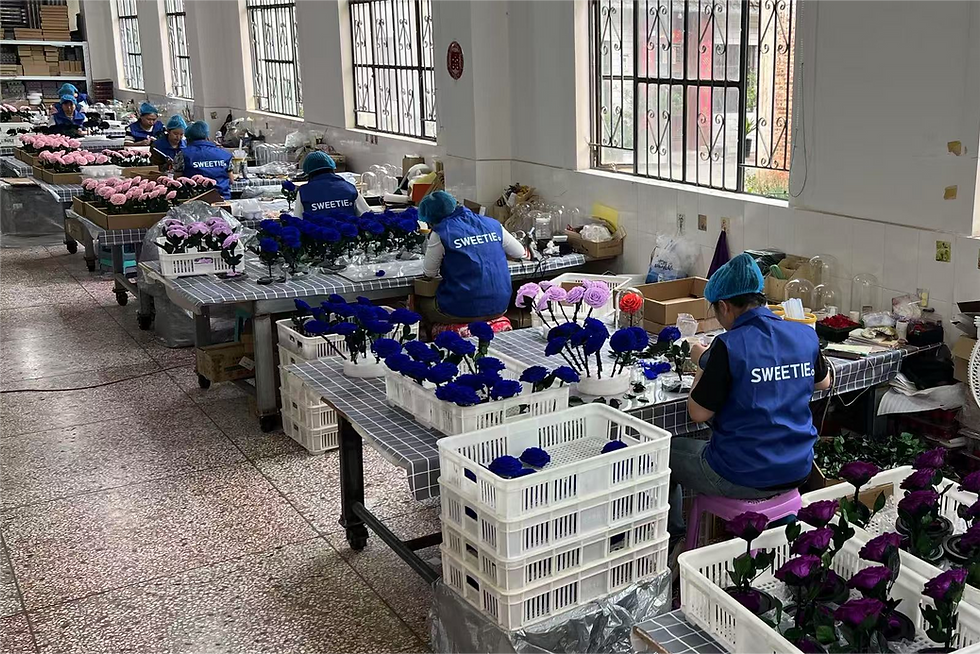
If you’d like to explore collectible-style floral gift programs, we manufacture preserved flower gifts, plush flower gifts, and crochet floral gifts—and we’ve supported both series development and collaboration-style projects. Reach us anytime at sales@sweetie-group.com.
CEO of Sweetie Group


Comments